

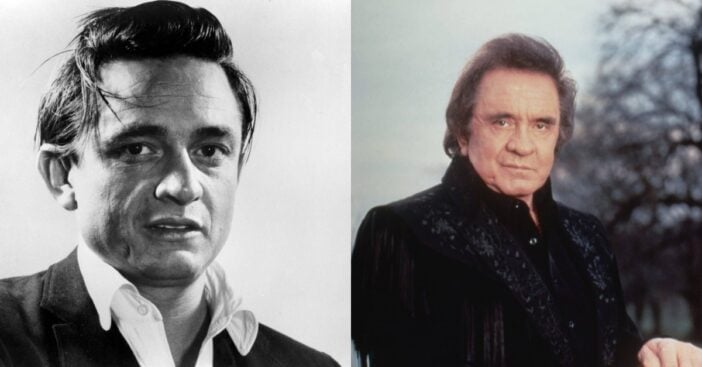
For most of his marriage to June Carter Cash, home for Johnny Cash was the lakeside house in Hendersonville, Tennessee, where the couple raised their son, John Carter Cash. But when the Man in Black came off the road and wanted to vanish, he drove a little over 40 miles southwest of Nashville to a plain old farmhouse in Bon Aqua, a Hickman County crossroads most of his fans had never heard of. He called that 107-acre spread “the center of my universe,” as Mental Floss and the farm’s own history both record.
The strange part is how the farm became his in the first place. The sweeter part is what a newcomer to his music found waiting there, years after the house went quiet.
How Did Johnny Cash End Up With a Farm He Never Went Looking For?

The Bon Aqua farm arrived by way of a betrayal. In the early 1970s Cash discovered that his accountant had been embezzling from him and quietly buying up real estate around the country with the money. According to Smithsonian, which relayed the Tennessean’s reporting, Johnny and June made the man sign the properties over to them and then sold every one of them except the farm in Bon Aqua.
That one they kept, because Cash had fallen for it. “For me in ’72, it was love at first sight,” he wrote in his 1997 autobiography, in a passage Country Living reprinted when the farm opened to the public. It was “a place that moved into my heart immediately, a place I knew I could belong.”
What he fell for was modest. The heart of the house was an old two-room log cabin with a dog-trot, the open breezeway Southern builders ran between two rooms. Cash closed in the breezeway, added two upstairs bedrooms and put porches on the front and back, which left the white clapboard farmhouse that visitors see today, according to a 2025 visit written up by Main Street Media of Tennessee. A man who could have lived almost anywhere fell hardest for a farmhouse with two fireplaces.
What Did He Do at the Hideaway?

Mostly, he did as he pleased. “This is a great place for pottering,” Cash wrote in the same autobiography, quoted by Mental Floss. “I can cook my own food, read my own books, tend my own garden, wander my own land.” The Grand Ole Opry’s guide to his Tennessee haunts describes the farm the same way, as the place he went to read, write and work in his garden.
It was also a family place, and the walls still prove it. There are bullet holes in one of them from the day Cash taught his daughter Cindy to shoot, a detail both Smithsonian and Mental Floss reported when the house reopened. Cindy is one of the four daughters he had with his first wife, Vivian Liberto, and you can meet all of Johnny Cash’s children and stepchildren here.
Down Old Highway 46 sat an old general store, and Cash turned it into a little stage for his neighbors. “We used to sing here on Saturday nights,” Cindy told the Tennessean in 2016, as quoted by Artnet News. “Us girls would get up on stage and sing whatever we wanted.” Admission was free, and there was no publicity at all. “We didn’t advertise,” she said. “If you saw a piece of paper on the door, you knew there’d be singing that night.”
Those nights gave Cash a song. He called it “Saturday Night in Hickman County,” and his handwritten lyrics for it now hang inside the old store, according to Smithsonian and Mental Floss. The store also hosted a 1975 party marking his 20 years of making music, and somebody pointed a video camera at it. That tape would matter later.
Why Did the Farm Sit Empty After 2003?
June Carter Cash died on May 15, 2003, and Johnny followed her on September 12 of that year. With both of them gone, the farmhouse in Bon Aqua was abandoned, as Country Living put it, and it sat empty for years. Cash had sold the general store down the road years earlier, and it had been turned into a recording studio.
The man who brought it all back was not a lifelong fan. Brian Oxley had only discovered Cash’s music a few years earlier, after retiring from running a large service company, and he became devoted enough to buy the 107-acre farm with his wife, Sally, in 2015 for $895,000. Mental Floss and Country Living both reported that price, and Smithsonian and Parade later repeated it.
The Cash family had left things behind, including guitars and that VHS tape of the 1975 celebration at the general store. Once the Oxleys realized where the party had taken place, they bought the store too and restored the small stage in the back where Johnny, June and the girls used to sing.
What Is Waiting for Visitors in Bon Aqua Today?

The farm and the store opened to the public together on July 12, 2016, as the Storytellers Museum and Hideaway Farm. “We want to make this more of an experience than a museum,” Oxley told the Tennessean. The farmhouse holds keepsakes from Bon Aqua, the Hendersonville house and the family’s Jamaica home, according to the Opry, while a garage on the property shelters the Cadillac built in tribute to “One Piece at a Time,” Cash’s 1976 No. 1 hit.
The farm is still open in 2026. Its official website lists general admission on Saturdays from 11 a.m. to 3 p.m. with no reservation needed, plus two-hour visits booked by phone Tuesday through Friday at (931) 996-4336. Tennessee tourism listings have shown slightly different hours over the years, so a call ahead is wise.
Oxley still talks about Cash the way a convert does. “He was the north star,” he told NewsChannel 5 in Nashville, recalling that Cash called this farm “the center of the universe where gravity starts.” The best review came from the girl who once learned to shoot inside that farmhouse. When the farm reopened in 2016, Cindy Cash told the Tennessean, “I can feel his presence here so strongly. Dad would have loved this.”