

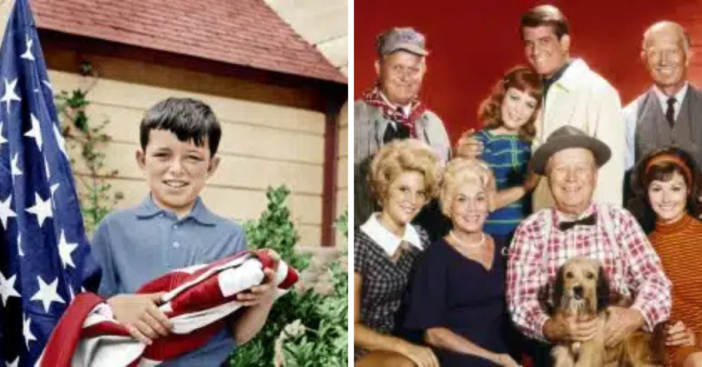
For six seasons and 234 episodes, the Cleavers lived in a town called Mayfield, and nobody ever said which state it was in. Leave It to Beaver ran from October 1957 to June 1963 on CBS and then ABC, and the silence about Mayfield’s whereabouts was on purpose. Even the mail kept the secret: a letter Ward reads in a second season episode is addressed simply to “Mayfield, State.”
Hooterville is the same story with a twist. Neither Petticoat Junction nor Green Acres ever pinned the town to a map, but this one has a real hometown behind it, a railroad hotel in Eldon, Missouri, that belonged to the family of Paul Henning’s wife. (Mayberry, the era’s other famous small town, is a story of its own.) Here is what each show actually said, what the creators told reporters, and which theories still hold up.
Why Did ‘Leave It to Beaver’ Keep Mayfield’s State a Secret?

The blank on the envelope was no accident. According to TV Series Finale, which freeze-framed that letter from Beaver’s principal, Mrs. Rayburn, the writers deliberately left Mayfield floating somewhere in America. Wikipedia’s entry on the series puts it plainly: the location of the town is never mentioned.
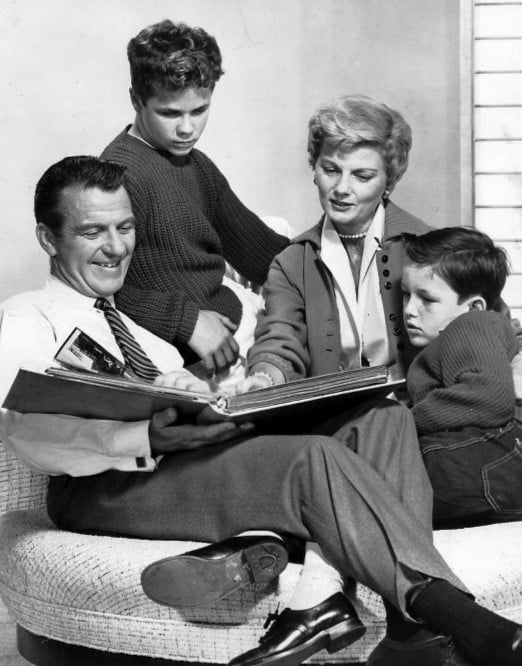
That vagueness fit the way Joe Connelly and Bob Mosher built the show, because they wrote it from real families rather than from any one place. “Somebody is always telling us what their kids did, and we just kick the idea around and turn it up with a script,” Mosher told the Gettysburg Times, as MeTV recounted. He added that the cast’s own children fed the stories too. “We don’t try to give an unreal impression of American life as we think it should be,” he said. A Mayfield with no state could belong to anyone watching, which may be the best explanation of all.
Still, a show that runs that long can’t help dropping hints.
What Clues Did the Show Leave Behind?

The clue fans quote most comes from Ward in the episode “The Boat Builders,” when he tells the boys, “We’re 20 miles from the ocean.” Leave It to Beaver expert Scott Hettrick flagged that line in his notes for writer Brian Humek’s Substack, where they also point out that the Cleaver cars carry no front license plate. That detail rules out a long list of states.
Other clues point every which way. An Ohio State pennant hangs on Eddie Haskell’s bedroom wall in the first season episode “Voodoo Magic,” and Ohio fans add that Ward is remembered in one episode as a Shaker Heights High man. Shaker Heights and the real Mayfield Heights both sit just east of Cleveland. Wisconsin fans point to the “W” pennant over Beaver’s bed. Then there is the scenery. The film historians at Silent Locations found stock footage of Skokie, Illinois, standing in for downtown Mayfield in “Beaver’s Fortune,” which aired December 5, 1959. In “Wally Buys a Car,” broadcast January 10, 1963, Ward and Wally test drive right down 3rd Street in Santa Monica.
That last one is the wrinkle. The same researchers note that the scripts usually treat California as a faraway place, even though the cameras rolled there, and the Cleaver house was a facade on the Universal Studios lot. So the Ohio, Wisconsin and Illinois camps are all fan theories built on props and passing lines. None of them was ever confirmed by the show or its creators.
Hooterville’s story starts somewhere much more specific.
Where Did Hooterville Come From?
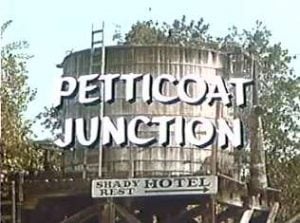
Paul Henning was a Missouri boy, born in Independence on September 16, 1911, according to the State Historical Society of Missouri. He married actress Ruth Barth in 1939, and Ruth grew up hearing about the hotel her mother’s family ran in Eldon, a small railroad town in Miller County. The Miller County Museum identifies it as the Burris Hotel, which sat beside the Rock Island Line tracks.
Henning never hid where the idea came from. “The Shady Rest was based on a real hotel in Eldon, Missouri, run by my wife’s grandmother,” he told the Orlando Sentinel in 1986. “That’s where the hotel and the train and the whole setting came from, from Ruth’s reminiscences of visiting her grandma.” The State Historical Society sums up the swap neatly: the Burris Hotel became the Shady Rest, and the town of Eldon became Hooterville. One of the working titles, according to The TV Guide TV Book, was Ozark Widow.
When Petticoat Junction premiered on CBS in September 1963, Bea Benaderet’s Kate Bradley ran the Shady Rest at a water stop on a forgotten branch line, roughly halfway between Hooterville and Pixley. Henning told the Orlando Sentinel that fall that “there is sentiment connected with the whistle of the railroad train.” We covered the hotel’s own history in our story on how ‘Petticoat Junction’ was based on a real hotel.
But the show itself never said “Missouri,” and two years later a New York lawyer moved to town and muddied the map.
What Did ‘Green Acres’ Say About Hooterville’s State?
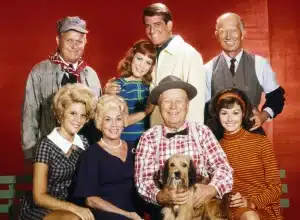
Green Acres arrived in 1965 and ran through 1971, with Eddie Albert’s Oliver Wendell Douglas dragging Eva Gabor’s Lisa to a ruined farm outside Hooterville. Creator Jay Sommers had his own source material, and it wasn’t Missouri. “I got the idea from my stepfather when I was a kid,” he said in a 1965 interview quoted by Mental Floss and MeTV. “He wanted a farm in the worst way and he finally got one. I remember having to hoe potatoes. I hated it.”
On screen, the geography got stranger. Pat Buttram’s Mr. Haney says the town is about 300 miles from Chicago, but Mental Floss points out that viewers never learned for sure where Hooterville was, and that even the accents on the show don’t agree. Wikipedia’s Hooterville entry catalogs dozens of conflicting clues from both shows, from a “weather in Texas” remark to radio call letters that suggest east of the Mississippi. Fans have made cases for Missouri, Kentucky, North Carolina and Pennsylvania. Those are theories, and the shows never chose among them.
Even the famous train was an out-of-towner. The Hooterville Cannonball was filmed on the Sierra Railroad in Jamestown, California, pulled by Sierra No. 3, the same engine that steams into High Noon.
So Where Do These Towns Really Belong?

The honest answer is that Mayfield has no state and was never meant to have one, while Hooterville has no official state but does have a birthplace. If you ask where Henning’s town came from, the answer is a hotel by the tracks in Eldon, Missouri, filled with the stories a little girl named Ruth carried west with her.
For Mayfield, the best answer may belong to the man who grew up there on screen. Jerry Mathers, who turned 78 on June 2, is the last of the Cleaver family still with us, and he still hears from viewers who never stopped visiting. “Our fans are so devoted, and many write to me that they record the show in the morning and watch it at night,” he told Fox News Digital in 2025. “I am very grateful to be associated with such a heartfelt show that touches the lives of so many families.” Maybe that is why no one ever printed the state. Mayfield was wherever you happened to be watching.