

For more than half a century, the most common answer to how Mister Ed talked has been two words long: peanut butter. Kids repeated it on playgrounds, and grown men argued about it at the bar. The man who put that story into circulation was the one person on the set who knew better. Alan Young, who played the soft-spoken architect Wilbur Post opposite the palomino from 1961 to 1966, admitted late in life that he had made the whole thing up.
The real method was simpler, and in its way more charming, because it depended on a patient trainer, a thin piece of nylon and a horse who turned out to be smarter than anyone expected. Mister Ed began in syndication on January 5, 1961, and moved to CBS that October, running 143 episodes before it signed off on February 6, 1966. Here is what was really happening every time that big upper lip started flapping.
Who Was Really Under That Blond Mane?
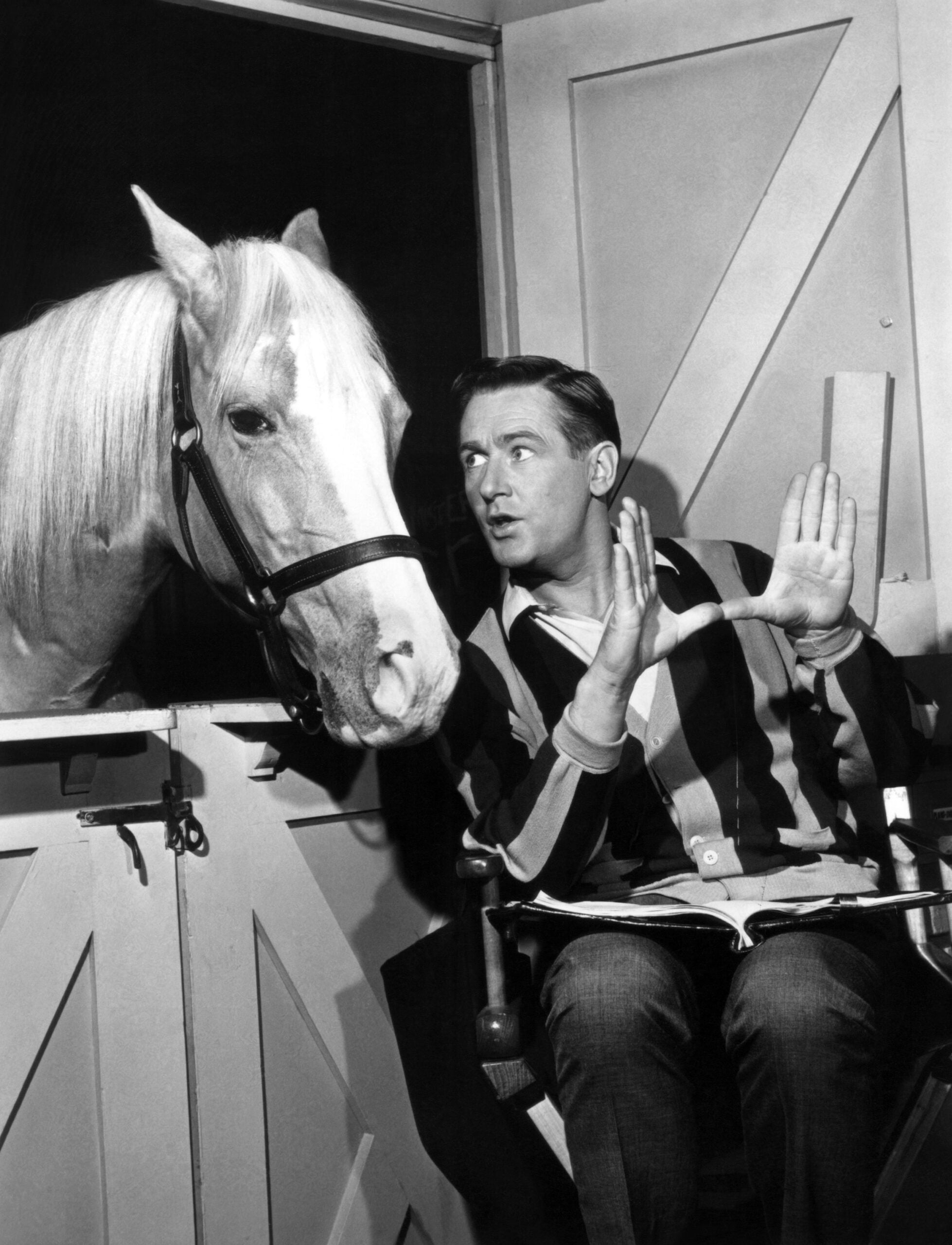
Mister Ed was played by a palomino gelding named Bamboo Harvester, foaled in 1949 in the Los Angeles area. According to Wikipedia’s account of his pedigree, his sire was an American Saddlebred called The Harvester and his dam was a part-Arabian mare, which helps explain the elegant head that filled so many close-ups.
The horse came with an experienced handler. Les Hilton had already trained Molly, the mule who played the title role in director Arthur Lubin’s Francis the Talking Mule pictures at Universal, and Lubin was the man who developed Mister Ed for television from Walter R. Brooks’s magazine stories. Encyclopedia.com notes that Hilton reused his Francis know-how on the new horse, which mattered more than anyone watching could have guessed. George Burns helped pay for the pilot, and according to the Associated Press obituary of Young, Burns told the producers to “Get Alan Young. He looks like the kind of guy a horse would talk to.”
The producers had their horse and their straight man. What they did not want anybody to have was the secret.
Why Did Alan Young Start The Peanut Butter Story?
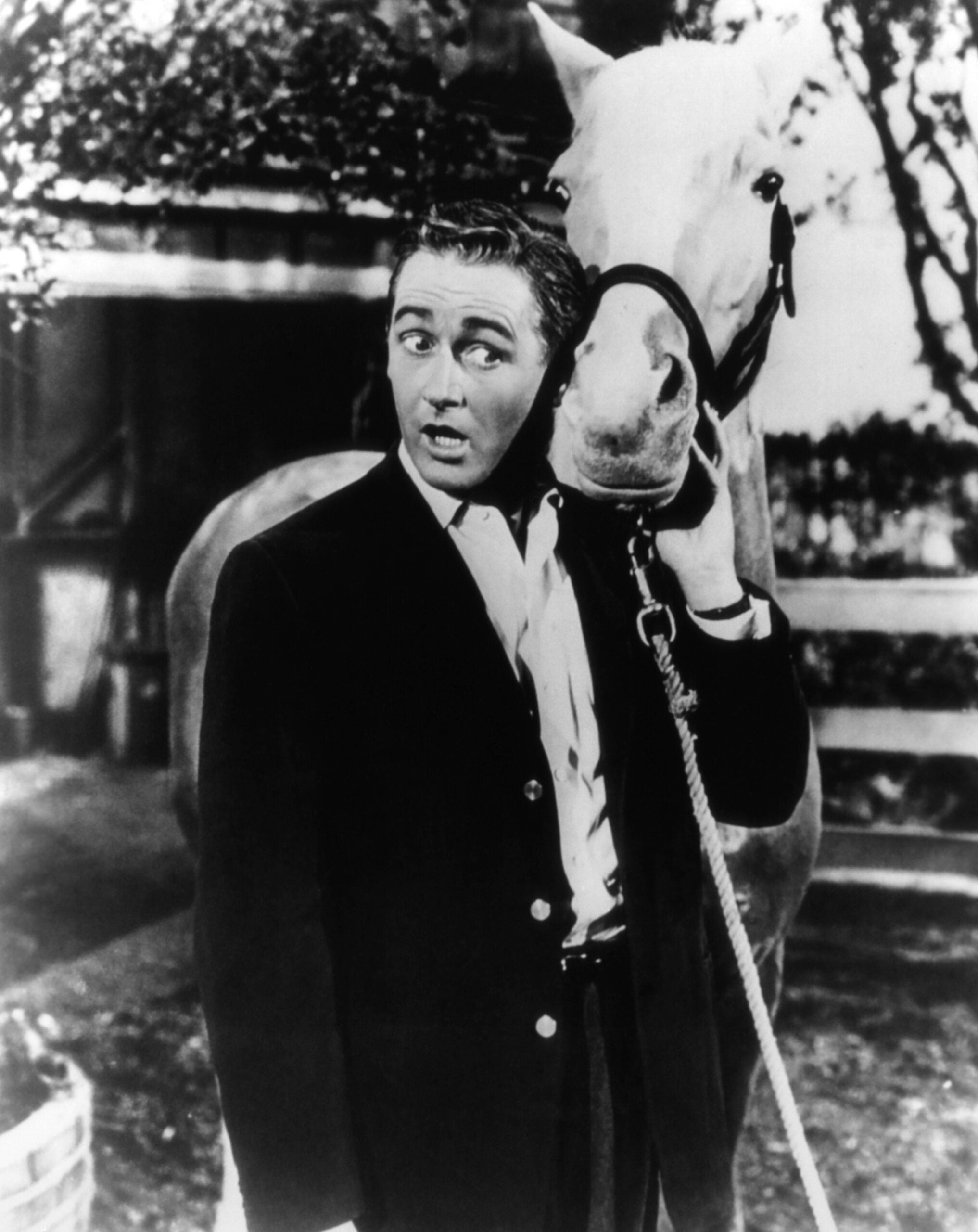
Producers Al Simon and Arthur Lubin asked the cast to stay quiet about the mechanics. Young told the San Francisco Chronicle’s SFGate in 2009, as quoted by CBR, that “they thought kids would be disappointed if they found out the technical details of how it was done.”
So whenever fans asked, Young gave them something better. He said the crew smeared peanut butter on Ed’s gums and the horse moved his lips trying to lick it off. Columnist Nick Thomas got the confession out of him in a Tinseltown Talks interview reprinted in Senior Voice Alaska in 2013. “So I made up the peanut butter story, and everyone bought it,” Young said.
Everyone did buy it, for decades. Young even borrowed the image in his own memoir. Wikipedia’s article on the series quotes his memoir with Bill Burt, Mister Ed and Me, describing the real sensation as “a little like having peanut butter stuck under your top lip.” What sat under that lip was a little less tasty.
The Thread That Did The Talking
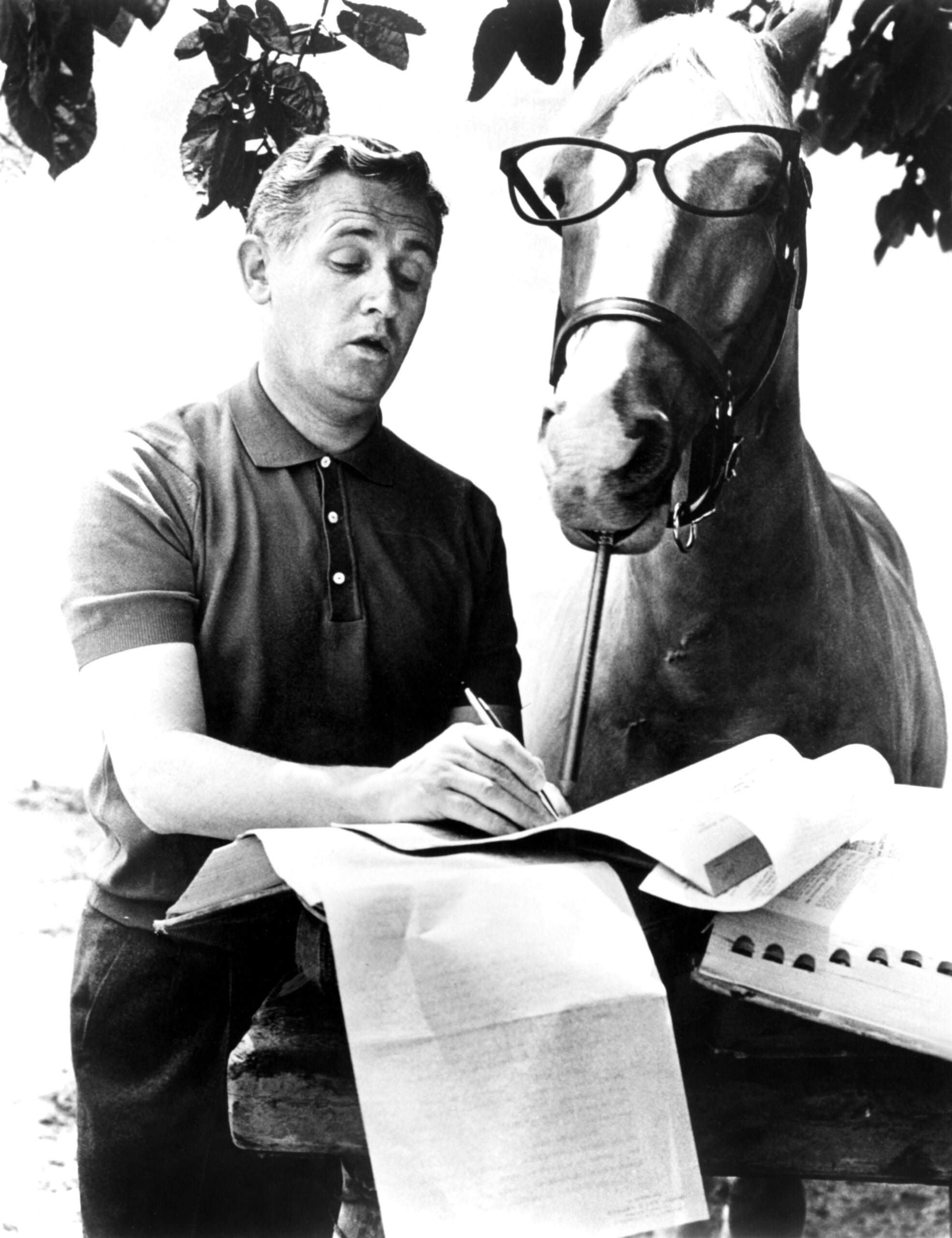
Hilton brought the trick over from the Francis films. He slipped a soft nylon thread under the horse’s upper lip, and the horse worked his mouth trying to get rid of it. “The trainer put a piece of nylon thread under his lip, and he’d try to get rid of it, but on cue,” Young told SFGate. “He stopped on cue, and he started on cue.”
He told Nick Thomas the same thing in fewer words: “It was initially done by putting a piece of nylon thread in his mouth.” CBR points out that in the earliest episodes, Ed really does look as if something is bothering him between his lips, and that fidgety look fades as the seasons go by. The reason it fades is the best part of this story, and we will get to it.
The thread only explained the mouth, of course. The deep, dry voice belonged to someone else entirely.
Whose Voice Came Out Of Ed’s Mouth?
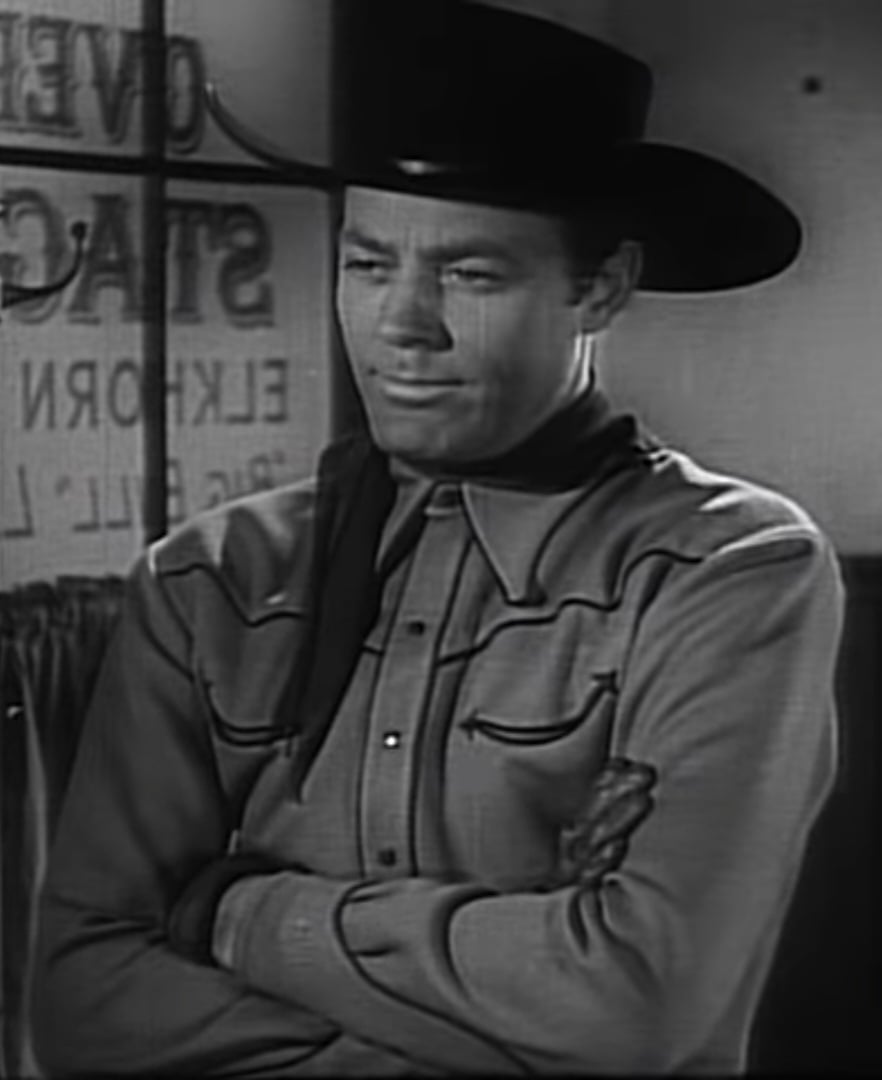
Ed’s lines were spoken by Allan “Rocky” Lane, a former Republic Pictures cowboy who had starred as Red Ryder in 1946 and 1947 and then made more than 30 B-westerns under the Rocky Lane name, usually riding a horse called Black Jack. Born Harry Leonard Albershardt in Mishawaka, Indiana, on September 22, 1909, Lane never saw his name on a Mister Ed episode. The closing credits listed the horse as played by “himself.”
Biographer Linda Alexander, who wrote I Am Mister Ed: Allan “Rocky” Lane Revealed, told Nick Thomas in a 2014 piece for Mesquite Local News that the producers did not want children to learn an actor was behind the voice. Lane reportedly felt the job was beneath him at first, but once the show became a hit he wanted recognition. According to Alexander, and to a 1990 history of Republic quoted by the fan site b-westerns.com, he got a raise instead of a credit. Lane died of cancer on October 27, 1973, at 64, in Woodland Hills, California.
Once the secret was out, the stories about how the effect was done only got stranger.
The Myths That Never Went Away
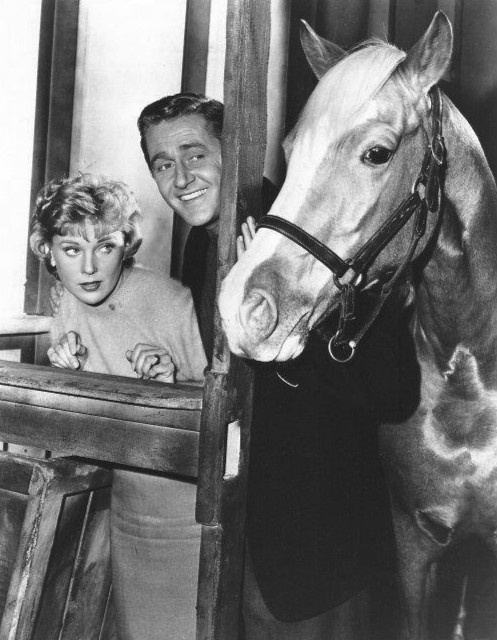
One rumor claimed Hilton gave the horse mild electric shocks to make him move his lips. CBR rated it false. No one ever produced evidence or went on record saying it happened, and Hilton was remembered as strict but not cruel. Treat it as a myth.
The other legend sits in a field about five miles north of Tahlequah, Oklahoma. A granite marker unveiled there in 1990 says Mr. Ed retired to that very field and died on February 22, 1979. A 2019 investigation by public radio station KGOU found that local tourism people now say it most likely holds Pumpkin, a lookalike palomino used for publicity, and Wikipedia’s article on Bamboo Harvester gives the same account. Young’s version, from his 2007 book Mister Ed and Me and More!, is that Bamboo Harvester died around 1970 at Hilton’s place in Burbank after a temporary handler gave him a tranquilizer, and that he was cremated in Los Angeles. By Young’s account, the horse America watched every week was never in Oklahoma at all.
The truth about the TV horse is better than either myth, because by the end he did not need the thread at all.
The Day Ed Stopped Needing The Thread
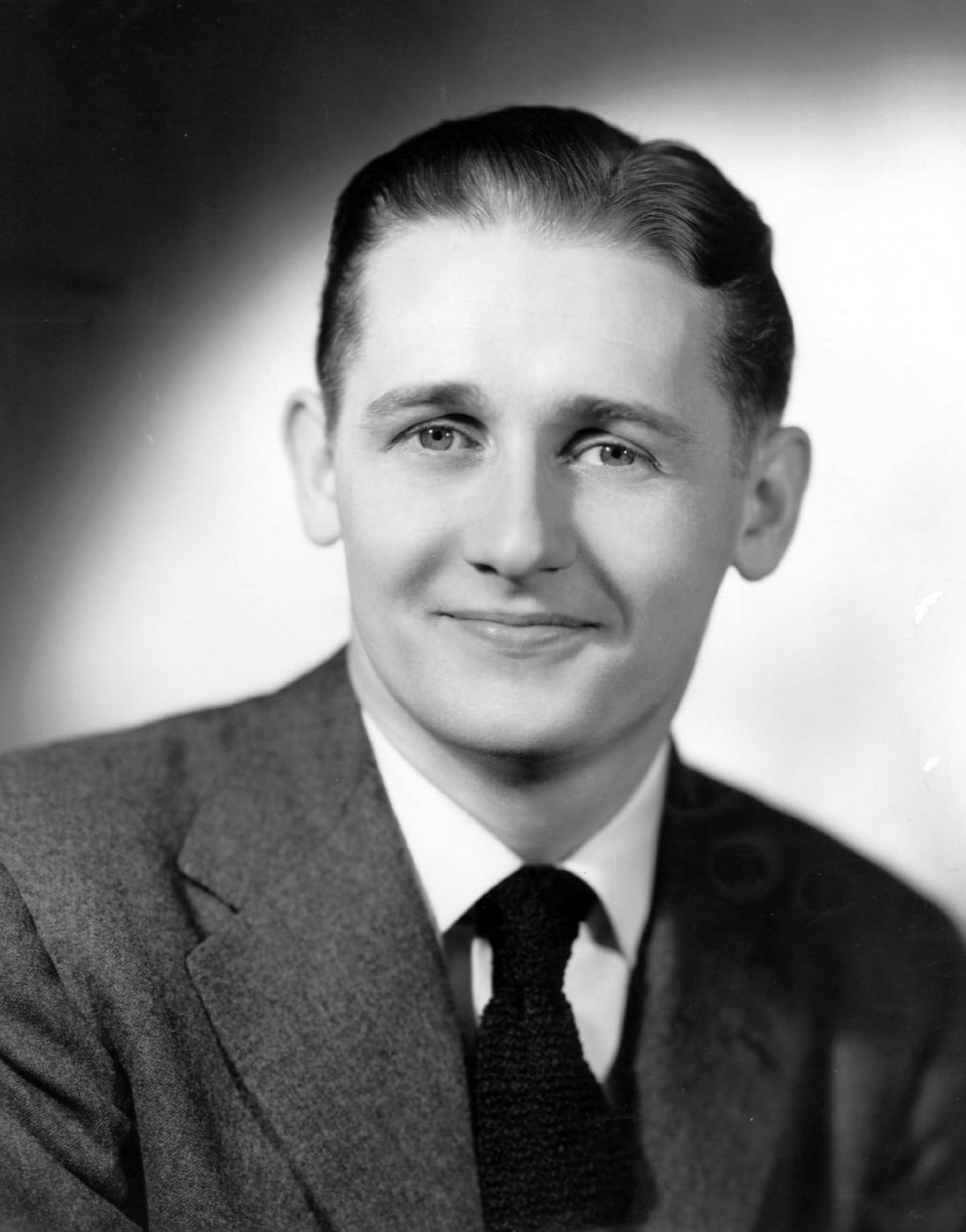
Over the years Bamboo Harvester simply learned the job. “Ed actually learned to move his lips on cue when the trainer touched his hoof,” Young told Thomas. Hilton could crouch out of the shot and tap a leg, and the horse would start “talking” with no nylon in his mouth.
Then Ed went one step further. “In fact, he soon learned to do it when I stopped talking during a scene,” Young said. “Ed was very smart.” The horse had worked out the rhythm of a conversation, and when his co-star finished a line, Ed answered.
Young stayed fond of his four-legged co-star for the rest of his life, a friendship we wrote about here. Born in North Shields, England, on November 19, 1919, Young went on to voice Scrooge McDuck for more than 40 years, and he died on May 19, 2016, at 96, at the Motion Picture and Television Fund’s retirement community in Woodland Hills, according to NBC News and the Associated Press. He remembered how Ed behaved after a scolding from the trainer, wandering over to his co-star as if to complain. “He would come over to me, like, ‘Look what he said to me,'” Young said.