

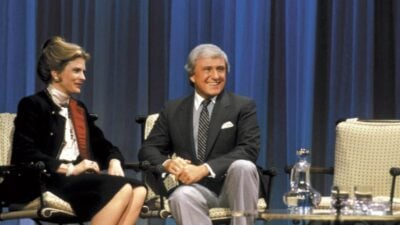
Somewhere in the desert outside La Quinta, California, there is a horse barn with 16 stalls and a private racetrack that Merv Griffin built for the thoroughbreds he loved. The whole 40-acre property is now for sale at about $24 million, according to People, with the listing put at $23.9 million and handled by Mauricio Umansky and Zach Goldsmith of The Agency. It comes almost 20 years after Griffin died in August 2007 at 82.
The man who once owned it gave us the evening routine of millions of American homes. If you watched a contestant solve a puzzle at 7 o’clock and then answer in the form of a question at 7:30, you were living inside Merv Griffin’s imagination. The story of how a singer from San Mateo ended up with a Moroccan palace in the Coachella Valley starts with a conversation on an airplane.
How Did A Band Singer Dream Up ‘Jeopardy!’?
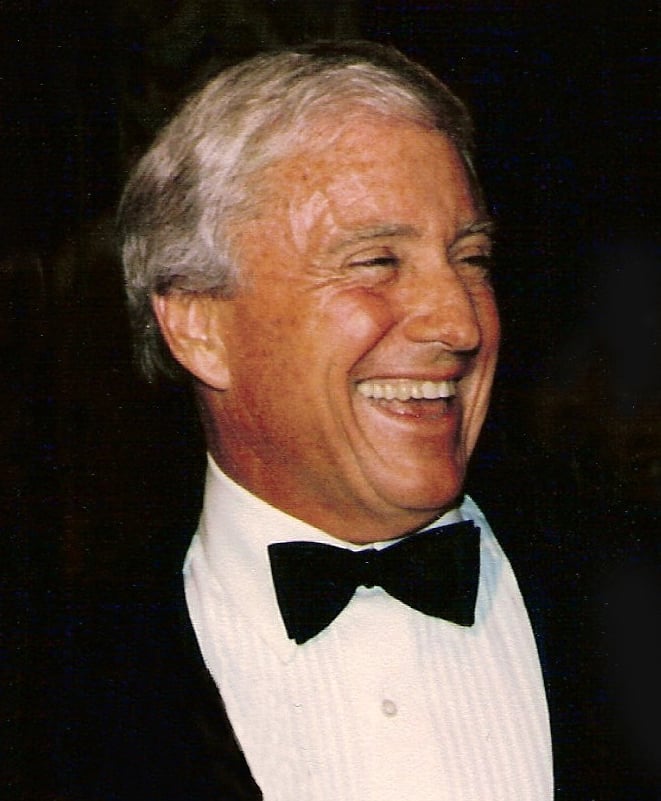
Merv Griffin was born July 6, 1925, in San Mateo, California, and he began as a voice, not a producer. At 19 he landed a singing job on a nationally syndicated radio show out of KFRC in San Francisco, the Television Academy recalls in its Hall of Fame tribute, and he went on to tour with Freddy Martin’s orchestra. Their novelty record “I’ve Got a Lovely Bunch of Coconuts” made him a name on the radio long before he hosted his first talk show.
Television was where he found his real gift, and his wife Julann helped him find it. The two married in 1958. On a flight together, Griffin was complaining that quiz shows had been dead since the rigging scandal that brought down The $64,000 Question. Julann’s answer, as the Television Academy tells it, was simple: “Why don’t you give them the answers?” Griffin described it later as a switch that would “give the answers to the contestant and let them come up with the question.”
NBC bought the idea without even shooting a pilot, and Jeopardy! premiered in 1964 and ran for 11 years. The show would make him rich, though not only in the way he expected, because the most profitable 30 seconds of it came from a tune he wrote himself.
The Lullaby That Became A Fortune
The “Think!” music that ticks under every Final Jeopardy began as a lullaby Griffin wrote for his son, Tony, under the title “A Time for Tony.” He claimed he dashed it off in less than a minute. In a 2005 interview with The New York Times, quoted by American Songwriter, he was frank about what that minute was worth. “That little 30 seconds has made me a fortune, millions,” he said, putting the total at “probably close to $70-80 million.”
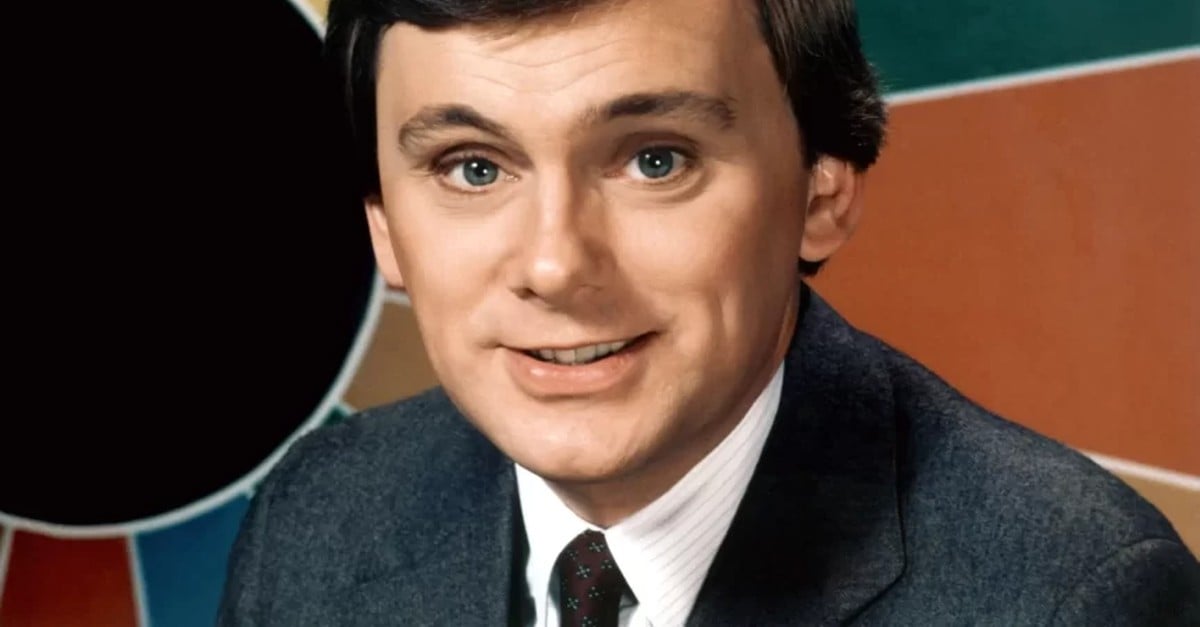
His second great game came from his childhood. Griffin used to play hangman with his sister on family road trips, and that pencil-and-paper game became Wheel of Fortune, which premiered on NBC’s daytime schedule on January 6, 1975, according to The Saturday Evening Post. Chuck Woolery hosted the first six years. Pat Sajak, a former Los Angeles weatherman, took over in 1981, and when the letter-turning job opened in 1982, Griffin auditioned three hopefuls for weeks and picked Vanna White. Sajak stayed for more than four decades, and his life since leaving the wheel looks very different today.
In 1986 Griffin retired from his long-running talk show and sold Merv Griffin Enterprises to Coca-Cola’s Columbia Pictures Television unit for $250 million, the Associated Press reported in his obituary. He kept a share of the profits from both games, which left him free to spend money on the thing he cared about most outside a studio.
Why Did Merv Need A Racetrack In The Desert?

That thing was horses. In the 1980s Griffin pieced together about 240 acres in La Quinta, roughly 30 miles southeast of Palm Springs, and raised thoroughbreds there. Inman reports that the home went up in 1986 and stayed his until his death, and that some 200 acres were later split off to create the Griffin Ranch community, which left the estate at the 40 acres for sale now.
He hired Los Angeles designer Waldo Fernandez to build a single-story, 5,409-square-foot main house that blends Moroccan style with California ease, with a circular skylight over the living and dining room and stained-glass fixtures throughout. Outside are four round guest houses, a gatehouse, staff quarters, a six-bay garage, a citrus orchard and an infinity pool looking over a 2.5-acre man-made lake. The barn and the racing track sit beyond them.
The horses paid him back late in life. Griffin’s colt Stevie Wonderboy won the Breeders’ Cup Juvenile at Belmont Park on October 29, 2005, and the Television Academy notes it was a $1.5 million race. Less than two years later, on August 12, 2007, Griffin died of prostate cancer at Cedars-Sinai Medical Center in Los Angeles.
What Happened To Merv’s Desert Hideaway After He Was Gone?
For several years after his death, the ranch waited. In 2013 a group led by Newport Beach real estate investor Mark Majerovic bought it for $7 million, and The Wall Street Journal reported that it went on to rent for as much as $15,000 a night. Being minutes from the Empire Polo Fields made it a natural base during the Coachella festival, and Fox Business reported that Katy Perry, Post Malone and Jack Harlow all stayed there.
Selling it has taken longer. The estate first listed in the spring of 2024 for $36 million and was cut to $29.95 million in February 2025. The new price of about $24 million is more than $12 million below where it started, and it still comes with the well and the water rights that once kept Griffin’s orchard green.
Whoever buys it gets the desert retreat of the man who wrote a 30-second song for his little boy and built two games that still air every weeknight. The barn still has its 16 stalls, and the oval track is still out there in the sand.


 81-Year-Old Rod Stewart’s 8 Kids Are All Grown Up, And One Of Them Didn’t Learn He Was Her Dad Until She Was 18