

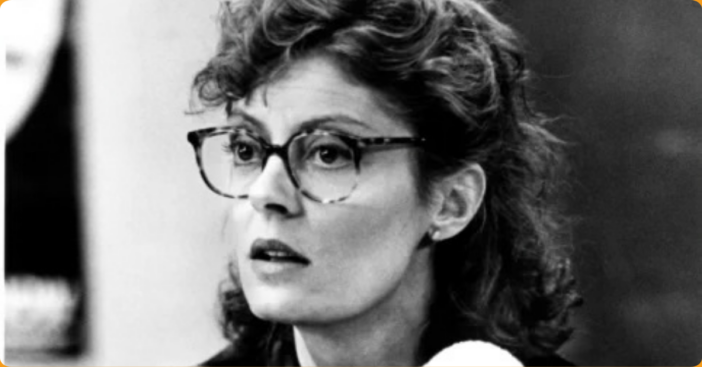
Susan Sarandon has spent decades building a reputation as a performer willing to speak up when something does not sit right with her. That instinct apparently extended to her work on movie sets, including one memorable disagreement while making the 1990 romantic drama White Palace.
According to Farout Magazine, long before behind-the-scenes creative disputes became easy fodder for social media, Sarandon challenged a line she believed simply did not ring true for her character. The White Palace disagreement offers an intriguing glimpse at the conviction she brought to her performances, even when pushing back created trouble on set.
Susan Sarandon’s White Palace Scene Sparked a Disagreement
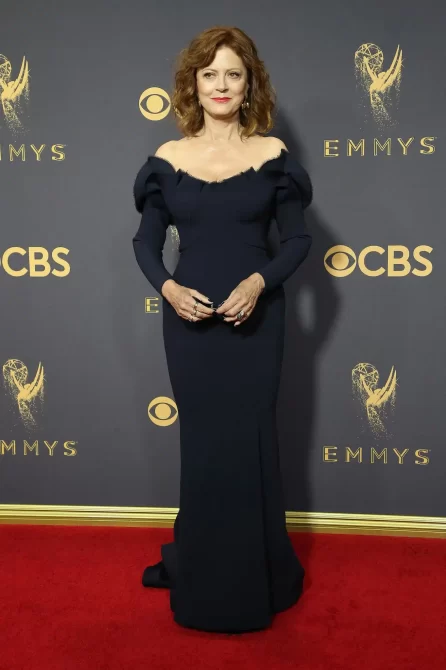
In White Palace, Sarandon played Nora Baker, a working-class waitress who begins an unlikely romance with James Spader’s Max Baron. While filming a Thanksgiving dinner scene, the script called for Nora to say, “Presidents don’t make poor people happen.” Sarandon objected, arguing that the statement did not make sense coming from the character as she understood her.
Sarandon later recalled that the filmmakers responded by pointing out that Nora did not necessarily share her personal political views. For Sarandon, however, that missed the larger issue. She maintained that her objection was about character consistency rather than simply inserting her own opinions into the role. She ultimately remembered the experience as one in which her concerns were not taken seriously and instead landed her in trouble.
Speaking Up Has Long Been Part of Sarandon’s Career
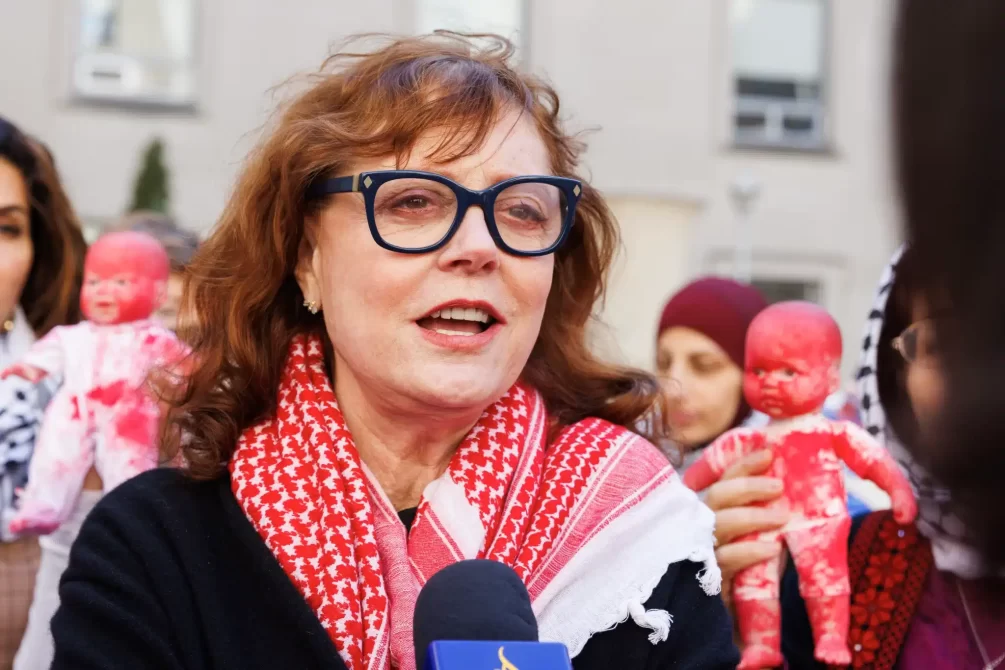
The confrontation reflects Sarandon’s long reputation for being outspoken and defending her views. Emily Blunt later called her a “force of nature,” praising her intelligence and presence. Sarandon’s acting career also began unexpectedly after she accompanied then-husband Chris Sarandon to an audition and caught casting directors’ attention herself.
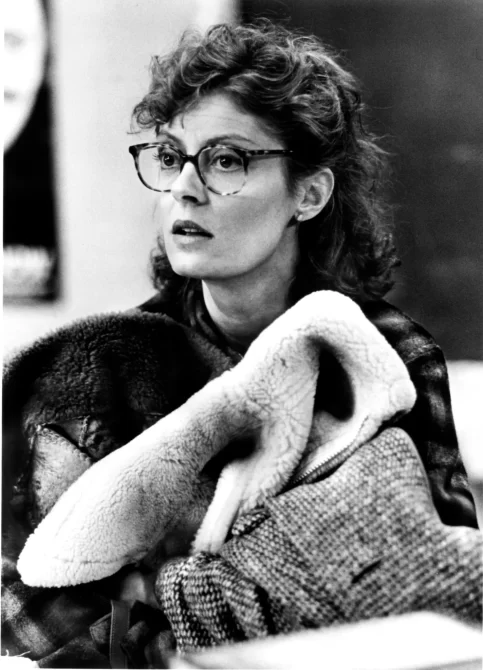
The Susan Sarandon White Palace incident was not her only creative clash. She also faced unexpected changes to her role in The Witches of Eastwick. Still, both experiences reflected the same approach: Sarandon wanted dialogue and character choices to feel believable, even when that meant pushing back behind the scenes.