

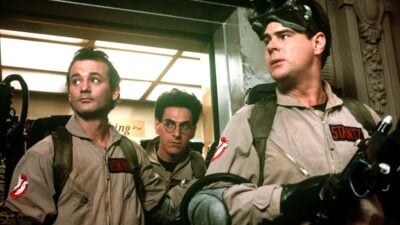
Harold Ramis would have turned 82 on Saturday, November 21, 2026. He was born that day in 1944 in Chicago, and the gentle, bespectacled man most of us remember as Egon Spengler in Ghostbusters spent the better part of four decades making other people funnier. He co-wrote Animal House, directed Caddyshack and steered Bill Murray through some of the best work of his career.
That last partnership is the part of his story people still ask about. Ramis and Murray made six projects together, and then, after one movie in the early 1990s, they stopped speaking for about twenty years. What finally broke the silence came quietly and very late, and it is a story his daughter didn’t share until four years after he was gone.
How Did a Chicago Kid End Up Writing ‘Animal House’?

Ramis got his start in 1969 at Chicago’s Second City, the improv theater that seemed to supply half the comedy of the 1970s, according to CBS News. When he came back to the troupe in 1972, he found John Belushi in the cast, and he settled into the role he would play for years, the calm straight man next to a human explosion.
He knew exactly what that job was. Ramis told The New Yorker‘s Tad Friend in 2004 that he could “complement John or Bill, who were people of instinct,” and help “guide and deploy that instinct.” In 1976 he became head writer of SCTV, the Canadian sketch show that gave us Rick Moranis, Catherine O’Hara and John Candy, and he stayed for its first three seasons.
From there he went to National Lampoon, which led to the script that changed everything. Ramis co-wrote National Lampoon’s Animal House with Douglas Kenney and Chris Miller, and the 1978 toga-party comedy handed his old Second City partner Belushi the role of Bluto. If you’d like to see where that rowdy Delta House crew ended up, our look at the ‘Animal House’ cast members still alive today picks up their stories. Ramis, meanwhile, was about to start working with the man who would matter most to his career.
Who Was Behind ‘Caddyshack,’ ‘Stripes’ and Egon?

Ramis made his directing debut with Caddyshack in 1980, which he co-wrote with Kenney and Brian Doyle-Murray, the older brother of Bill Murray. He didn’t appear on screen in that one. A year later he did, playing Russell Ziskey, the reluctant Army buddy who signs up alongside Murray’s character in Stripes.
Then came 1984. Ramis and Dan Aykroyd wrote Ghostbusters together, and Ramis gave himself the part of Egon, the deadpan scientist who never cracked a smile while Murray’s Peter Venkman cracked wise beside him. He came back for Ghostbusters II in 1989, and Egon’s dry lines about Twinkies and collecting “spores, molds and fungus” have been quoted by fans ever since. (Our look at the ‘Ghostbusters’ cast members still alive today covers the rest of that team.)
By the start of the 1990s, Ramis and Murray had worked together on stage and screen for nearly twenty years. They were close enough that Murray was godfather to Ramis’ daughter Violet. That made what happened next even harder to understand.
What Went Wrong on ‘Groundhog Day’?

Ramis directed Groundhog Day and co-wrote it with Danny Rubin, and the 1993 film has become a February 2 tradition in a lot of living rooms. Making it was another matter. “It was a tense shoot for a number of reasons,” producer Trevor Albert told The Hollywood Reporter, as quoted by Fox News.
The two men wanted different movies. Murray leaned toward something more philosophical, while Ramis kept pulling it back toward comedy, and Murray’s personal life was in turmoil at the time. Ramis described his old friend on that set as “really irrationally mean and unavailable,” a line both SlashFilm and Fox News trace back to his 2004 New Yorker profile.
Violet Ramis Stiel filled in the rest in her 2018 memoir, Ghostbuster’s Daughter: Life With My Dad, Harold Ramis. “Bill was going through a difficult time in his personal life,” she wrote, and during one argument “my dad uncharacteristically lost his temper.” After that, she wrote, “Bill just completely shut my dad out… for the next twenty years.”
Ramis never pretended it didn’t hurt. “It’s a huge hole in my life,” he admitted, as reported by Fox News and Looper. “But there are so many pride issues about reaching out.” He even found a way to describe Murray without bitterness. “Bill would give you his kidney if you needed it,” he said, “but he wouldn’t necessarily return your phone calls.”
Did Bill Murray and Harold Ramis Ever Make Up?

In May 2010, an infection set off a rare autoimmune disease called inflammatory vasculitis, and Ramis lost the ability to walk. A relapse in late 2011 left him weaker still, and by the end he had lost most of his ability to speak.
Murray did not call ahead. “In classic Bill fashion, he showed up at the house, unannounced, at 7AM, with a police escort and a dozen doughnuts,” Stiel wrote in her memoir, as quoted by Yahoo. Because Ramis could barely talk, Murray did most of it, and the two men “spent a couple hours together, laughed a little and made their peace.” SlashFilm’s account of the book describes the same visit to the family’s home on Chicago’s North Shore.
Harold Ramis died there on February 24, 2014, at 69, from complications of the vasculitis he had fought for four years. His wife, Erica, his sons Julian and Daniel, and Violet survived him, CBS News reported. Murray released a short statement through his lawyer to TIME that listed the films they had made together, from Meatballs to Groundhog Day, and ended simply: “He earned his keep on this planet. God bless him.”
Six days later, Murray walked onto the Oscars stage to present Best Cinematography with Amy Adams. After the nominees were read, he leaned into the microphone and went off script. “Oh, we forgot one,” he said. “Harold Ramis, for Caddyshack, Ghostbusters and Groundhog Day.”


 James Arness Had A Simple Reason For Dodging Reporters During ‘Gunsmoke’