

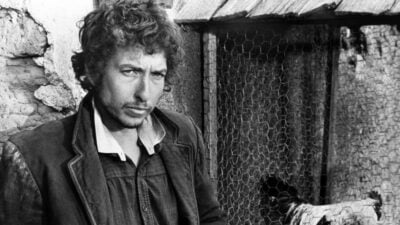
The tambourine was so big that Bob Dylan compared it to a wagon wheel. It belonged to Bruce Langhorne, a quiet Greenwich Village guitarist who sometimes carried a large Turkish frame drum ringed with little bells, and when producer Tom Wilson asked him to play it on one of Dylan’s early sessions, the picture never left the songwriter’s head. “He had this gigantic tambourine,” Dylan wrote in the liner notes to his 1985 box set Biograph. “It was like, really big.” The sight of Langhorne playing it, he added, “just stuck in my mind.”
So the real “Mr. Tambourine Man,” by Dylan’s own account, was a session man most record buyers never saw. Dylan, born May 24, 1941, is 85 and on tour in Europe this fall, and for more than six decades he has watched listeners pin the title on a drug dealer, on God and on a Fellini character. The Byrds made the guessing louder when their electric version hit No. 1 in the summer of 1965, but the man with the drum came first.
Who Was Bruce Langhorne, the Real Mr. Tambourine Man?
Langhorne was born May 11, 1938, in Tallahassee, Florida, and grew up in New York’s Spanish Harlem, where he trained as a young violinist. At 12 he held a cherry bomb too long, and it took the tips of two fingers and part of his right thumb. “At least I won’t have to play the violin anymore,” he remembered telling his mother, as Rolling Stone recounted in his 2017 obituary.
The guitar he picked up instead made him a different kind of musician. “I got to be a very good accompanist because I was really forced to listen,” he said, and Dylan heard it. Langhorne played on “Corrina, Corrina” for The Freewheelin’ Bob Dylan in 1962, then on Bringing It All Back Home in 1965, where his electric lines drive “Subterranean Homesick Blues” and “Maggie’s Farm.” On Dylan’s own recording of “Mr. Tambourine Man,” cut January 15, 1965, it is Langhorne’s guitar weaving the countermelody around the vocal. “If you had Bruce playing with you, that’s all you would need to do just about anything,” Dylan later wrote in Chronicles: Volume One.
Even in Biograph, Dylan hedged a little, saying he thought the song was inspired by Langhorne and admitting, “I don’t know if I’ve ever told him that.” Langhorne took the news with a grin. “I like it. I think it’s a good song,” he told music writer Richie Unterberger, adding that it was “about me. If I wanted to fuel a big ego, that’d be a way to do it.” That settles the source of the image. It doesn’t explain why so many people heard something else.
Why Did So Many Fans Hear a Drug Song?

The theories started almost as soon as the record came out. Dylan began writing the song in February 1964, after a cross-country road trip with friends that took in Mardi Gras in New Orleans, according to biographer Clinton Heylin. With lines about a trip on a “magic swirling ship” and smoke rings of the mind, a generation of listeners decided the Tambourine Man was a dealer and the song was a high set to music.
Dylan has denied that reading for decades. “Drugs never played a part in that song,” he wrote in the same Biograph notes, and he said the smoke rings line was not about drugs either. Drugs, he added, were never that big a thing with him: “I could take ’em or leave ’em, never hung me up.” Fans are free to doubt him, but the drug reading remains a theory, and the songwriter has never endorsed it.
Two other theories have stuck around. Biographer Howard Sounes reported that Dylan cited Federico Fellini’s 1954 film La Strada, with its wandering street performer, as an influence on the song’s mood. And the man who sang it to No. 1 heard a prayer. “I was singing to God and I was saying that God was the Tambourine Man,” Roger McGuinn told Byrds biographer Johnny Rogan. “It was a prayer of submission.” How McGuinn got the song at all is a story of its own.
How Did The Byrds Turn Five Minutes Into Two?
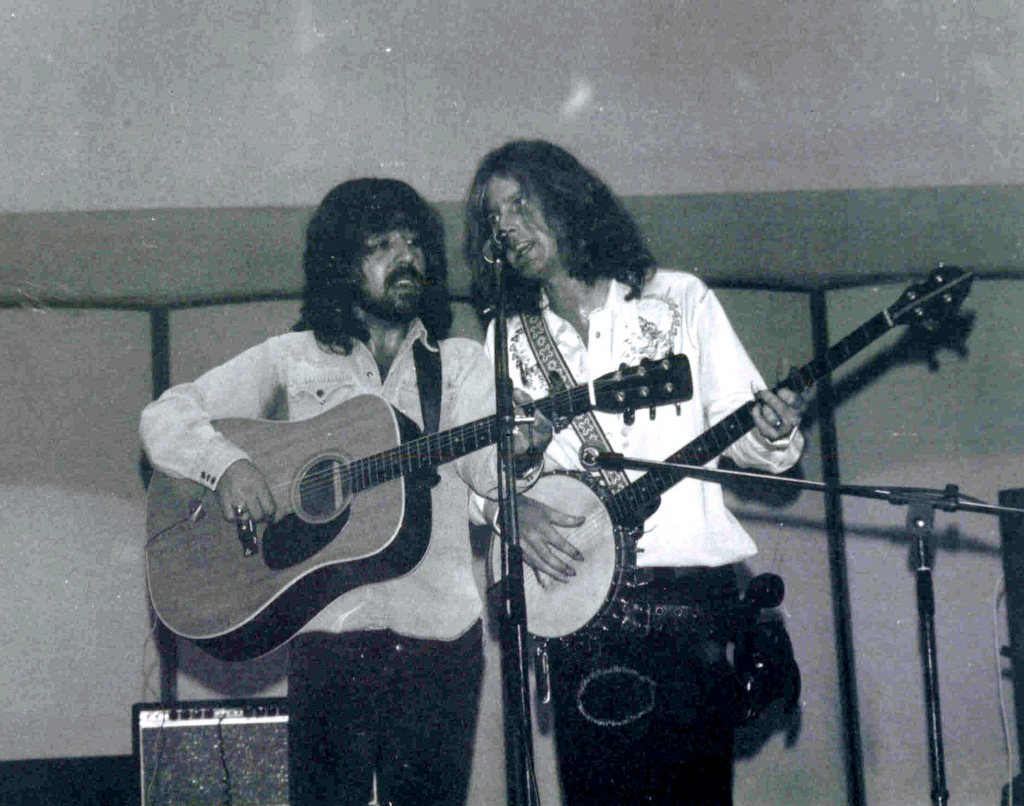
Dylan’s take ran about five and a half minutes, and an earlier demo with Ramblin’ Jack Elliott singing harmony had been shelved. The Byrds’ manager, Jim Dickson, got hold of an acetate of that unused recording and pushed the young band to try it. “When we first heard ‘Mr. Tambourine Man’ it was a long folk song, and it had four or five verses,” McGuinn told DJ Don Wilcock in 1994, in an interview later published by American Blues Scene. “It was much too long for radio. Radio wanted songs about two minutes and 30 seconds at that time.”
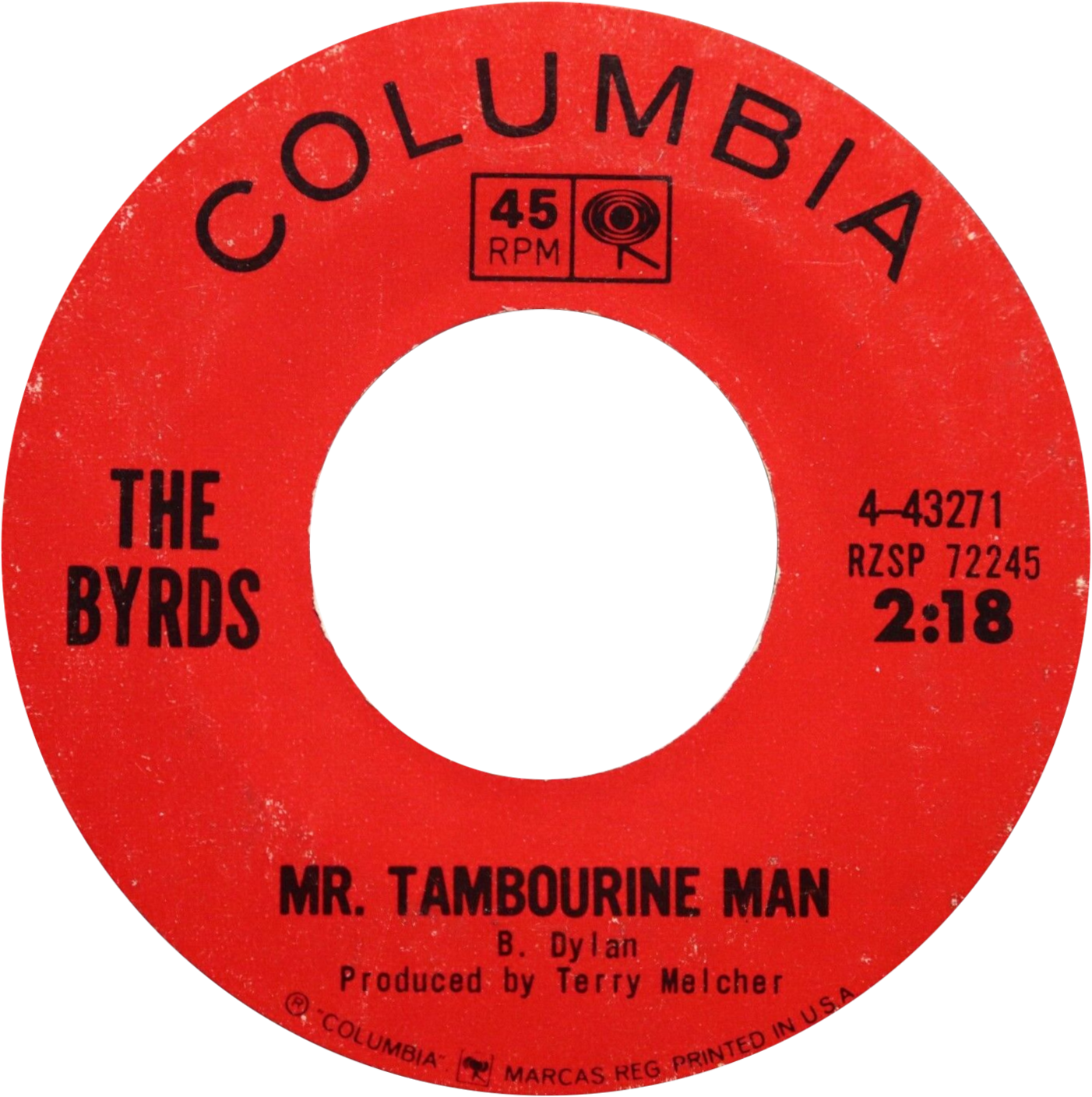
McGuinn kept one verse, changed Dylan’s loping 2/4 feel to a steady 4/4, and opened with the chiming riff from his Rickenbacker 12-string. Producer Terry Melcher, who felt the band hadn’t gelled yet, booked the Los Angeles session players later known as the Wrecking Crew for the January 20, 1965, date at Columbia’s Hollywood studio. Hal Blaine played drums and Leon Russell was among the players, and McGuinn was the only Byrd allowed to play an instrument, while David Crosby and Gene Clark sang the harmonies. The arrangement borrowed its feel from Brian Wilson’s production of the Beach Boys’ “Don’t Worry Baby.”
Released April 12, 1965, the single reached No. 1 on the Billboard Hot 100 on June 26, 1965, and topped the British chart as well, the first time a Dylan song had gone all the way to No. 1 on the Hot 100. Dylan had already heard it at a rehearsal at World Pacific Studios. “Bob said, ‘What’s that?'” McGuinn has recalled of that afternoon. When it clicked, Dylan’s reaction, as Rogan reported it, was “Wow, you can dance to that!” Tom Petty would later say The Byrds changed the world with that sound, and McGuinn, born July 13, 1942, is 84 and was still playing it on tour this October. The man who inspired it took a quieter road.
Where Did Bruce Langhorne’s Music Go Next?
Langhorne kept working in the background. Through trumpeter Hugh Masekela he met Peter Fonda, and he wrote the score for Fonda’s 1971 western The Hired Hand, then for Jonathan Demme’s Fighting Mad in 1976, and he played on the soundtrack for Pat Garrett and Billy the Kid. After a diabetes diagnosis he started a small business making low-sodium, sugar-free African pepper sauces under the name Brother Bru-Bru’s.
He did not release a solo album until 2011, and he called it Tambourine Man. Langhorne died April 14, 2017, at his home in Venice, California, at 78. His friend Cynthia Riddle told The New York Times the cause was kidney failure, and he was survived by Janet Bachelor, his wife of 29 years. His song, meanwhile, is headed back to where it started.
Why Is Dylan Going Back to Where It All Began?
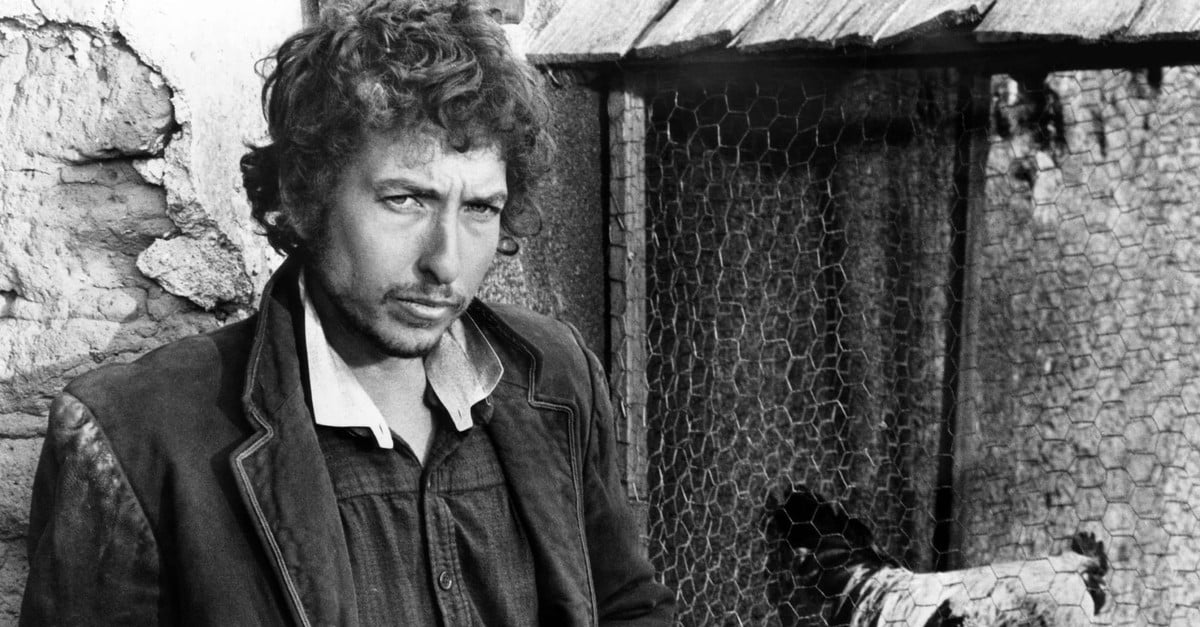
Before he ever recorded “Mr. Tambourine Man,” Dylan tried it out in front of an audience at London’s Royal Festival Hall on May 17, 1964, a concert widely cited as the song’s live debut. He was 22, the recording was eight months away, and nobody in the hall had heard the words before.
This December, Dylan returns to that same hall for five nights, December 3, 4, 5, 7 and 8, his first shows there since 1964, as JamBase reported when the dates were announced in July. Phones will be locked away, so whatever he sings will stay in the room. Whether or not the old song turns up on the set list, the room where it first rang out will be hearing Dylan again 62 years later, and somewhere in that music is a guitarist with a drum as big as a wagon wheel.

 ‘Charlie’s Angels’ Star Kate Jackson Lost An Oscar-Winning Role Over A Schedule
 The Only ‘The Mary Tyler Moore Show’ Cast Members Still Alive Today