

The idea came to John Trimble on a hot drive home in a Volkswagen Beetle with no air conditioning. He and his wife, Bjo, had just visited the set of Star Trek in 1967, and the mood there had soured. Ratings were weak after two seasons on NBC, and the cast around William Shatner’s Captain Kirk seemed to know what was coming. “There ought to be something we could do about this!” John said, as Bjo later recalled for StarTrek.com.
What the couple did next buried a television network in mail and earned the show a third season. Shatner, now 95, went on to play Kirk in seven feature films, in large part because those extra episodes turned Star Trek into a rerun staple. And yet the rescue came with a catch that nobody saw coming, and NBC was the one holding it.
A Fan Couple Who Already Knew The Show From The Inside
The Trimbles were no casual viewers. They had met Gene Roddenberry at the 1966 World Science Fiction Convention in Cleveland, where Bjo staged a fashion show, and they had visited the soundstages several times since. On their last visit, John told KALW in 2022, “The whole atmosphere had changed.” The cast looked depressed, and the couple understood something many fans did not, which was that a show needed roughly three seasons of episodes before it could be sold into syndication.
By then the Trimbles were renting a small house in Oakland, and before starting anything they telephoned Roddenberry and asked whether a letter campaign would help. He gave them his blessing, and according to StarTrek.com, he helped them gather addresses from science fiction conventions, book dealers and the show’s own fan mail. Bjo has always insisted the credit belongs at home. “The whole ‘Save Star Trek’ campaign was John’s fault,” she told Sci-Fi Radio in a 2015 interview quoted by SlashFilm.
They ran it all on a hand-cranked mimeograph machine, and the secret was simple arithmetic.
How The Rule Of Ten Buried NBC In Letters
The first newsletter went out to about 150 of the most active fans the couple knew, according to both SlashFilm and Woman’s World. Each one asked the reader to write NBC and the show’s sponsors and then pass the word to ten more people. “Thus was the Rule of Ten born,” Bjo wrote. Over several weekends, she estimated to KALW, the Trimbles mailed something like 25,000 pieces, with friends babysitting and answering the phone so the cranking never stopped.
On a Saturday night in early January 1968, more than 200 Caltech students carried torches through Burbank to the steps of NBC, according to a Los Angeles Times report from January 8, 1968, later recounted by Gizmodo. One of their signs read, “It Is Totally Illogical to Cancel Star Trek.”
Nobody agrees on how many letters actually reached the network. NBC normally drew about 50,000 pieces of mail a year across its entire schedule, and estimates for Star Trek alone have run from 100,000 to a million. Some executives were convinced Roddenberry was secretly behind it all. “NBC was certain I was behind every fan, paying them off,” he said in the oral history The Fifty-Year Mission, adding that the campaign “surprised me.” On March 1, 1968, at the end of the episode “The Omega Glory,” an NBC announcer told viewers over the closing credits that Star Trek would return in the fall. The unspoken message, as Bjo put it, was “so please stop writing letters.”
The fans had won. Then NBC handed out the new fall schedule.
The Friday Night Slot That Undid The Rescue
Roddenberry had been promised an early Monday slot, but Rowan & Martin’s Laugh-In owned Mondays. According to David Gerrold’s book The World of Star Trek, as recounted by Den of Geek, NBC executive Mort Werner phoned Roddenberry one morning over breakfast to say the network had found the perfect time slot. It was Friday nights at 10:00. It was a slot where the young viewers who had marched and written letters were often out for the night.
Roddenberry stepped back from running the show day to day, and veteran producer Fred Freiberger took over a third season with a smaller budget. “The show was getting sloppy,” Shatner wrote in his 1993 memoir Star Trek Memories. “Our scripts were suffering and cancellation seemed a probability.”
He was right. The crew was told the show was canceled in the first days of January 1969, just before filming wrapped on the episode “Turnabout Intruder” on January 9. NBC finally aired it on Tuesday, June 3, 1969, the last original Star Trek episode the network broadcast. Less than a year after that triumphant announcement, the Enterprise was gone.
What That One Extra Season Really Bought
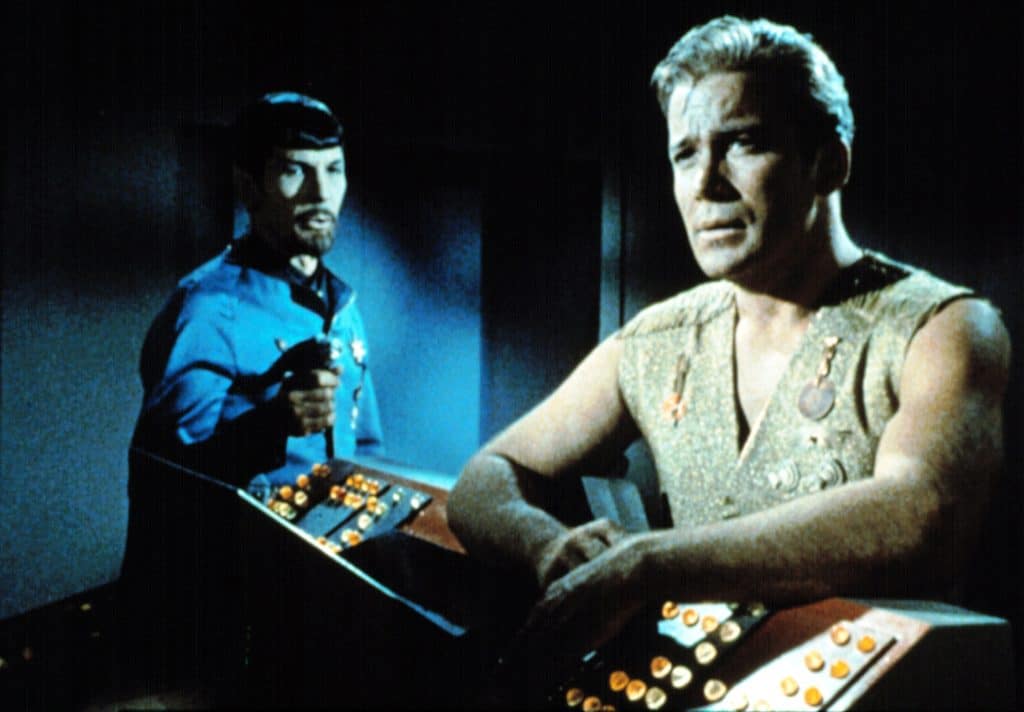
The third season left Star Trek with 79 episodes, just enough for local stations to run it every weekday, and that is where most of us found it. Those reruns built the audience NBC never had, and they brought Kirk and Spock back on the big screen. You can see who from the bridge crew is still with us in our look at the surviving Star Trek cast.
The Trimbles kept going too. Bjo worked on the Star Trek Concordance, the episode reference guide first printed in the couple’s basement in 1969, and in 1976 she rallied fans again to have NASA’s first space shuttle named Enterprise. When Paramount made Star Trek: The Motion Picture in 1979, she and other fans appeared in uniform as crew members in the recreation deck scene. John Trimble died on April 19, 2024, at 87, after 64 years of marriage, and Bjo turned 93 in August.
Shatner, who told NPR in September about beating stage 4 melanoma, is still touring a live stage show this fall. As for the network man who insisted that only 10,000 letters ever arrived, Bjo had an answer ready for him, as she told KALW. “Wow! If we could get shows renewed with only 10,000 letters, that makes us even more powerful than we thought.”



 Dustin Hoffman’s Kids Mostly Grew Up Away From The Spotlight