

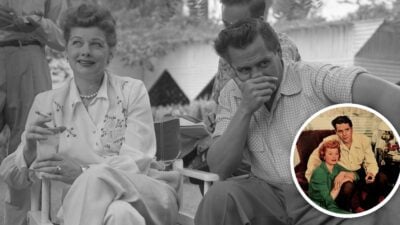
Lucille Ball and Desi Arnaz had been husband and wife since November 30, 1940, more than a decade before I Love Lucy premiered on CBS in October 1951. Yet when the cameras peeked into the Ricardos’ bedroom, America’s favorite married couple turned in for the night on two separate twin beds. The short answer is that nobody wrote a law about it. Twin beds were the cautious habit of the day, carried over from Hollywood, and a network and a cigarette sponsor that were nervous about anything that hinted at what married people do behind a closed door.
The longer answer is more fun, because the Ricardos’ beds were not always as far apart as people remember, and the same nervousness that kept them in separate mattresses also kept a very pregnant Lucille Ball from ever saying the word “pregnant” on the air. Here is what the episodes actually show, what the people who made the show said, and which parts of the story are tall tales.
Were Lucy And Ricky’s Beds Really Apart?

Not at first. Viewers got their first good look at the Ricardo sleeping arrangements in the fourth episode, “Lucy Thinks Ricky Is Trying to Murder Her,” and the two twin beds in that bedroom are shoved right up against each other. The episode recap site WTF Lucy joked that with the mattresses touching, it was “practically an orgy in there.” The Classic TV Database describes the same setup for the show’s first two seasons, from 1951 to 1953, with the two beds pushed together on one box spring.
Even pushed together, they stayed two beds. Each one kept its own sheets and blankets, so Lucy and Ricky could share a pillow talk scene without technically sharing a bed. That small distinction mattered a great deal to the people paying for the show, and it points straight back to where the twin-bed habit came from.
Where Did The Twin-Bed Habit Come From?

It started in the movies. Hollywood’s Production Code said only that the treatment of bedrooms “must be governed by good taste and delicacy,” and it never spelled out a twin-bed rule. In practice, the Code office under Joseph Breen leaned on studios to keep married couples in separate beds, and the look became so standard that audiences stopped noticing it. Early television inherited the caution. The broadcasters’ own Code of Practices for Television, which the National Association of Broadcasters issued in December 1951, was voluntary and aimed at “illicit sex,” but networks and sponsors played it safe anyway.
There was already proof that a real couple could share a bed on TV without the sky falling. Mary Kay and Johnny, a sitcom starring real-life spouses Mary Kay and Johnny Stearns, debuted on the DuMont network on November 18, 1947, and it is generally credited as the first series to show a married couple sharing one bed. It even wrote Mary Kay’s real pregnancy into the show. But it was a small program on a small network, and almost none of it survives. I Love Lucy was a different animal. Within six months of its debut it was drawing 67 of every 100 Monday night viewers at 9 p.m., according to TIME, and that kind of audience made everyone involved more careful, not less. The real test came in 1952, when Lucille Ball found out she was expecting her second child.
Why Couldn’t Lucy Ricardo Say “Pregnant”?

When Ball got pregnant with Desi Arnaz Jr. as the second season was getting underway, CBS and sponsor Philip Morris both balked at showing a pregnant woman on a TV comedy. Desi pushed back hard. When executives floated the idea of hiding Ball behind chairs and tables, his answer, as TIME recounted it, was “Not Lucy.” He wrote directly to Philip Morris chairman Alfred Lyons, and in his memoir Laughs, Luck…and Lucy, head writer and producer Jess Oppenheimer remembered that “Desi sat down and fired off a letter to Alfred E. Lyons, chairman of the board of the Philip Morris Company.” The sponsor gave in.
The vocabulary did not. CBS considered “pregnant” too vulgar for the air, according to Mental Floss and The A.V. Club, so the writers used “expecting” instead, which Ricky turned into “‘spectin’.” The episode that broke the news, which aired December 8, 1952, was titled “Lucy Is Enceinte,” borrowing the French word to get around the ban. Here is the funny part. The very next episode, which aired December 15, was titled “Pregnant Women Are Unpredictable.” The A.V. Club pointed out that it got away with it because episode titles never appeared on screen, so viewers at home never saw the forbidden word.
Who Had To Approve The Baby Episodes?
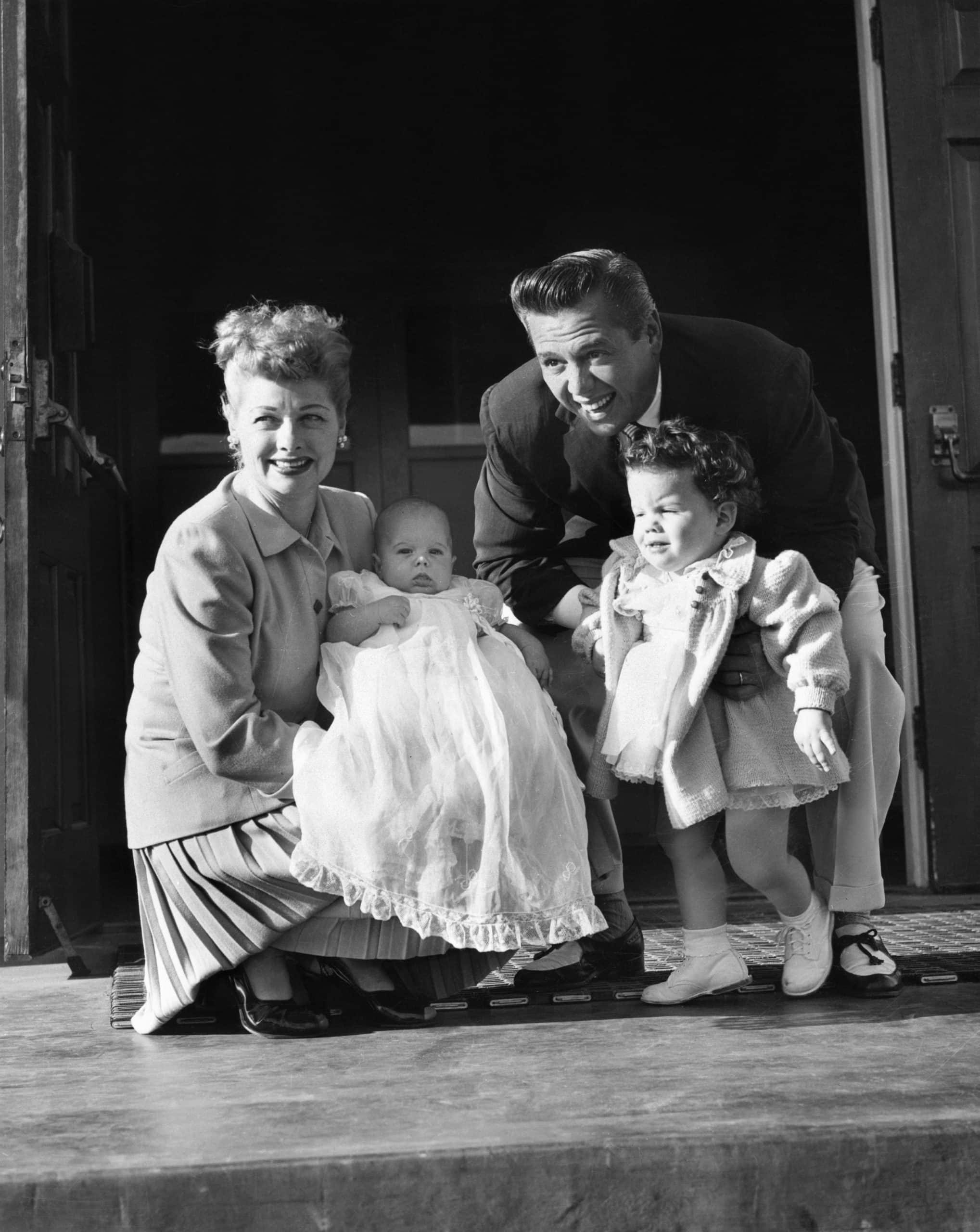
Clergymen, believe it or not. Oppenheimer wrote that he came up with a way to calm everyone’s nerves: “Why not arrange for a priest, a minister, and a rabbi to approve each of the ‘baby show’ scripts,” he recalled in his memoir. “If any of them found anything objectionable, we would simply remove it!” Desi confirmed the arrangement to United Press on the day of the birth episode. “We had a rabbi, a priest and a Protestant minister on the set to approve those sequences,” he said, as the San Francisco Chronicle reported on January 19, 1953.
The panel signed off, and the result was one of the biggest nights in television history. Ball delivered Desi Arnaz Jr. by scheduled cesarean section on Monday, January 19, 1953, the same day “Lucy Goes to the Hospital” aired, and an estimated 44 million Americans watched Little Ricky arrive. That was more than tuned in the next day for President Eisenhower’s inauguration. We told the full story of that storyline in how Lucille Ball’s pregnancy changed television history, and the show’s off-camera tension had its own chapter in the long-running feud between Vivian Vance and William Frawley. Once the baby arrived, though, something happened in the Ricardos’ bedroom that fans still argue about.
What Happened To The Beds After Little Ricky?

The most repeated story is that once Little Ricky was born, CBS asked for the twin beds to be pulled apart. The Classic TV Database says the network made the request “to diminish the impact of the suggested sexual history of Lucy and Ricky,” since a baby was now living proof of what the couple had been up to. That claim has circulated in trivia collections for years, but no memo, interview with the cast or account from Oppenheimer has surfaced to confirm that CBS gave the order. Treat it as a plausible explanation rather than a documented fact.
What anyone can check is the screen itself. In the later seasons the Ricardos’ twin beds stand apart, and according to the same trivia sources they were pushed together just once more, when Lucy and Ricky moved into a bigger apartment in the Mertzes’ building. The couple who brought a real baby home in front of 44 million people, and who had been married for more than twelve years by then, finished the show’s run sleeping a few feet apart. Off camera, Lucille Ball and Desi Arnaz’s marriage ended in May 1960, a few weeks after their final Lucy-Desi Comedy Hour episode as Lucy and Ricky, “Lucy Meets the Moustache,” aired on April 1.



 The Only ‘One Day At A Time’ Cast Members Still Alive Today, Including One Who Is 88