

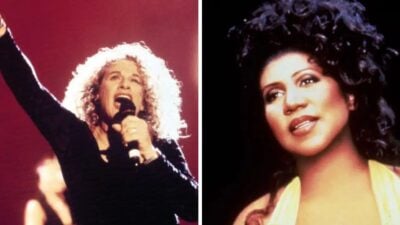
Most hit songs begin with a melody or a broken heart. This one began with a man leaning out of a car on a New York street in 1967, a title tossed at a young songwriting couple, and a single night of work that gave Aretha Franklin one of the defining records of her life. Parade revisited the story this week, and it is one Carole King has been telling for most of her career, though never quite the way the man in the car told it.
King turned 84 on February 9, and she has her own version of how it all happened, in her 2012 memoir and on her most famous album. Then there is the December night in 2015 when the song came back to her in a theater full of people, with the President of the United States sitting nearby, and that may be the best part of the whole story.
Who Was the Man in the Car, and What Did He Want?

He was Jerry Wexler, the Atlantic Records producer who had brought Aretha Franklin to the label and was hunting for songs worthy of her. King and her husband and writing partner, Gerry Goffin, were walking in Manhattan when Wexler’s limousine pulled up beside them, and the window came down. “I’m looking for a really big hit for Aretha,” King remembered him saying, as she told CNN in 2022. “How about writing a song called ‘A Natural Woman?'”
Wexler remembered the scene a little differently. Lou Adler, who went on to produce King’s records, told Songfacts that Wexler described Goffin coming out of a building while Wexler drove past and yelled the title out the window. Whichever way it happened, the couple felt the phrase was so important to the song that they gave Wexler a share of the writing credit. He never stopped enjoying that. When Adler phoned him on his 90th birthday, Wexler said, “Isn’t it amazing what those kids gave me? The checks keep coming in, and I’m really happy about it.”
What those kids gave him took exactly one night to make.
How Did Gerry Goffin Turn Two Words Into a Song Overnight?
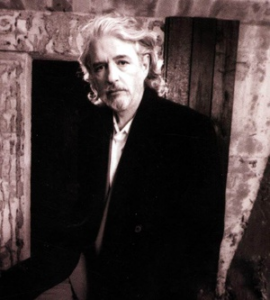
In the Goffin and King partnership, Gerry wrote the words and Carole wrote the music. King explained to Terry Gross on NPR’s Fresh Air in 2012 why she knew he was her lyricist. She pointed to “his ability to say in really simple words big ideas, big feelings, big thoughts,” and said he “had the ability to get inside a woman’s head and say the things women were thinking.” A song about a woman who finally feels like herself because of someone’s love was exactly that kind of job.
King built the music on the gospel chords she had absorbed as a young writer, because she “was listening to a lot of what they then called black music,” as she put it to Gross. “And then we went home and then we made the demo, and then they took the demo and ran with it,” she said. Wexler produced Franklin’s record himself, and Atlantic released “(You Make Me Feel Like) A Natural Woman” in September 1967. It climbed to No. 8 on the Billboard Hot 100 and No. 2 on the R&B chart.
King told NPR it was “a remarkable feeling to hear a song of yours come back with all the embellishments” that a great singer adds, “only even better.” She had given the song away, and four years later she decided to sing it herself.
Why Did Carole King Sing It Herself on ‘Tapestry’?

By then King and Goffin had divorced, and she had moved west to start over as a performer. In January 1971, she recorded “Natural Woman” for Tapestry, with Lou Adler producing. Where Aretha’s version soars, King’s is quiet and close, built around her piano and Charles Larkey’s bass, and she sings it almost the way you would say it to someone across a kitchen table. Rolling Stone critic Jon Landau called it “an entirely fresh and original interpretation.” If you owned a copy of Tapestry, and millions of people did, you know the one. The album spent 15 weeks at No. 1 and won four Grammys.
The song never really left her. When she wrote her memoir in 2012, she called it A Natural Woman, and she told NPR that “in the book I have the story of how we got the title of ‘Natural Woman’ from Jerry Wexler.” Wexler died in August 2008 at 91, and Goffin died in June 2014 at 75. That left King as the last of the three credited writers when the song’s most famous voice came to sing it back to her.
What Happened When Aretha Sang It Back to Her?

On December 6, 2015, King was one of the honorees at the Kennedy Center Honors in Washington. She was 73, and so was Aretha Franklin, who had been born just six weeks after her in 1942. Franklin walked out in a floor-length fur coat, set her purse on the piano and sat down to play. Not even a minute in, the camera cut to President Obama wiping away a tear, PBS NewsHour reported. He later told The New Yorker, “American history wells up when Aretha sings,” as NBC News recalled after her death.
Halfway through, Franklin rose from the piano, walked downstage and let the coat fall to the floor. “It’s been a long time since I’ve done Kennedy Center, and I wanted to have a peerless performance,” she told Vogue the next year, and once she was sure of her voice, her thought was simple: “Let’s get out of this coat! I’m feeling it. Let’s go!” She died on August 16, 2018, at 76, and that night is still one of Aretha Franklin’s most emotional performances.
King spent most of the song on her feet, singing along to Goffin’s words. The show’s musical director, Rickey Minor, told The New York Times in 2018 that she “had never seen Aretha play piano and sing her song.” The phrase Jerry Wexler had called out from a car 48 years earlier was coming back to its writer from the greatest voice that ever sang it, and King could hardly take it in. “Carole just kept saying, ‘Oh my God, oh my God,'” Minor remembered, “and holding her head.”


 73-Year-Old Lauren Tewes Went From Waitress To ‘Love Boat’ Cruise Director, Then Traded Hollywood For A Kitchen
 Dick York Collapsed On The ‘Bewitched’ Set Before Darrin Was Recast—Here’s What Happened