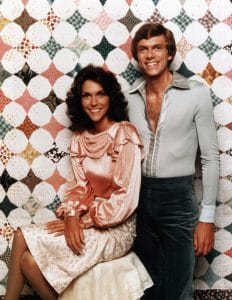

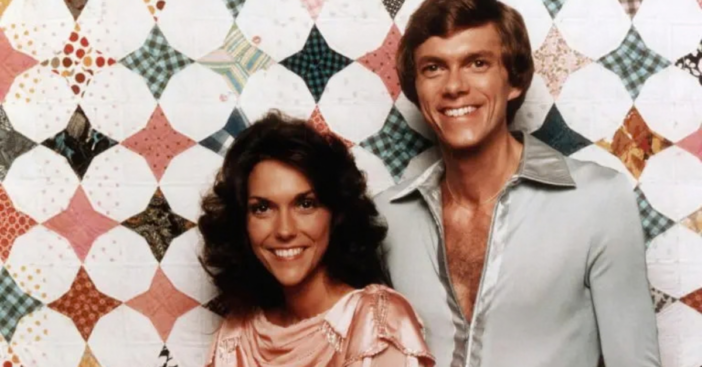
Richard Carpenter turns 80 on October 15. His sister’s voice is the one the world remembers, and he would be the first to say so. Yet every note she sang sat inside an arrangement he built.
The Carpenters sold records by the millions in the 1970s. As Richard Carpenter turns 80, he is still the keeper of that sound and the brother who has never stopped speaking Karen’s name.
How Richard Carpenter Built The Sound

He was born October 15, 1946, in New Haven, Connecticut, and was the family’s piano prodigy. In 1965 he formed the Richard Carpenter Trio with his younger sister on drums. The group won a Battle of the Bands at the Hollywood Bowl the next year.
Herb Alpert signed the siblings to A&M Records on April 22, 1969. One year later their recording of “(They Long to Be) Close to You” went to No. 1.
That breakthrough recording showed exactly what Richard could do with a song. In a 2024 interview with the Recording Academy, he recalled how Herb Alpert handed him the sheet music for “(They Long to Be) Close to You,” a Burt Bacharach and Hal David composition that had already been recorded by other artists. Richard developed the distinctive piano introduction and added an elaborate vocal ending, layering his and Karen’s voices until a simple four-part harmony sounded like 12 singers. He remembered people at A&M Studios opening the door during recording sessions just to hear what the siblings were creating.
Richard chose the songs and wrote the arrangements. He also co-wrote several of their best-loved hits, including “Goodbye to Love” and “Yesterday Once More.”
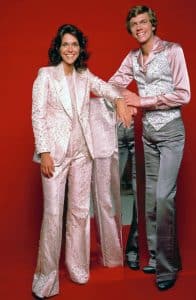
Richard wasn’t afraid to take musical risks, either. While recording “Goodbye to Love” in 1972, he decided the ballad needed a powerful electric guitar solo and recruited guitarist Tony Peluso, whom he had heard performing with another band. Peluso initially worried that his playing might be too aggressive for the Carpenters’ gentle sound, but Richard encouraged him to let loose. The resulting fuzz-guitar solo became one of the record’s most memorable features, although Richard later recalled receiving angry letters from listeners who thought the duo had abandoned its soft-rock roots.
Although Karen became famous for her unmistakable contralto voice, she initially preferred sitting behind a drum kit. Richard has recalled that she was an exceptionally talented drummer, particularly when using brushes, and performed on recordings including “This Masquerade” and “Flat Baroque.” He began encouraging her to sing when she was still a teenager, recognizing something special in her voice. In his 2024 interview with the Recording Academy, Richard also marveled at her extraordinary breath control, recalling how other professional singers would ask how she managed to sustain such long phrases without taking a breath.
The story turned tragic on February 4, 1983, when Karen died at 32. Richard has spent the years since caring for the catalog, and he has shared his favorite memories of her with fans.
Life At 80 In Thousand Oaks
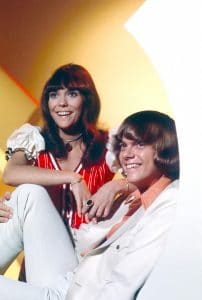
Carpenter married Mary Rudolph in 1984. They raised five children in Thousand Oaks, California.
Music is still a family affair. He performs from time to time with his children as the Carpenter Family Singers, according to Remind Magazine. Their sets mix Carpenters songs with standards.
Preserving Karen’s recordings has also remained an important part of Richard’s life. In 1989, he assembled Lovelines, an album featuring previously unreleased performances, including four songs originally recorded for Karen’s solo project in 1979 and 1980. Decades later, he continued revisiting the siblings’ extensive catalog, overseeing collections of rare recordings, remixes, and remastered favorites. In 2024, the Carpenters released Christmas Once More, a newly remastered collection of their beloved holiday songs. For longtime fans, these releases have offered opportunities to hear Karen’s voice again, sometimes in recordings that were unavailable during her lifetime.
He has also kept telling the story himself. In 2021 he co-wrote the book Carpenters: The Musical Legacy. The album Richard Carpenter’s Piano Songbook followed in January 2022, with solo piano versions of the hits.
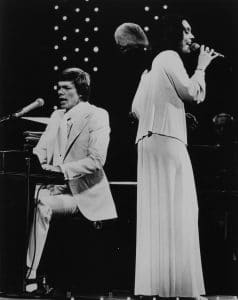
For Richard, however, preserving the Carpenters’ music has never meant trying to recreate the partnership he lost. When the Recording Academy asked in 2024 whether he had considered forming another band after Karen’s death, he explained that any new musical partnership would have felt incomplete without her. More than four decades later, he still thinks about the songs they might have recorded together. He also revealed that he had kept tapes of their live performances, recorded night after night while the siblings were touring. Those recordings preserve not just Karen’s famous voice, but the remarkable consistency of her performances on stage.
Richard once described his place in a changing music industry with typical modesty. “Music is a different world from when Karen and I were signed by Herb Alpert in 1969,” he told the Associated Press in 2008. “But I feel I have some talent.” Nearly six decades after the Carpenters signed their first recording contract, millions of listeners would undoubtedly agree. At 80, Richard remains the man who helped create those unforgettable harmonies, and the brother determined to make sure Karen’s voice is never forgotten.