

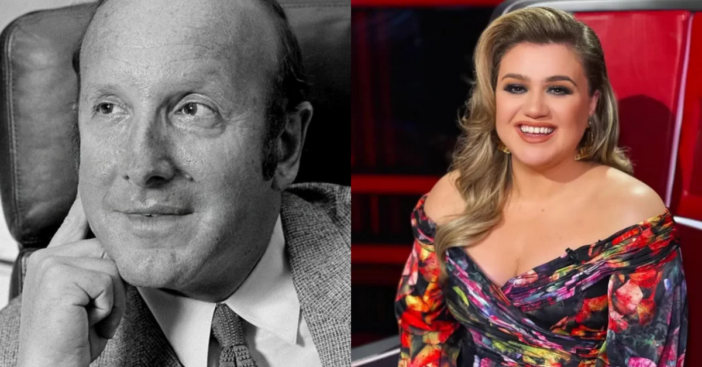
Following Clive Davis’s death at age 94, fans have revisited his remarkable influence on the music industry and his sometimes-complicated relationships with the artists he managed. One of his most public disagreements involved Kelly Clarkson, who repeatedly challenged his account of their creative clashes.
The Clive Davis-Kelly Clarkson conflict began while the singer was establishing herself beyond her American Idol victory. Although their partnership produced successful music, they disagreed over songs, production choices, and how Davis later described their private conversations.
They Disagreed Over Clarkson’s Biggest Songs

According to Nicki Swift, in his 2013 memoir, The Soundtrack of My Life, Davis said Clarkson opposed adding “Since U Been Gone” and “Behind These Hazel Eyes” to Breakaway. He also recalled an emotional meeting in which she supposedly cried while he tried to persuade her to accept his vision for the record.

Clarkson quickly disputed that version of events. She said she never opposed “Since U Been Gone” and instead pushed for a stronger, guitar-driven sound. According to Clarkson, she became emotional during a different discussion after Davis criticized “Because of You,” a deeply personal song she had helped write about her family experiences.
The Private Disagreement Between Clive Davis And Kelly Clarkson Became a Public Feud

After Clarkson challenged his memoir, Davis responded publicly by describing her as fiercely independent and suggesting she sometimes spoke without considering the consequences. However, he also acknowledged that her direct personality helped make her appealing to fans. Their competing statements turned what had begun as a creative disagreement into a long-running celebrity feud.

Clarkson revisited the conflict in 2017, claiming Davis allowed male executives to dismiss her songwriting abilities during a meeting. In 2023, she told The Howard Stern Show that while she respected Davis’ success, she did not personally like him. Their story highlights the tension that can arise when artists and executives clash over creative control.