

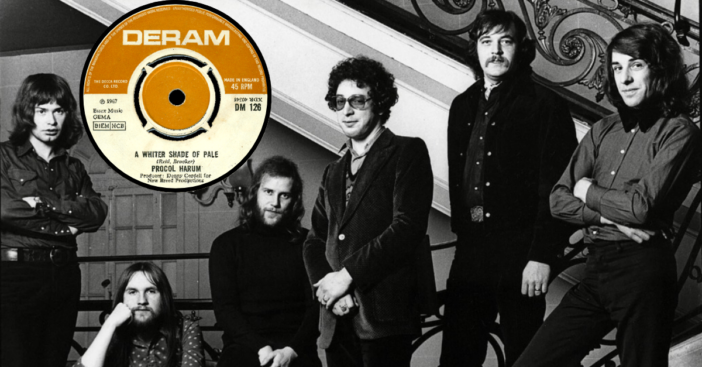
Procol Harum’s “A Whiter Shade of Pale” has kept listeners puzzled since the summer of 1967, and the man who wrote the words always said there was no secret code to crack. Keith Reid described the song as a love story told in images. “It’s sort of a film, really, trying to conjure up mood and tell a story. It’s about a relationship,” he told Songfacts in 2009. Its famous title line came from a remark he overheard at a party.
The song’s second mystery, who actually wrote that haunting organ melody, took until 2009 and Britain’s highest court to settle. The Law Lords ruled unanimously that organist Matthew Fisher was a co-writer of the music alongside singer Gary Brooker, which left Fisher with a 40 percent share of the music copyright. Getting there took four years of court battles, and his claim very nearly failed because he had waited 38 years to bring it.
How Did a Debut Single Become the Sound of 1967?
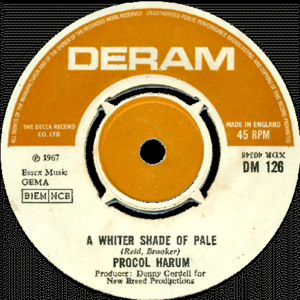
Deram Records released the single in Britain on May 12, 1967, two weeks before Sgt. Pepper arrived. It reached No. 1 on the UK chart in early June and held the top spot for six weeks, right through the season Americans remember as the Summer of Love. In the States it climbed to No. 5 on the Billboard Hot 100, and over the decades it has sold more than 10 million copies worldwide, as NBC News noted when Brooker died.
What made it stick was the sound. Brooker sang and played piano, and Fisher’s Hammond organ floated over everything with a melody that echoed Bach. Brooker never hid the classical roots. “I wasn’t consciously combining rock with classical, it’s just that Bach’s music was in me,” he told Uncut. Our own look inside “A Whiter Shade of Pale” traces how quickly the record took off. The words, though, were the part people kept arguing about.
What Did Keith Reid Say “A Whiter Shade of Pale” Really Means?
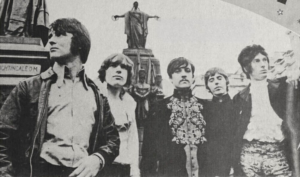
Reid was barely 20 when he wrote the lyrics, and he started with nothing more than a phrase. At a party, he heard Guy Stevens of Island Records tell his wife that she had turned “a whiter shade of pale,” a story told in The Rough Guide to Cult Pop and in Island founder Chris Blackwell’s 2022 memoir Islander. “I had the phrase ‘a whiter shade of pale,’ that was the start, and I knew it was a song,” Reid told Uncut in 2008. “It’s like a jigsaw where you’ve got one piece, then you make up all the others to fit in.”
He insisted the pieces added up to something simple. “I was trying to conjure a mood as much as tell a straightforward, girl-leaves-boy story,” he said in the same interview, adding that books shaped the imagery and drugs did not. Read that way, the song follows a couple at a crowded party who “skipped the light fandango” and “turned cartwheels ‘cross the floor” while the room spun. By the end, her face, “at first just ghostly,” turns that whiter shade of pale. Some of the lines in between, however, he never fully explained.
Which Lines Are Still Unsettled?
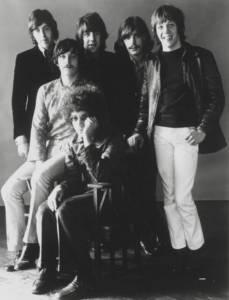
The “sixteen vestal virgins who were leaving for the coast” remain the biggest puzzle. In ancient Rome, the vestal virgins were priestesses sworn to chastity, and writers such as Claes Johansen and Tim de Lisle have read the song as a drunken seduction told through sea voyage imagery, with the virgins hinting at innocence being left behind. That reading is persuasive, but Reid never confirmed it, so it stays an interpretation rather than an answer.
The miller is a different case, because Reid shot that theory down himself. Readers have long assumed “as the miller told his tale” pointed to Chaucer’s bawdy Canterbury Tales, yet he told Songfacts, “I’d never read The Miller’s Tale in my life,” and said, “it certainly wasn’t a conscious idea for me to quote from Chaucer, no way.” A fandango, for the record, is a lively Spanish dance, which fits his picture of a couple whirling across a floor. If the words were settled by the writer’s own say, the music was another matter.
Who Really Wrote the Organ Melody Everyone Hums?
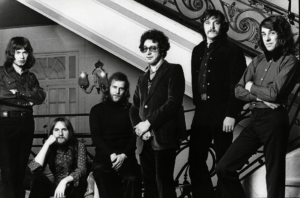
For nearly four decades, the label read Brooker and Reid. Brooker’s side said the two had written the song before Fisher joined the band in early 1967, and that Fisher had added his part to a song that was already finished. Fisher, who left Procol Harum in 1969, said the organ line that opens the record was his own composition. He finally sued Brooker and the publisher in 2005.
On December 20, 2006, Mr Justice Blackburne sided with Fisher in the High Court. “I find that the organ solo is a distinctive and significant contribution to the overall composition,” he ruled, as NME reported, but he gave Fisher 40 percent of the music copyright rather than the half he sought, and nothing from before 2005. Fisher said the point was recognition. “This was never about money. There will not be a lot of that anyway,” he said, as Best Classic Bands recorded. “But this was about making sure everyone knew about my part in the authorship.”
Fisher had built a whole second life by then. After years producing records for other artists, he earned a computing degree at Wolfson College, Cambridge, in 1995 and went to work as a programmer, and he played with a reunited Procol Harum from 1991 to 2004. His victory did not last long, though.
Why Did a 38-Year Wait Nearly Cost Matthew Fisher Everything?

In April 2008 the Court of Appeal agreed Fisher had co-written the music but took the money away anyway. Lord Justice Mummery found him “guilty of excessive and inexcusable delay in asserting his claim,” adding that “he silently stood by and acquiesced in the defendant’s commercial exploitation of the work for 38 years,” as the BBC reported. Royalties went back to Brooker and Reid.
On July 30, 2009, the House of Lords reversed that decision unanimously in Fisher v Brooker. English law sets no time limit on a copyright claim like his, the Lords held, and Brooker had not been harmed by the wait. The writing credit now reads Brooker, Reid and Fisher, and The Times reported in Brooker’s 2022 obituary that the fight had cost him about £1 million in legal fees.
All three men have since grown old with the song. Brooker died of cancer at home on February 19, 2022, at 76, and Reid died of cancer in a London hospital on March 23, 2023, also at 76, as uDiscover Music reported. Fisher, born March 7, 1946, turned 80 this year. The line he waited 38 years to claim found its warmest tribute in the judgment itself, where Baroness Hale wrote, “As one of those people who remember the sixties, I am glad that the author of that memorable organ part has at last achieved the recognition he deserves.”