


For 69 episodes, Lieutenant Columbo never once said his own first name out loud. Fans who paused the tape found a different story. The name on his police ID is Frank, and it shows up in close-ups across the show’s run, most famously in the 1971 episode “Dead Weight.”
So the closest thing to a real answer for the Columbo first name question is “Frank.” The more famous answer, “Philip,” was a fake. A trivia writer invented it on purpose as a trap, and it ended up at the center of a $300 million lawsuit against Trivial Pursuit.
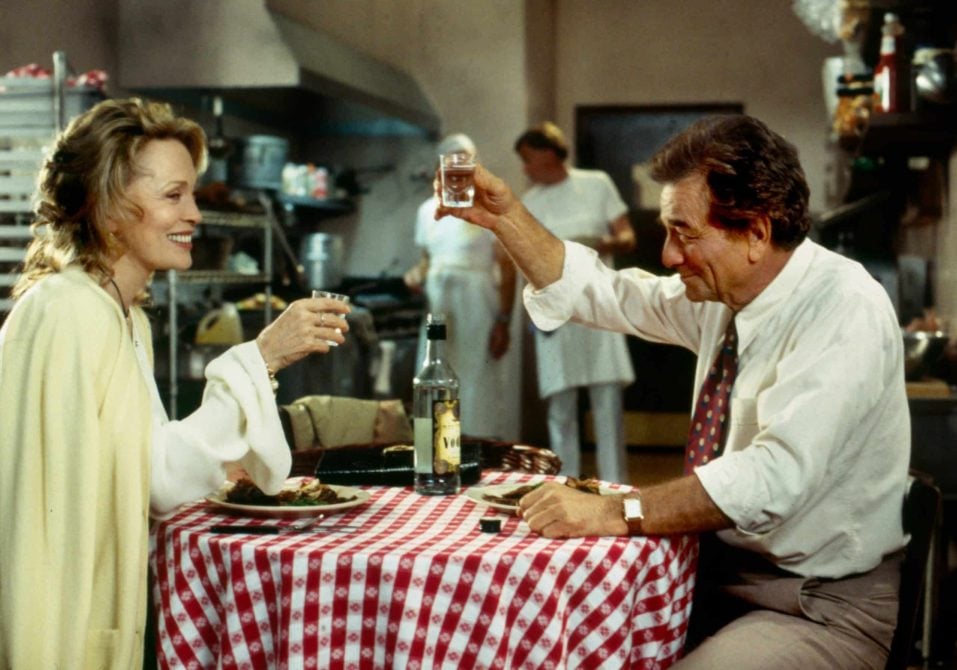
The Short Answer: Frank, But Only On Paper
According to Wikipedia’s history of the series, Columbo’s first name is never spoken in the show. The name “Frank Columbo” or “Lt. Frank Columbo” can be seen in print on his police identification in a handful of episodes.
The best-known sighting comes early. In “Dead Weight,” a Season 1 episode from 1971, the lieutenant holds out his badge wallet for identification. Mental Floss notes that freeze-frame viewers can read the name “Frank” on it. The Columbophile blog, which has reviewed every episode, also names “Dead Weight” as the clearest example.
That moment flashed by in 1971, years before most families owned a VCR. Almost nobody watching at home could have caught it.
Where The “Philip” Myth Came From
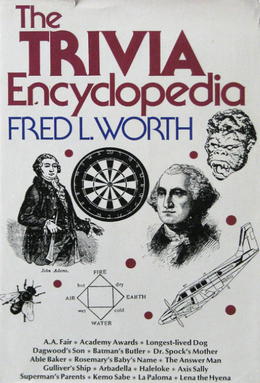
Many people who grew up in the 1980s will swear the answer is Philip. That one traces back to a single book.
Fred L. Worth was a trivia writer from Sacramento. His Trivia Encyclopedia came out in the 1970s and was followed by sequels. To catch anyone copying his work, he planted one made-up fact in the pages: that the lieutenant’s full name was Philip Columbo.
Worth admitted the trick himself. “I made it up so I would know if anyone ever used my books,” he told UPI in October 1984.
Then Trivial Pursuit arrived. The board game became a sensation in the early 1980s, and one of its cards asked for Columbo’s first name. The answer printed on the back was Philip.
The $300 Million Lawsuit Over A Fake Name

Worth spotted his invented fact and went to court. UPI reported that he filed a $300 million federal suit in Los Angeles. He named the game’s publisher Selchow & Righter, the Canadian company Horn Abbott, and the game’s creators.
The fake name proved the game’s writers had used his book. It did not win him the case. The makers of Trivial Pursuit admitted lifting trivia from Worth’s work, according to the University of British Columbia‘s IP law blog. The courts still ruled against him. Facts, the Ninth Circuit Court of Appeals found in 1987, cannot be owned. “The discovery of a fact, regardless of the quantum of labor and expense, is simply not the work of an author,” the court wrote.
Worth lost at trial and lost on appeal. The Supreme Court declined to take the case in March 1988. His invented name outlived the lawsuit, though, and it is the reason so many game-night players still answer “Philip.”
What The Show Actually Shows
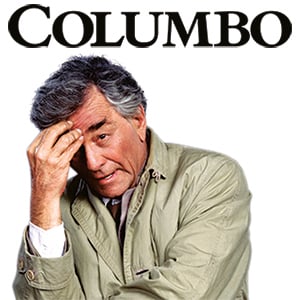
“Dead Weight” was not the only slip. The clearest example came after the move to ABC. In the 1989 episode “Grand Deceptions,” an evidence bag carries the words “Lieutenant Frank Columbo.” Wikipedia and Columbophile both cite that bag.
What the show never did was let the man say it. Columbo talked constantly about his wife, and viewers never saw her either. He never gave his own first name in dialogue. That mattered to the character. The killers always knew him as “Lieutenant,” a rumpled title they badly underestimated.
The rank was the whole joke. Many of the guest stars he chased were rich and polished. Jack Cassidy, for example, played a smooth killer three times between 1971 and 1976. Our story on how Shaun Cassidy remembers his father, Jack Cassidy, shows the kind of polish those villains brought.
What Peter Falk And The Creators Said
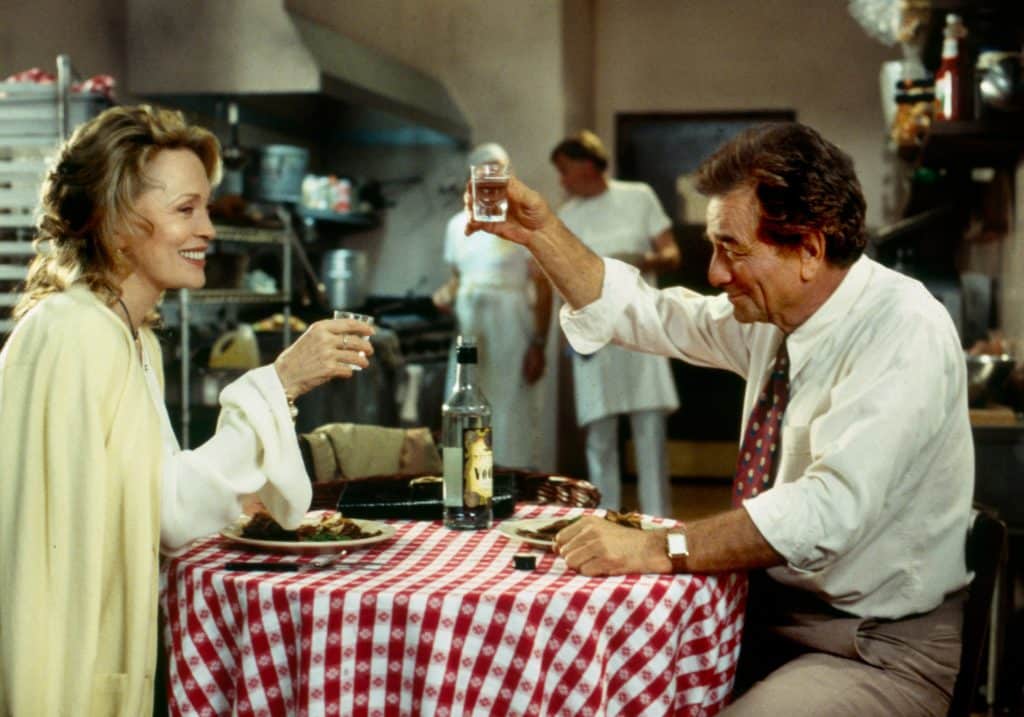
Peter Falk was asked about the name for decades. His answer was a joke. The Associated Press obituary that ran when he died in June 2011 at 83 notes that Columbo’s first name was one of the details kept from viewers. “Falk joked that it was ‘Lieutenant,'” it reads.
Falk also saw a lot of himself in the role. “I’m just as sloppy as the lieutenant but not nearly as smart,” he once said, according to that same AP obituary.
Richard Levinson and William Link created the detective. He first appeared in 1960 in a live TV play called “Enough Rope,” played by Bert Freed. Falk took over in the 1968 TV movie Prescription: Murder. Link was still asked about the first name years later. The Television Academy’s 2002 oral history with Link includes a segment titled “On ‘Columbo’ never having a first name.” According to Columbophile, both creators always held that the first name was never established. Levinson died in 1987 at 52, and Link died in December 2020 at 87.
Why It Still Matters
So which is it? On screen, the only name anyone can point to is Frank, and it lives on props rather than in the scripts. Philip is a proven fabrication. The people who made the show never treated either one as official.
The badge detail has a second life now that every episode streams in high definition. A clue that once lasted a split second can be paused and studied by anyone. It suits a detective who solved every case by noticing what everyone else missed.
The Philip mix-up left its own mark too. Legal writers still cite Worth’s case as a classic “copyright trap.” It also helped settle that facts cannot be owned, even when a writer works hard to gather them. That matters to anyone who has ever compiled a list of facts. A man in a wrinkled raincoat ended up in that legal history without ever saying his first name.




 The Zombies’ Rod Argent Revealed Who The Girl In “She’s Not There” Really Was, And Fans Had It All Wrong