

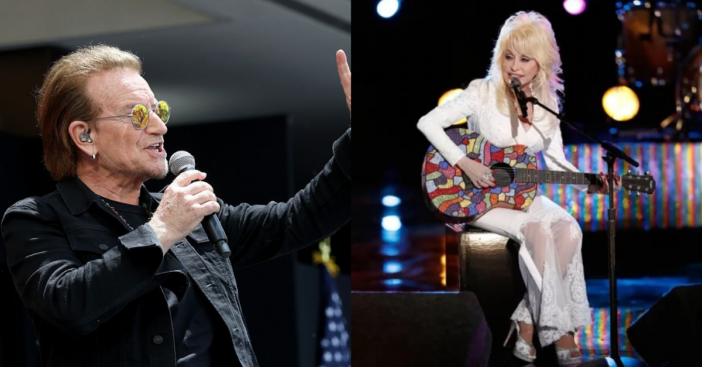
Dolly Parton spent seven decades building one of the most beloved careers in country music, and her final trip to the recording studio now carries an especially emotional weight. The late singer appears alongside Bono on “Torn,” the closing track from U2’s upcoming album Carnaval de Luz, due Nov. 13.
According to Rolling Stone, the Dolly Parton final recording came together in June, just months before her death at 80 in August. Bono has since admitted that hearing her voice on the song has become difficult, particularly because Parton was already ill when she recorded her part and still made the effort to sing.
Dolly Parton’s Final Recording Came Together During Her Illness

Bono originally approached Parton about contributing to a separate project influenced by Irish folk music. After hearing some of his ideas, however, Parton suggested another possibility: a song of her own called “Torn.” Bono and Snow Patrol’s Johnny McDaid then reworked the lyrics around the story of a mother watching her family fall apart, and Parton agreed to record the new version.
Her determination left a lasting impression on Bono. He recalled that Parton got out of bed while ill to record the vocal and “sang her heart out.” Hearing the finished performance now carries a different emotional weight for him, and he admitted, “I can’t even listen to it now.” Parton shares a writing credit on the track with U2 and McDaid.
Dolly Parton Heard and Approved the Song Before Her Death
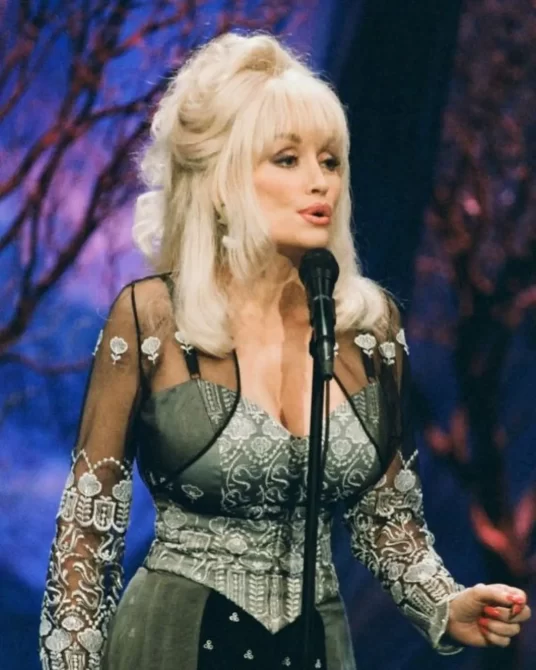
Parton heard and approved the completed mix of “Torn,” with producer Garret “Jacknife” Lee saying she was proud of her performance and loved the final recording. The song also features Daniel Lanois on pedal steel and Larry Mullen Jr. on drums. While “Bound to Ride” was released posthumously, it was recorded years earlier, making “Torn” Parton’s last known vocal recording.
For fans, the Dolly Parton final recording adds a poignant closing chapter to a career filled with songs that crossed generations and genres. Bono’s difficulty listening to the track speaks to the personal connection behind the collaboration, but Parton’s reaction to the finished song offers something comforting too: she heard the work, loved what they had created, and knew that one more piece of her voice would eventually reach listeners.