

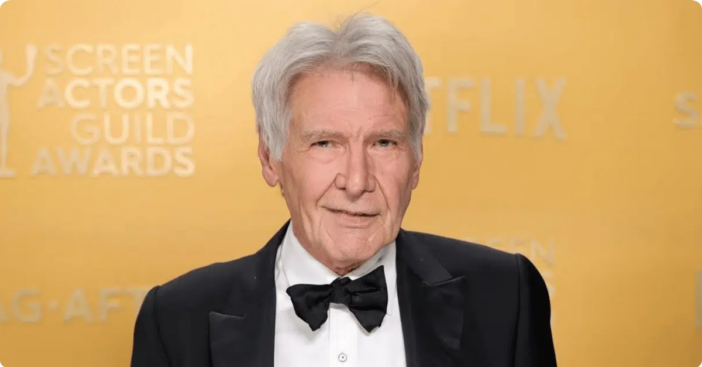
For more than half a century, Harrison Ford has embodied adventure, resilience, and quiet authority on screen. From space operas to sweeping action franchises, his presence shaped generations of moviegoing memories. Now, at 83, the conversation around Harrison Ford’s retirement has taken on a more reflective tone—one rooted not in finality, but in fulfillment.
The latest discussion emerged during a press event for Shrinking, the Apple TV+ series that has given Ford one of the most introspective roles of his career. Rather than sounding weary or detached, his words carried gratitude. They suggested an actor taking stock of the journey, not rushing toward the exit.
Harrison Ford Retirement Comments Hint at Contentment

While speaking on a panel alongside his Shrinking castmates, Ford addressed what comes next after a role that challenged and nourished him creatively. According to Hello Magazine, he acknowledged that if the series were to mark the end, “that would be sufficient.” The remark stood out not as an announcement, but as a quiet admission of peace with whatever the future holds.

Ford described the work as different from anything he has done before, noting that it felt meaningful and deeply valuable. In Shrinking, he plays a therapist living with Parkinson’s disease, a role that leans more on emotional precision than spectacle. That change seems to be at the heart of the current discussion about Harrison Ford’s retirement because it shows an actor who is more interested in purpose than momentum.
Harrison Ford’s Retirement Talk Meets a Lifetime of Contradictions

What makes this moment especially compelling is Ford’s long-standing resistance to the idea of stepping away. Just last year, he openly rejected retirement, pointing out that acting allows room for aging rather than pushing against it. That belief still holds weight, even as his recent comments introduce nuance.

The trajectory of Harrison Ford’s retirement talks is unpredictable, grounded, and human, much like the trajectory of his career. He continues to balance major television projects while reassessing what he needs creatively. Rather than closing a chapter, he appears to be rereading it, appreciating the work for what it has given him. For fans, that reflection carries its own kind of closure, one defined by gratitude rather than goodbye.