

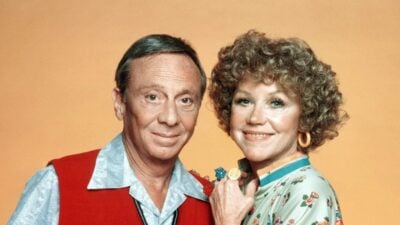
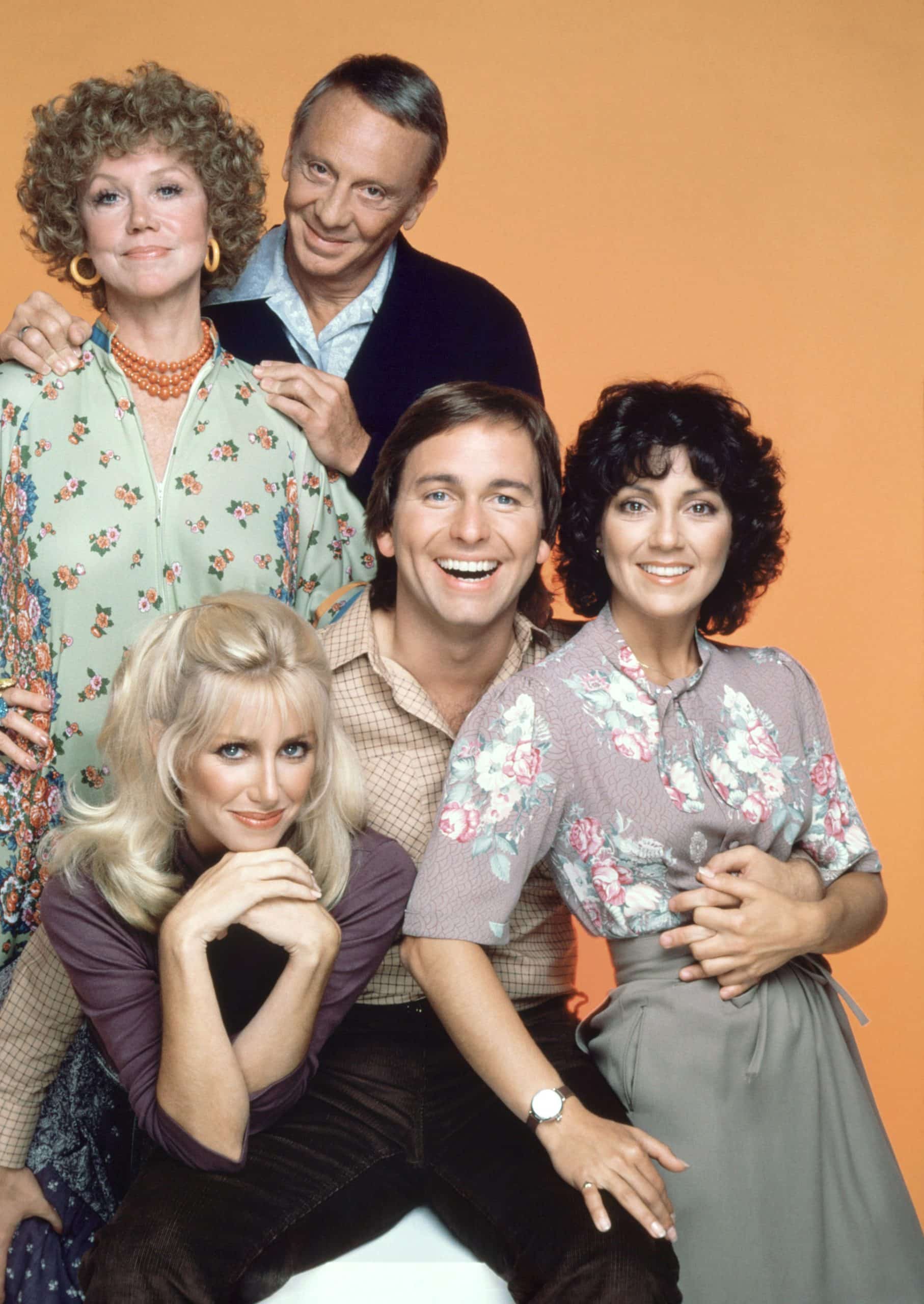
For three seasons, the funniest people in Jack, Janet and Chrissy’s building were the two who lived downstairs. Norman Fell’s Stanley Roper hid behind his newspaper and swore Jack Tripper was up to something, while Audra Lindley’s Helen Roper rolled her eyes in a flowing caftan and begged her husband for a little romance. Then, in March 1979, the landlords packed up and left Three’s Company in the middle of its biggest years.
The short answer is that ABC gave them their own sitcom. The Ropers premiered on March 13, 1979, and Fell only agreed to go because the producers wrote a safety net into his contract: if the new show failed fast, he could come home. It did fail, a little more than a year later, and Mr. Roper never moved back in. The reason Fell said he was given came down to money and one actor, and both are at the end of this story.
Why Did Norman Fell Say No to His Own Show at First?
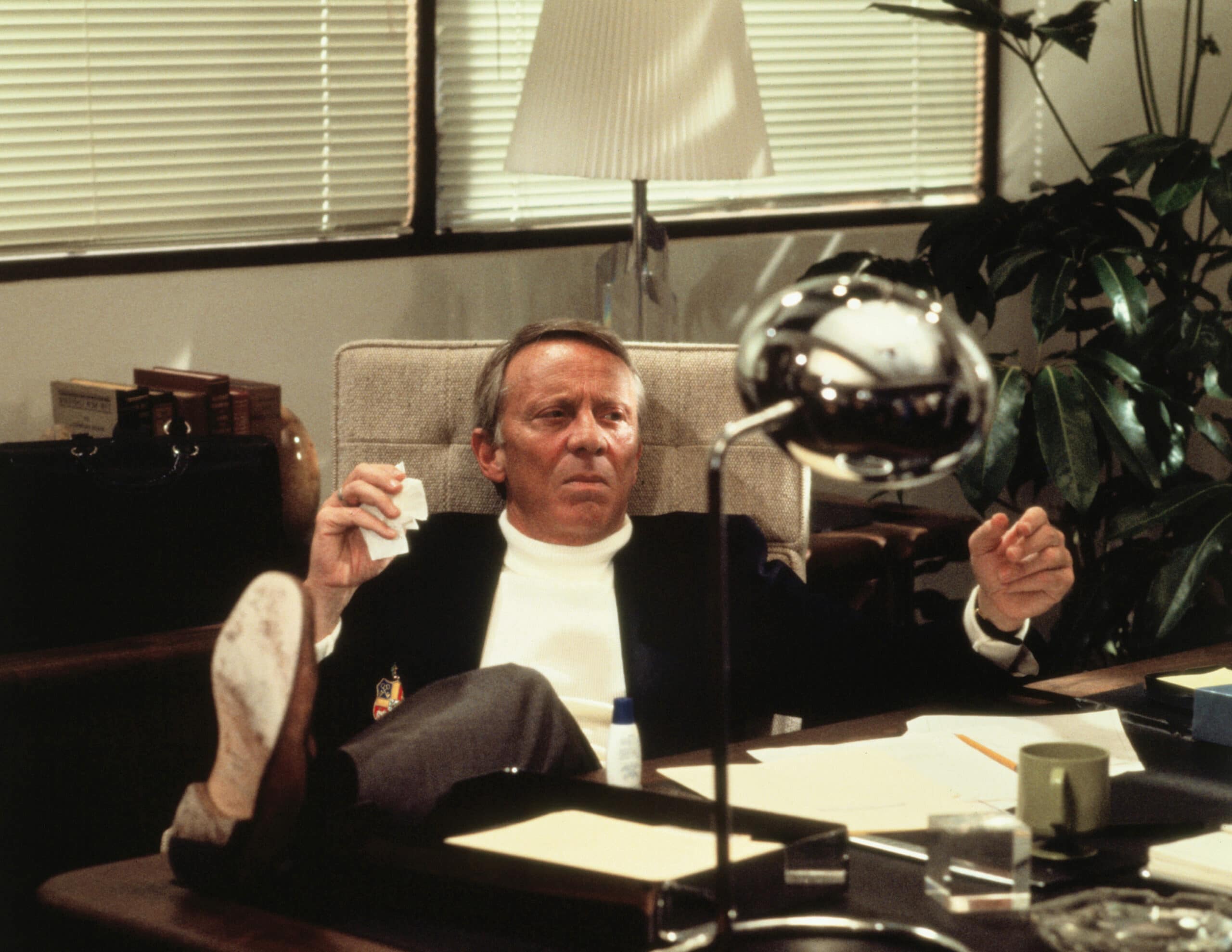
The spinoff idea came up almost as soon as Three’s Company took off. According to the history of the series, ABC programming chief Fred Silverman floated a Ropers show in 1977, and Fell, Lindley and the producers all passed because Three’s Company hadn’t yet lasted a full season. The comedy was loosely built on the British hit Man About the House, and Britain had already spun its landlords off into George and Mildred, so the road map was sitting right there.
The idea came back in 1978 from the show’s own producers and ABC’s new entertainment president, Tony Thomopoulos. Lindley was game. Fell, who had spent decades as a working character actor in films like Ocean’s 11, The Graduate and Bullitt before Stanley Roper made him famous, was not. He would win a Golden Globe for the role in early 1979, and he knew exactly what a hit was worth. To win him over, the producers put a promise in writing: the new show would get a full year to prove itself, and if it was canceled before then, he could go back to Three’s Company. Lindley never asked for the same clause.
How Did ‘Three’s Company’ Write the Ropers Out?
The goodbye played like one of the show’s classic misunderstandings. In “An Anniversary Surprise,” which aired March 13, 1979, Helen and the roommates become convinced Stanley is having an affair. The “other woman,” played by Ruta Lee, turns out to be a real estate agent helping him sell the building and buy a house in Cheviot Hills, an upscale Los Angeles neighborhood where Helen hoped to finally climb the social ladder.
ABC aired The Ropers premiere at 10 p.m. that same Tuesday night, right after the farewell. The new show gave Stanley and Helen a snobby neighbor, the realtor Jeffrey P. Brookes III, played by a young Jeffrey Tambor, and the plan worked beautifully at first. The Ropers finished the 1978 to 1979 season at No. 8 in the ratings, and its premiere drew one of the biggest series debut numbers ABC had seen at the time. Back at the old building, Don Knotts arrived as the new landlord, Ralph Furley, in “The New Landlord” on September 25, 1979. For a few months, it looked like everyone had won.
What Went Wrong With ‘The Ropers’?

That fall, ABC moved The Ropers to Saturdays at 8 p.m., opposite NBC’s CHiPs. Fell later called the slot “a killer time when everyone’s out to dinner,” in comments collected in Chris Mann’s book about the show, Come and Knock on Our Door. By the second week of the new season, the show had fallen to 52nd place out of 61, and Fell flew to ABC’s headquarters in New York to plead for a better night. He didn’t get one.
He also missed the people he had left behind. “I missed John,” Fell said of John Ritter, as quoted by Cracked. “I missed bouncing things off him.” ABC announced the cancellation in May 1980, after 28 episodes. Lindley insisted in Mann’s book that a late surge had pushed the show back up the charts. “We were #25, and we were canceled,” she said, although Nielsen’s published list for that season has Soap at No. 25.
Why Couldn’t Mr. Roper Come Back?

This is where the contract clause turned out to be worth less than Fell had hoped. The Ropers survived its first year, so by the time ABC pulled the plug, the guarantee had already run out. As Remind Magazine put it, “the producers had technically honored their end of the contract.” Fell came to believe the network had made up its mind earlier and simply waited until the deadline passed so he couldn’t return.
When he asked about going home anyway, the answer was blunt. “First of all, you and Audra are too expensive,” Fell recalled being told. “We have one person playing that part now.” That one person was Don Knotts, whose Mr. Furley had become a hit in his own right, and the producers saw no reason to pay two landlords when one was working. Fell took it hard for exactly as long as he allowed himself to. “I put it behind me,” he said, according to Parade. “I was upset about it, but I gave myself a day or so to be moody.” He also admitted, “I could have gone on in Three’s Company for another five or six years.”
Did the Ropers Ever Come Home?
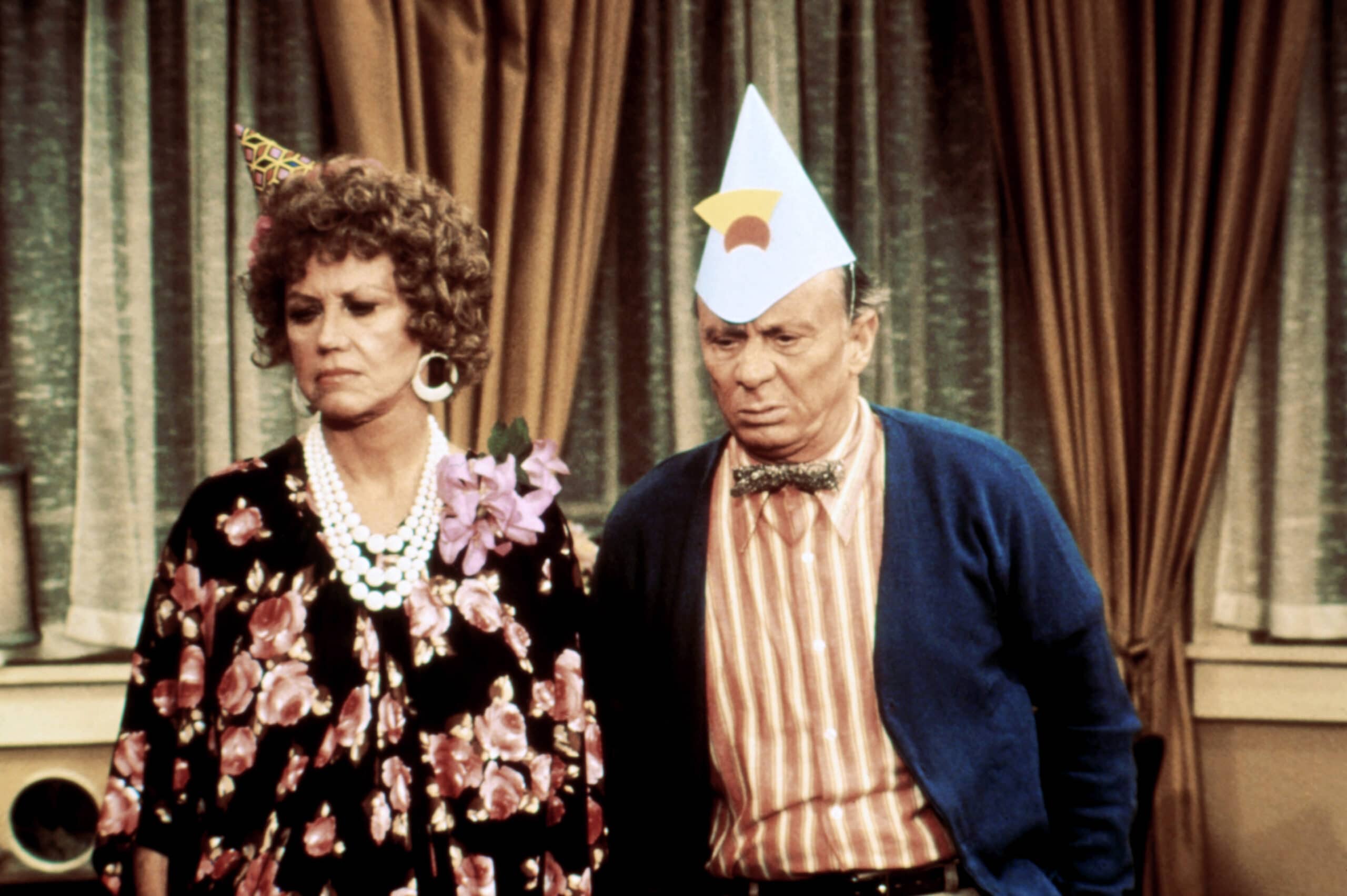
Once, for one night. On March 17, 1981, Fell and Lindley returned as guest stars in “Night of the Ropers,” a season five episode in which the bickering couple show up at their old building after a fight, and Helen ends up in a romantic triangle with Mr. Furley himself. It was the last time Stanley and Helen appeared on Three’s Company, which ran until 1984. If you want to know where the rest of the cast ended up, we tracked down the stars of Three’s Company who are still with us.
There was nearly a second act. In 1986, distributor D.L. Taffner planned Three Apartments, a syndicated comedy that would have made Fell and Lindley landlords again, this time of a three-unit building. It was shelved in January 1987 because of a crowded syndication market. Lindley went on to play Cybill Shepherd’s mother on Cybill and died of complications from leukemia on October 16, 1997, at 79. Fell died of multiple myeloma on December 14, 1998, at 74. His longtime business manager, Stan Schneider, told reporters after his death that strangers never let him forget the part he gave up. “Everyone called him Mr. Roper,” Schneider said, “on the street, wherever he went.”

 The ‘Partridge Family’ Plan Changed The Moment David Cassidy Opened His Mouth