

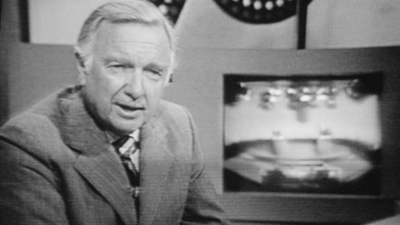
Walter Cronkite was born 110 years ago on Wednesday, on November 4, 1916, in St. Joseph, Missouri, the son of a dentist. For 19 years, from April 1962 until March 1981, he sat behind the desk of the CBS Evening News and told America what had happened that day, closing every broadcast with the same five words: “And that’s the way it is.”
He was famous for keeping his composure through wars, assassinations and moon shots. But there was one afternoon when the steady voice almost gave way on live television, and decades later he explained exactly what went through his mind in that moment.
How Did A Dentist’s Son Become ‘The Most Trusted Man In America’?
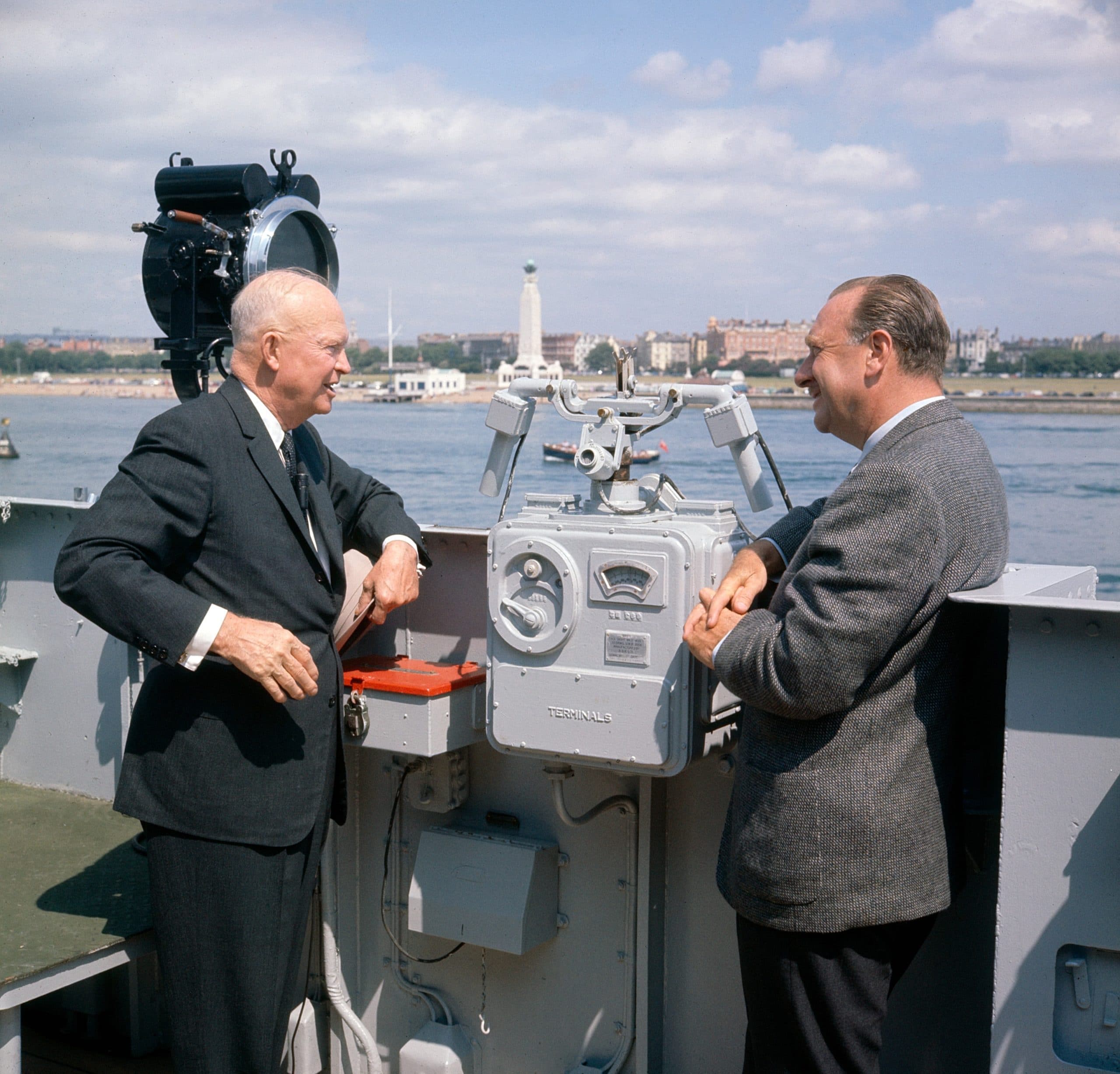
Cronkite grew up in Houston after his family moved there in the 1920s, and he was working as a sportscaster at radio station KCMO in Kansas City in 1936 when he met an advertising writer named Mary Elizabeth Maxwell, known to everyone as Betsy. They married on March 30, 1940, according to UPI, and stayed married for nearly 65 years. In his memoir, A Reporter’s Life, he credited “the longevity of our marriage to Betsy’s extraordinary keen sense of humor.”
Betsy had her own theory about why viewers trusted her husband. “I think it’s because he looks like everyone’s dentist,” she said, as recounted in Douglas Brinkley’s biography Cronkite.
The famous title came from an actual poll. In 1972, the firm Oliver Quayle and Company surveyed 8,780 people about how much they trusted public figures, and Cronkite scored 73 percent, ahead of a generic “average senator” at 67 percent and Senator Edmund Muskie at 61, as both Slate and media historian W. Joseph Campbell have documented. CBS wasted no time. On Election Day that November, it ran newspaper ads that read “Re-elect the Most Trusted Man in America.”
Trust like that meant viewers noticed every time his voice changed. And there were a few times it did.
When Did Walter Cronkite Let His Feelings Show?
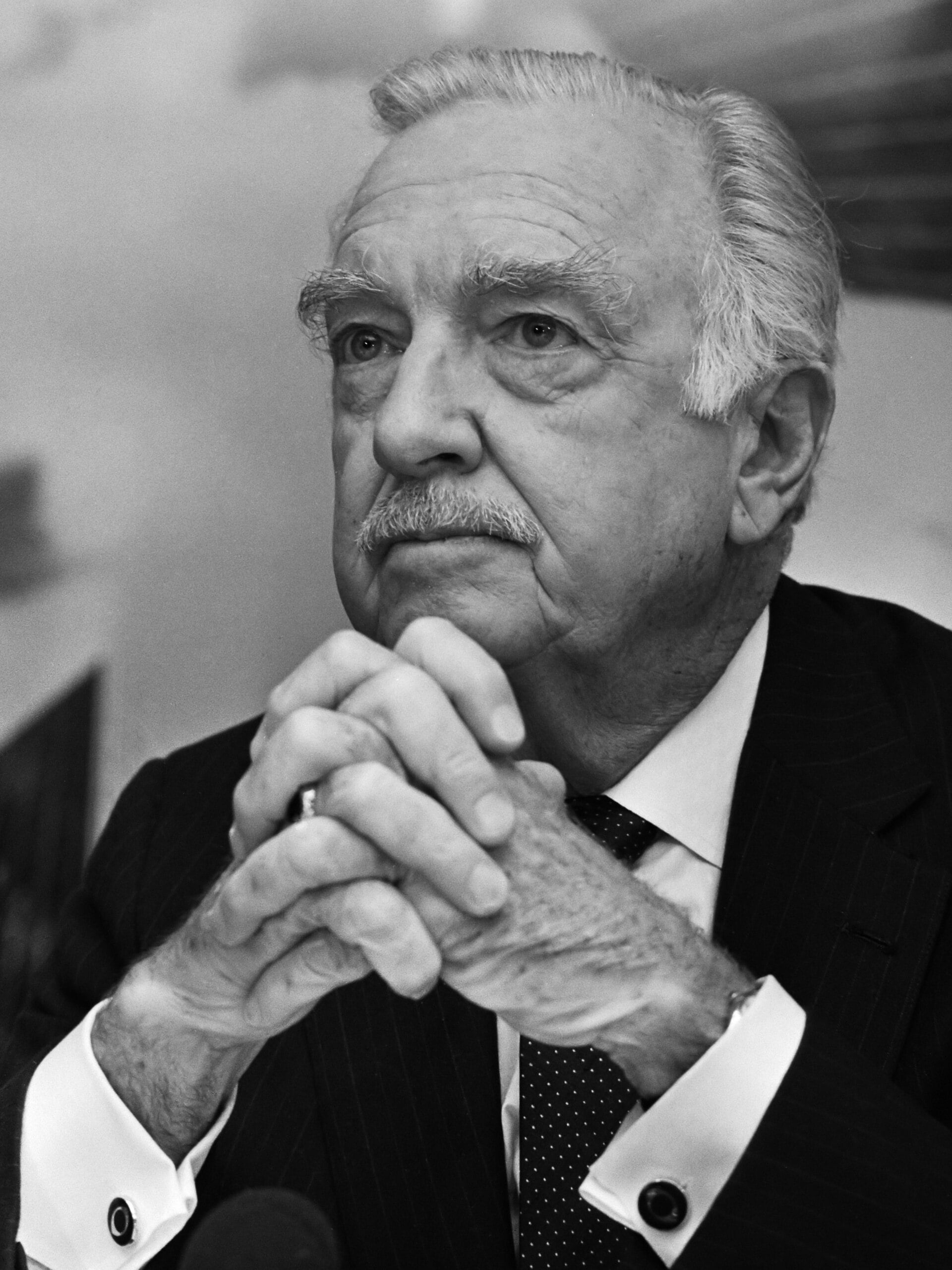
When Apollo 11 touched down on July 20, 1969, the man known for his precise words could barely find any. “‘Oh boy! Whew! Boy!’ These were my first words, profundity to be recorded for the ages. They were all I could utter,” he wrote in his memoir, as Universe Today quoted. He had been so thrilled by the launch days earlier that he shouted “Go, baby, go!” on the air.
A year and a half before that, he had done something anchors simply didn’t do. After returning from Vietnam, he closed a February 27, 1968, special report with his own opinion, concluding that the only rational way out was “to negotiate, not as victors, but as an honorable people who lived up to their pledge to defend democracy, and did the best they could,” according to NPR.
Legend says President Lyndon Johnson watched and told aides, “If I’ve lost Cronkite, I’ve lost Middle America.” The quote is repeated everywhere, but historians doubt it happened that way, because Johnson was reportedly at Texas Governor John Connally’s birthday party in Austin that night, as Campbell has shown. Cronkite himself seemed surprised by the legend. “To be honest, I was rather amazed that my reporting from Vietnam had such an effect on history,” he told Esquire in 2006.
None of those moments, though, compared to a Friday afternoon in November 1963.
What Did Cronkite Admit About The Day Kennedy Died?

On November 22, 1963, Cronkite was reading wire bulletins from Dallas as CBS broke into its afternoon programming. When the official word arrived, he read it carefully. “From Dallas, Texas, the flash, apparently official, President Kennedy died at 1 p.m. Central Standard Time, 2 o’clock Eastern Standard Time, some 38 minutes ago,” he said, as CBS News and NBC’s archives preserve it. He glanced at the studio clock, and took off his glasses while he composed himself, as ABC News recalled.
Years later he explained what was happening inside. “My gosh, the president’s dead,” he remembered thinking, he told CBS in 2003. “And it hit me pretty hard, just for that moment, while I gathered myself together.” In a 2002 conversation with NPR, he described it more precisely. “Those whose jobs often involve great emotional stress develop an amazing stoic power to defer emotion,” he said, adding that it was “a power that momentarily eluded me,” as GBH reported.
When he finally signed off for good on March 6, 1981, handing the chair to Dan Rather, he left the door open. “Old anchormen, you see, don’t fade away; they just keep coming back for more,” he said. Betsy died in 2005, and Cronkite died at home in New York on July 17, 2009, at 92, with his family beside him.
At his funeral, his son, Chip, didn’t talk about Dallas or the moon. He thanked his father for “saying to mom as you passed her in the kitchen or the hall, ‘Shall we dance?’ and then taking her for a few turns around the room,” CBS News reported. The most trusted man in America, it turns out, was also a pretty good dance partner in his own kitchen.




 ‘Night Court’ Star Markie Post Spent Nearly Four Years Fighting A Battle Fans Never Saw
 ’60s Vocal Group The Lettermen Announce Founding Member Tony Butala Has Died At 87