

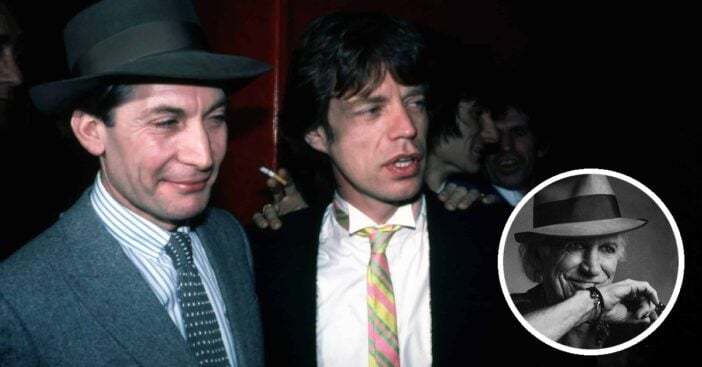
In the winter of 1967, the Rolling Stones gave America a soft, strange little ballad with a recorder in it, and by March “Ruby Tuesday” had climbed to No. 1 on the Billboard Hot 100. For decades, fans have wondered who the girl was who would never say where she came from. The man who wrote the words has answered it himself. Keith Richards, now 82, says Ruby was Linda Keith, the young Vogue model he dated in the mid-1960s and lost in 1966.
“Basically, Linda is ‘Ruby Tuesday,'” Richards wrote in his 2010 memoir Life, as American Songwriter and uDiscover Music have both quoted. That settles the name, but the woman herself is the better story, because Linda Keith didn’t simply walk out of a Rolling Stones song. She walked into rock history in a way almost nobody saw coming.
The Ruby Tuesday Meaning Keith Richards Finally Spelled Out

Linda Keith was about 20 and already working as a model when she and Richards became a couple in London, and he was smitten from the start. In Life he wrote that he thought she was out of his league. The two were together from roughly 1964 until 1966, the stretch when the Stones went from a hard-working club band to a group that couldn’t walk down a street.
That fame is part of what pulled them apart. The Stones spent the summer of 1966 touring America, and when Richards came home he learned that Linda had left him for good. “That’s the first time I felt the deep cut,” he wrote in the memoir. He did what songwriters do with a wound like that. “Even if you’ve been f***ed over, you can find consolation in writing about it, and pour it out,” he explained, which is how a girl who wouldn’t stay put became a girl who “just can’t be chained.”
Richards had touched on it years earlier, too. In the 2003 book According to the Rolling Stones, as Ultimate Classic Rock has quoted, he described the song as being about “some chick you’ve broken up with, and all you’ve got left is the piano and the guitar.” He called it “one of those songs that are easiest to write, because you’re really right there and you really sort of mean it.” The heartbreak was his, but the sound that made people stop and listen came from somebody else in the room.
How Brian Jones Turned A Breakup Song Into Something Delicate

The Stones cut the song in London in late 1966, and the instrument everyone remembers is Brian Jones’s alto recorder, fluttering over the melody like something out of an Elizabethan court. Jones was the band’s restless multi-instrumentalist, the one who could pick up almost anything and make it sound like it belonged on a pop record. On “Ruby Tuesday,” his recorder sits right next to Mick Jagger’s voice at the front of the mix.
The rest of the track was just as handmade. Arranger Jack Nitzsche is usually credited on piano, and the low, mournful bottom end came from a double bass shared by two Stones at once, with Bill Wyman fingering the notes while Richards drew the bow across the strings.
Who wrote the tune is where the band’s memories split. Wyman wrote in his book Rolling with the Stones that the lyrics were entirely Richards’s, with Jones helping on the music. The late Marianne Faithfull remembered it differently, recalling that Jones brought an early version of the melody to the group himself. The song was credited to Jagger and Richards either way, and Jones, who died in July 1969 at 27, never got to tell his side at length. The single’s own story took an odd turn before it reached the top.
Why “Ruby Tuesday” Was Never Meant To Be The Hit
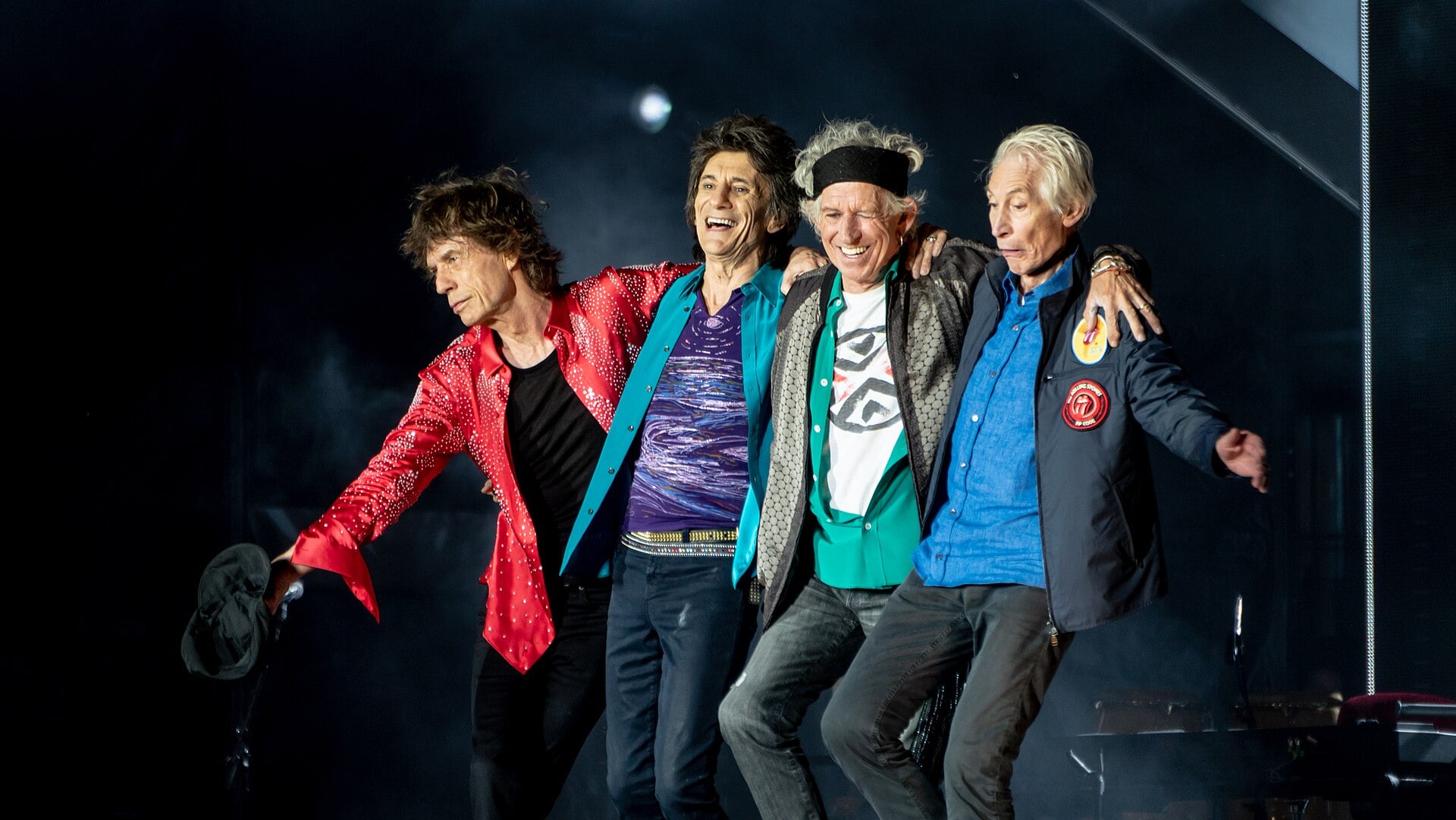
“Ruby Tuesday” was released on January 13, 1967, on the same single as “Let’s Spend the Night Together,” and the louder song was the one getting all the attention. Two days later the Stones turned up on The Ed Sullivan Show to play both numbers, and the show would not let Jagger sing the title line of “Let’s Spend the Night Together” on Sunday night television. He sang “let’s spend some time together” instead and rolled his eyes on camera while he did it.
That famous lyric change belonged to the other side of the record, but it helped “Ruby Tuesday” enormously. Plenty of American radio stations were uneasy about the racier song, so DJs flipped the single over. “Let’s Spend the Night Together” stalled at No. 55 on the Hot 100, while “Ruby Tuesday” went all the way to No. 1, the band’s fourth American chart-topper. In Britain, where the two songs were listed together as a double A-side, the record peaked at No. 3. If you bought the American version of the album Between the Buttons, you got “Ruby Tuesday” on it, too, because British albums of the day usually left singles off. There are plenty more things you might not know about “Ruby Tuesday”, but the question fans keep coming back to is the girl herself.
What Mick Jagger Said, And The Other Theories About Ruby

Jagger, now 83, sang every word but has always been honest that the song wasn’t really his.
“It’s just a nice melody, really. And a lovely lyric,” he told Jann Wenner in a 1995 Rolling Stone interview. “Neither of which I wrote, but I always enjoy singing it.”
The band still plays it, too, and a 1990 Tokyo Dome performance ended up on the live album Flashpoint.
Not every telling of the story lands on Linda Keith. Some older song histories, Songfacts among them, repeat a version in which the song was about a groupie Richards knew, and a few place its writing in a Los Angeles hotel room in early 1966. Those accounts don’t point to a direct quote we could verify, and they are best treated as a theory. Richards’s own memoir is the most detailed account he has given, and it names Linda. Nobody has ever explained why he chose the name Ruby, or why a Tuesday, and Richards hasn’t offered an answer either. What he did write about at length is what happened to Linda after she was gone.
Where Linda Keith Went After She Left Keith Richards
In May 1966, while Richards was away on tour, Linda was out in New York and wandered into the Cheetah club on Broadway, where Curtis Knight and the Squires were playing. She told NPR in a rare 2010 interview that the band was fairly ordinary, except for the backup guitarist, a left-handed player working a right-handed guitar flipped upside down. He was calling himself Jimmy James. His real name was Jimi Hendrix.
She became his champion before almost anyone in the business would listen. She encouraged him to sing, though he doubted his voice, and she played him a new Tim Rose record of “Hey Joe,” the song that would become Hendrix’s first single. His own guitar was in a pawn shop, so she lent him one of Richards’s white Fender Stratocasters. Several managers and label men she dragged to his shows passed. Then she brought along Chas Chandler, the bassist of the Animals, who saw Hendrix play that July and soon took him to London. Within months Britain was talking about the Jimi Hendrix Experience.
The year did not end happily for her. In Life, Richards wrote that Linda had gotten mixed up with drugs, and that he went to her parents to warn them she was on a dangerous road. Her father traveled to New York to bring her home, and back in England she was made a ward of the court. It is a tender detail in a book full of wild ones, the jilted boyfriend still worried enough to knock on her family’s door.
Richards wrote that Linda came through it, raised a family and made a home in New Orleans, and she married the musician and producer John Porter. She has spoken publicly only a handful of times since. Her story ended up in both men’s music, which is more than most muses can say. The guitarist she believed in became a legend, and the guitarist who lost her wrote one of the prettiest songs the Rolling Stones ever recorded, about a girl he couldn’t hold on to.