

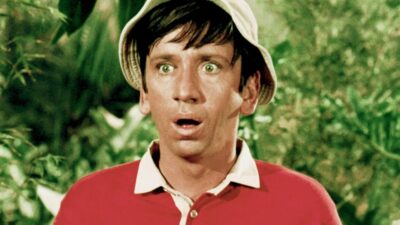
Seven people boarded the S.S. Minnow for a three-hour tour, and for about thirty years a theory has insisted that number was no accident. Ask around at any reunion of people who grew up on Gilligan’s Island and somebody will explain it with total confidence: the Professor was Pride, Ginger was Lust, Mr. Howell was Greed, and poor Gilligan, in that red shirt, was either Sloth or something much worse. The castaways, the story goes, were the seven deadly sins, stranded together forever in reruns.
It is a wonderful theory, and it is a fan theory. The man who created the show, Sherwood Schwartz, heard it for years and turned it down with a laugh in a 2001 interview, and the oldest version anyone can find was never signed by anybody at all. What Schwartz said he actually built on that island is a better story than the sins, and he spent the rest of his life wishing more critics had noticed it.
Where Did The Seven Deadly Sins Theory Come From?

The theory did not come from a network memo or a script. It came through the inbox. By February 1997, a short comic essay titled, in one copy, “Gilligan and Theology” was being forwarded around the early internet, and an MIT humor mailing list archived a copy on February 19, 1997 that had already passed through at least two other people. No author’s name survives on it. “The Seven Deadly Sins of Gilligan’s Island theory is quite simple,” it begins, before assigning Pride to the Professor, Envy to Mary Ann, Lust to Ginger and Greed to Mr. Howell, the man who “takes a trunk full of money on a three-hour cruise.”
Then the joke runs into trouble, and that trouble is the best part. The writer admits there is “a Gilligan problem.” With Sloth handed to Mrs. Howell, the Skipper has to cover both Anger and Gluttony, which leaves the first mate with no sin at all. So the essay crowns him something else. “Gilligan must be SATAN. Think about it,” it says, adding one last thought: “Gilligan always wore red.”
The same essay turned up on the Straight Dope message board on February 29, 2000, where one poster admitted “it could just be a UL,” an urban legend. A few years later the joke picked up something it had never had, which was a quote from the creator.
Did Sherwood Schwartz Ever Admit It?
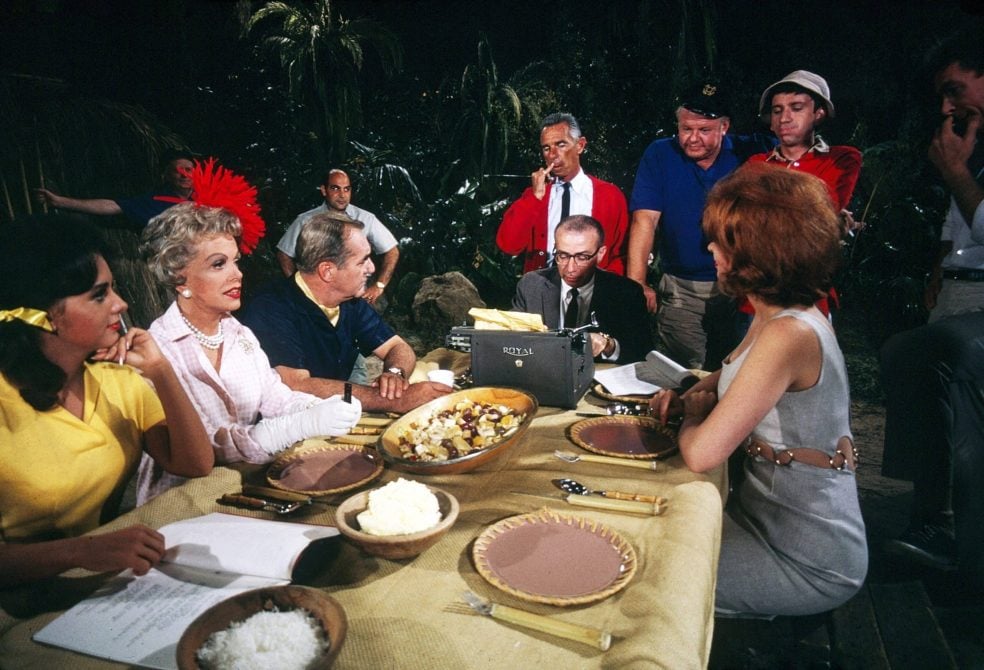
That quote appears to have no real source. In January 2008, NPR ran a series called In Character, and its “Your Turn” page posted listener nominations. One, credited to a listener named Thomas Siegman, stated that “years after the show ended, its creator, Sherwood Schwartz, admitted that each of the characters represented one of the seven deadly sins.” It named no interview, no book and no date, and it went on to repeat the old punchline that the island “may well have been Hell” with Gilligan as the devil. Because the page sat on npr.org, the line has been passed around ever since as if NPR had interviewed Schwartz, and several entertainment sites still repeat it that way.
Schwartz did talk about the sins, and on the record he said the opposite. In a 2001 interview with L. Wayne Hicks for TVParty, he was asked how he decided on seven as the magic number. “I don’t know,” he answered. “A lot of people have written to me saying they understand that’s the seven deadly sins. That was never in my mind, but they’ve explained it to me.” The transcript notes that he laughed. “It could have been eight. It could have been six. I couldn’t see 12 people.” If the number was not a code, though, the people behind it certainly were a plan.
Why Did Schwartz Choose Seven Castaways?

Schwartz said the people mattered far more than the count. “It was carefully thought out, these seven people,” he told TVParty. “That took me like a year to figure out who should be on the island.” What he wanted was a group with nothing in common, so that none of them could get up and leave, and he set it out plainly: “When would a billionaire sit down and have lunch with Gilligan, except if he had to? The same is true of a movie star and a professor.”
He even said the group would look different if he were starting over. “If I were to create the show now, I would not have seven white people,” he told the same interviewer, explaining that he would want Black, Mexican-American and Asian castaways on the island “if I was staying with what my idea was to begin with.” The sins would not have survived a recast like that, but his idea would have.
He tried that idea out on the very top of CBS before the show went on the air in September 1964. “It was in an early meeting at CBS with William Paley himself, the chairman of the board,” Schwartz told the Los Angeles Times in 1992. “When he asked me to describe the show, I said it was a social microcosm.” Paley, he said, “visibly blanched” and told him, “I thought it was a comedy show.” Schwartz shot back, “Mr. Paley, it’s a very funny microcosm,” and added that he never used the phrase again. UPI told the same story in 2001, with Paley protesting, “I thought it was supposed to be a comedy!”
What Were The Castaways Really Supposed To Be?

To Schwartz, the island was a small, funny version of the world, and he meant that literally. We looked at why the Professor never fixed the boat in an earlier story, and the reason is the same one. “It’s serious in that Arabs and Jews have to learn to live together for they’re stuck together,” Schwartz told TVParty. “North Koreans and South Koreans, they have to learn. If you don’t learn, you’ll all die.” He was firm that this was “not an afterthought, this is in the show,” and he said the deep-meaning letters started arriving as soon as it premiered. “I got with regularity bachelor’s degree, master’s degree thesis from people in the theatrical area explaining what’s the basis for ‘Gilligan’s Island.’ Like I didn’t know.”
Only one of those readers ever earned his full approval. In 2001, University of Virginia English professor Paul A. Cantor published Gilligan Unbound, which read the island as a model of American democracy. Cantor later wrote in The Washington Post that Schwartz had written to him, and The Weekly Standard quoted the letter after Schwartz died on July 12, 2011, at 94. It had always bothered Schwartz that people called the show silly. “Not a single critic got it,” he wrote, “with the basic concept of democracy staring them right in the face.” Cantor died in 2022 at 76.
The cast seemed to understand it without needing a thesis. Dawn Wells, who played Mary Ann until her death in December 2020 at 82, told Pop Culture Classics in 2014 that the show was about more than Mary Ann in a pair of shorts. “This was a bunch of misfits trying to get along,” she said. “And that’s what’s happening in the world today, a bunch of misfits trying to get along.”
Bob Denver, the first mate the old email cast as Satan, died in 2005 at 70, and today only Tina Louise, the island’s Ginger, is still here at 92. Seven people who would never have shared a lunch table spent three seasons sharing a hut, and Schwartz always said that was the point. The sins were just a joke somebody forwarded, and it is the getting along that has kept people watching for sixty years.

 The ‘Family Ties’ Cast Members Still Alive Today, 44 Years After The Keatons Moved In