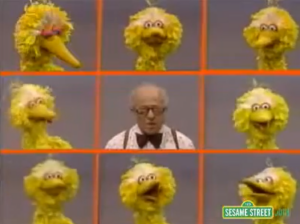

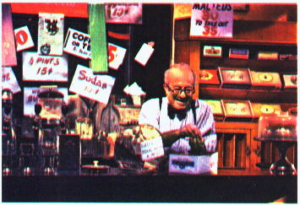
For 13 years, the grocer in the bow tie and horn-rimmed glasses ran the corner store on Sesame Street, mixing birdseed milkshakes for Big Bird and grumbling his way through every kindness. Will Lee, the actor who played Mr. Hooper from the very first episode in November 1969, died of a heart attack in New York on December 7, 1982. He was 74, and only weeks earlier he had taped what turned out to be his final scenes.
The short answer to what happened to Mr. Hooper is that the show let him die too. Instead of hiring a new actor or telling children he had retired to Florida, the producers wrote an episode in which the grown-ups on the street explain to Big Bird that his friend is dead and will never come back. It aired on Thanksgiving Day, November 24, 1983, and the people who made it have never forgotten the day they filmed it.
Who Was the Man Behind Mr. Hooper’s Counter?

Long before children knew him as a grumpy, soft-hearted shopkeeper, Will Lee was a serious stage actor. He was born William Lubovsky in Brooklyn on August 6, 1908, and he came up through the political theater of the 1930s. According to the American Heritage Center at the University of Wyoming, which holds his papers, Lee was called before the House Un-American Activities Committee, refused to say whether he had ever been a Communist, and was blacklisted until 1956.
Sonia Manzano, who played Maria, remembered those stories well. “He was a political activist in the ’30s,” she told NPR’s Life Kit in 2019. She recalled that he once spotted director Elia Kazan, who had named names to the committee, and crossed the street rather than face him. When the cast wanted him to ride in the Macy’s Thanksgiving Day Parade, she said, his answer was, “I didn’t work this hard all my life to work this hard.”
He did ride in the parade in 1982, and he died less than two weeks later. That left the neighborhood Jim Henson’s Muppets shared with its human cast facing a question no one wanted to answer.
Why Didn’t the Show Just Say He Moved Away?
Because several episodes with Lee had already been taped, the writers had months to decide. According to The A.V. Club, the options on the table were to recast the role, to say Mr. Hooper had retired to Florida, or simply never to mention him again.
“Everyone said, well, let’s just say he retired,” Manzano told NPR. “But a basic principle of Sesame Street was always that we wanted to show children real life, the way the world worked.” She gave the credit to executive producer Dulcy Singer, “who really fought back the sensibility of, let’s say he went away or let’s kind of gloss it over. She really wanted to face it head-on.” Singer herself told the Associated Press in 1983, as quoted by the A.V. Club, that “our instincts told us to be honest and straightforward,” because if they left it unsaid, “kids would notice.”
The show then did its homework. Head writer Norman Stiles consulted child psychologists and the workshop’s researchers, and the experts were clear on what preschoolers needed to hear. Mr. Hooper had died, he was not coming back and he would be missed. They also advised against dwelling on how he died, since telling small children that he was old and sick could make them afraid for their own grandparents.
What Did the Grown-Ups Tell Big Bird?

The episode, number 1839, opens with Big Bird proudly handing out portraits he has drawn of everyone on the street. He saves one for Mr. Hooper. When he asks where his friend is, Maria reminds him gently. “Big Bird, don’t you remember we told you? Mr. Hooper died. He’s dead.” Big Bird nods and says he will give him the drawing when he comes back.
That is when Loretta Long’s Susan says the line parents still quote. “Big Bird, when people die, they don’t come back.” He asks if that means ever, and she answers, “No, never.” The late Emilio Delgado, as Luis, adds quietly, “Well, Big Bird, they’re dead. They can’t come back.”
Big Bird does not take it well, and that was the point. “He’s got to come back,” he insists. “Who’s going to take care of the store? And who’s going to make my birdseed milkshakes and tell me stories?” Finally he asks for one good reason it has to be this way. Gordon, played by Roscoe Orman, tells him, “Big Bird, it has to be this way because.” Big Bird asks, “Just because?” and Gordon answers, “Just because.”
In his history of the show, Street Gang, Michael Davis reported that the outside experts wanted that “just because” cut, but Stiles kept it. Rosemarie Truglio of Sesame Workshop told NPR in 2019 the answer left room for each family to explain death through its own faith, without burying a small child in more than he could take in at once.
Why Did It Air on Thanksgiving?

The date was chosen with care. “It was scheduled to be shown on Thanksgiving Day so that parents would be home with the child,” Manzano said.Some viewers objected, she remembered, but the episode went on to win a Peabody Award, and Stiles won a Daytime Emmy for the writing. According to the Television Academy, it aired once and was never rerun.
Life on the street did go on, in small ways children could follow. In the story, Mr. Hooper left the store to his young assistant David, played by Northern Calloway, who ran it until Calloway left in 1989. Mr. Handford, a retired firefighter played for most of the 1990s by David L. Smyrl, took over next and sold it in 1998 to Alan, the character Alan Muraoka plays. Through every new owner, the sign kept Mr. Hooper’s name.
The episode found a second life, too. After the 2012 school shooting in Newtown, Connecticut, the clip spread online as a guide for parents who suddenly had to explain death to their own children. Manzano, who spent 44 seasons on the show and wrote for it as well, still put it above everything else. “I still think that the ‘Goodbye Mr. Hooper’ was the most poignant show that we did,” she told NPR.
Why Was the Cast Crying When the Cameras Stopped?
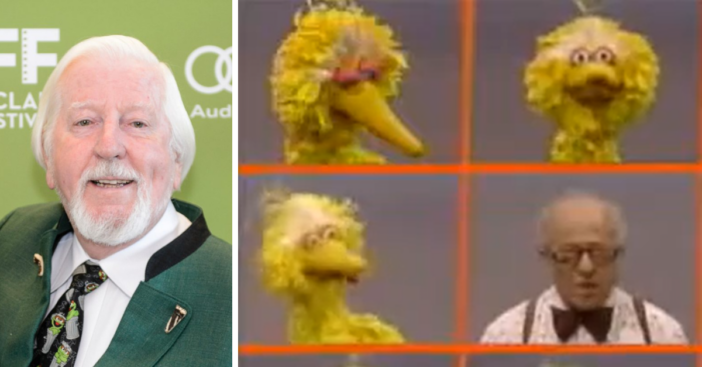
The tears in the main scene were real. Caroll Spinney, who performed Big Bird from inside the costume and died in 2019 at 85, said, “When we finished there were tears on all the actors’ faces,” according to the A.V. Club. “When I came out of the suit, I had to have a towel because I had been crying.” He called it “probably the most sensitive show we have ever done.”
Decades later, he still could not talk about it without feeling it. “There wasn’t a dry eye in the house during that scene, including me,” Spinney wrote during a 2015 Reddit question-and-answer session reported by PBS NewsHour. “Because we loved him. It’s losing Will Lee. What a lovely man he was.”
Spinney had a reason to take it personally. On what turned out to be Lee’s last day of taping, he had told his old friend that he loved him, a memory he later shared in his Television Academy interview. And the drawing Big Bird hangs above his nest at the end of the episode, the one he meant to give Mr. Hooper, was drawn by Spinney himself. It stayed on the set as a quiet memorial, which means that for every child who grew up on the street after 1983, Mr. Hooper never completely left.