

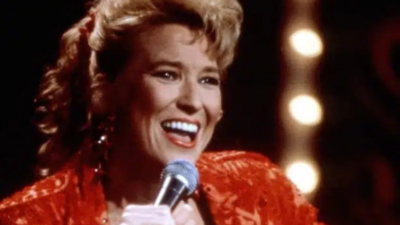
Tanya Tucker turns 68 on October 10, and she has been a country star for 54 of those years. Born in Seminole, Texas, in 1958, she was just 13 when “Delta Dawn” made her a sensation in 1972, a little girl with a voice that sounded like it had already lived three lifetimes.
Interestingly, “Delta Dawn” almost wasn’t Tucker’s debut single. Producer Billy Sherrill had initially wanted her to record “The Happiest Girl in the Whole U.S.A.,” but the teenager preferred the darker story of a troubled woman waiting for a long-lost lover. Tucker had heard Bette Midler perform the song and believed it suited her better. Her instincts proved correct when “Delta Dawn” climbed to No. 6 on Billboard’s country chart in 1972, launching a career that would span more than five decades.
Most child stars fade. Tucker did the opposite.
Tanya Tucker Grew Up In Front Of Everyone
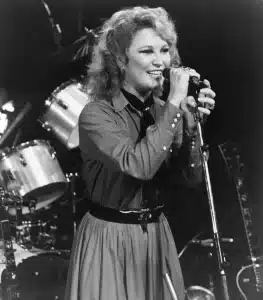
Her success hardly stopped with “Delta Dawn.” By 1974, Tucker had scored three No. 1 country hits with “What’s Your Mama’s Name,” “Blood Red and Goin’ Down,” and “Would You Lay with Me (In a Field of Stone).” The songs dealt with subjects far more mature than audiences might have expected from a young teenager, including violence, heartbreak, and complicated relationships. She even appeared on the cover of Rolling Stone in 1974, and on her 16th birthday, she signed a lucrative recording contract with MCA Records worth approximately $1.5 million.
She is one of the rare performers who started as a child and carried her audience with her into adulthood, never losing the grit that made her different. The hits and the headlines came in equal measure for decades, and she outlasted every prediction that she would burn out.
Her personal life often attracted as much attention as her records. In the early 1980s, Tucker had a highly publicized, turbulent relationship with fellow country superstar Glen Campbell, who was more than 20 years her senior. As her career slowed, she also struggled with alcohol and cocaine, eventually entering the Betty Ford Center for treatment in 1988. By that point, however, she was already building another chapter of her career, having returned to the country charts with hits such as “Just Another Love” and “I Won’t Take Less Than Your Love.”
A Comeback That Became A Coronation

The 2019 revival wasn’t Tucker’s first comeback. After her early success faded, she signed with Capitol Records in 1986 and launched a remarkable second run on the country charts. Songs including “Strong Enough to Bend,” “Love Me Like You Used To,” and “Two Sparrows in a Hurricane” introduced her to another generation of listeners. In 1991, she won the Country Music Association’s Female Vocalist of the Year award, although she couldn’t attend the ceremony because she had given birth to her second child, Beau, earlier that day. She watched the celebration from her hospital room instead.
In 2019 she returned with While I’m Livin’, produced by Brandi Carlile and Shooter Jennings, and won her first Grammys for it. Four years later she was inducted into the Country Music Hall of Fame. The women she came up alongside have stayed close, too, as we saw in the last piece of advice Dolly Parton gave her. Her full career record reads like country music’s own stubborn survival story.
Her Grammy victories in 2020 were especially meaningful after nearly half a century in the business. ‘While I’m Livin” won Best Country Album, while “Bring My Flowers Now” earned Best Country Song, giving Tucker her first two Grammys. The emotional song encourages people to express their love and appreciation while their loved ones are still alive, rather than waiting until they’re gone. Tucker has described it as one of the most important songs of her career, even suggesting that it might surpass “Delta Dawn” in her heart. She followed that triumph with another album produced by Carlile and Jennings, ‘Sweet Western Sound,’ in 2023.
Sixty-eight years old, and Delta Dawn still has not run out of road.





 Ben Vereen Turns 80, And Broadway’s Best Are Lining Up To Sing Him Happy Birthday
 Diane Keaton Died One Year Ago Today, And ‘The Family Stone’ Is Going On Without Its Matriarch