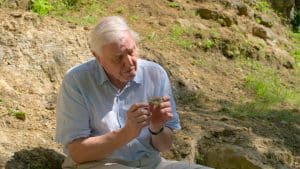


Scientists have honored legendary broadcaster and naturalist Sir David Attenborough in a unique way ahead of his milestone birthday. Researchers recently named a newly identified species of wasp after the beloved environmental advocate as he approaches his 100th birthday.
The discovery has attracted global attention, not only because of the unusual insect but also because of Attenborough’s lifelong influence on science and nature education. The tribute adds another remarkable achievement to the celebrated broadcaster’s legacy as David Attenborough 100 becomes a major milestone for fans around the world.
Rare Wasp Spent Decades Inside Museum Collection

According to CNN, scientists discovered the tiny wasp specimen in southern Chile back in 1983. However, researchers stored it in London’s Natural History Museum collection for more than four decades before experts fully examined and classified it. Researchers later realized the insect belonged not only to a completely new species but also to a previously unknown genus. Scientists named the insect Attenboroughnculus tau in tribute to the broadcaster. The species name “tau” refers to the T-shaped markings visible on the wasp’s abdomen.
The insect measures only 3.5 millimeters long and belongs to a rare group of parasitic wasps linked to regions that once formed the ancient supercontinent Gondwana. Scientists explained that these wasps survived in isolated areas like Chile, Australia, and New Guinea while disappearing from many other parts of the world.
David Attenborough’s Legacy Continues To Inspire Scientists

Researchers involved in the discovery said Attenborough inspired their interest in science from an early age. Gavin Broad, one of the scientists behind the study, explained that growing up with Attenborough’s documentaries helped him understand the importance of taxonomy and wildlife conservation.
David Attenborough 100 also highlights the broadcaster’s lasting impact on generations of scientists and nature lovers. Over the years, more than 50 species have received names inspired by Attenborough, including birds, reptiles, plants, fish, and spiders. Beyond television, Attenborough continues advocating for endangered species and environmental protection. Even at nearly 100 years old, he remains active in wildlife storytelling and recently narrated another nature series focused on British backyard ecosystems.