


For decades, Val Kilmer captivated audiences with unforgettable performances that ranged from intense drama to blockbuster action. His presence on screen carried a unique depth, shaped by both talent and a personal journey that often mirrored the complexity of his roles.
Now, even after his passing, Val Kilmer continues to leave a mark on the film industry. A new independent project is bringing him back to the screen in a way that blends memory, technology, and storytelling. According to People, the decision reflects not only creative ambition but also a desire to honor the actor’s final artistic intentions.
Val Kilmer’s final role takes shape through new technology

In the upcoming indie film As Deep as the Grave, he appears without ever stepping onto the set. Filmmakers recreated his image and voice using advanced generative AI, building a performance from archival footage and materials provided by his family. The role had originally been written specifically for him, making his absence deeply felt during production.
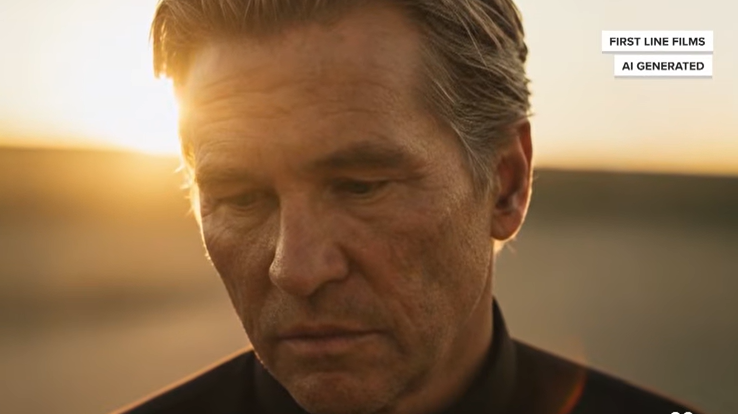
Director Coerte Voorhees explained that Kilmer had been eager to take on the role before health challenges prevented him from filming. Rather than recast the part, the team chose a different path. They used technology to preserve his presence, creating a performance that reflects both the character and the actor’s real-life experiences.
A legacy that continues beyond Val Kilmer’s lifetime

The use of AI in this project also highlights how deeply involved Kilmer had been with emerging technology during his life. After losing much of his voice to throat cancer, he worked with developers to recreate it, allowing him to communicate and perform again. That same spirit of innovation now shapes this posthumous appearance.

His family supported the decision, emphasizing that he believed in the story and wanted to be part of it. They described him as a deeply spiritual person who connected with the themes of discovery and reflection in the film. Through this project, he remains present in a way that feels both modern and deeply personal, extending his legacy into a new era of filmmaking.