

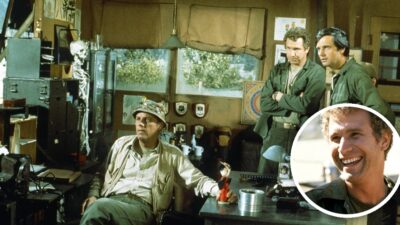
When M*A*S*H came back for its fourth season on September 12, 1975, Hawkeye Pierce walked into the Swamp after a stretch of R&R and found his best friend’s cot empty. Captain “Trapper” John McIntyre had been discharged while Hawkeye was away, and the man who played him for three seasons, Wayne Rogers, was gone from the show for good. There was no farewell episode and no last scene between the two surgeons. Viewers who had spent three years watching Hawkeye and Trapper trade martinis and wisecracks never got to see them say goodbye.
The short answer is that nobody planned it. Rogers quit during the summer break after season 3 had already wrapped, in a dispute over a contract he had never signed, so there was no chance left to film a send-off. The writers had to explain Trapper’s absence in the season premiere, “Welcome to Korea,” and the way they did it left Hawkeye with exactly one goodbye from his old tentmate, delivered by the least likely messenger in camp.
Wayne Rogers Was Promised A Partner’s Role, Not A Sidekick’s

Rogers, born April 7, 1933, in Birmingham, Alabama, had spent years in guest roles on shows like The Fugitive and in films like Cool Hand Luke before M*A*S*H came along in 1972. He originally looked at the part of Hawkeye and found the character too cynical for him, so he asked to test for Trapper instead, and he was told the two doctors would carry equal weight.
That was the plan in the writers’ room too. In his 1998 Television Academy Foundation interview, developer Larry Gelbart described Trapper as originally conceived as Alan Alda’s “co-equal” and talked about how diplomatic Rogers was as that balance shifted. It shifted fast. Alda’s Hawkeye became the voice of the show, and by the third season Trapper was more and more the man standing next to him with the punch line. The Encyclopedia of Alabama notes that Rogers felt his character had been overshadowed, and the frustration went back further than most fans knew.
The Contract Rogers Refused To Sign
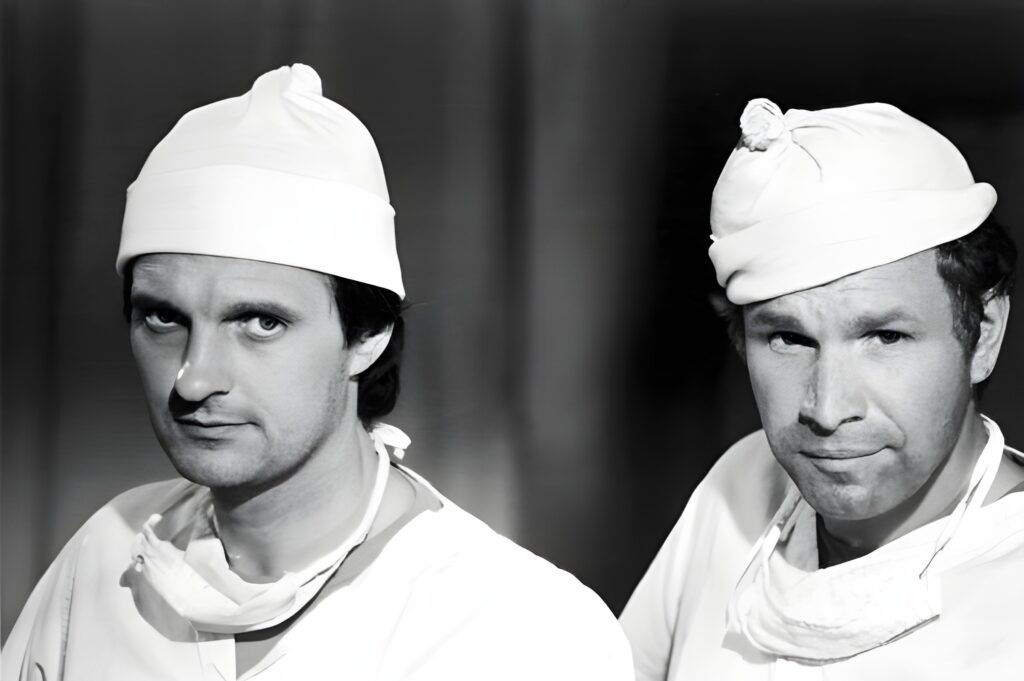
“I had beef from the first day of shooting,” Rogers told the Dayton Daily News in 1978, as MeTV later recounted. “I was promised a contract that never materialized.” In his telling, the profit points, percentages and billing he expected were “all lip service.”
What finally broke the deal was a single clause. When the studio put a formal contract in front of him, it included what Rogers called “an old-fashioned morals clause.” He explained to Reuters that “if you behaved in an immoral fashion, they have the right to suspend you,” and he refused to sign it. Years later he told the interview show Pop Goes The Culture, in comments Parade revisited this month, “Well I don’t think it’s morally appropriate. Why should I be subjected to something that everybody else isn’t subjected to?”
The studio did not budge. “Well, we’re a hit show,” Rogers remembered being told. “If you don’t agree, tough, goodbye.” Because he had never signed anything, he was free to take them at their word, and he did. The timing is what cost Trapper his farewell, and it is easiest to see next to the exit that happened in the very same season.
Why Henry Blake Got A Send-Off And Trapper John Didn’t

McLean Stevenson also left after season 3, but he announced it while the cameras were still rolling. That gave the producers time to build “Abyssinia, Henry,” the March 18, 1975 episode in which Colonel Blake is sent home, toasted by Hawkeye and Trapper and then lost when his plane is shot down over the Sea of Japan. As we covered in the story of Henry Blake’s exit, Gelbart kept that final page from the cast until the last moment.
Trapper is right there in that episode, raising a glass to Henry, and it turned out to be the last time Rogers ever appeared on the show. His decision came during the 1975 summer hiatus, after the season had been filmed and the cast had scattered. Gelbart and producer Gene Reynolds were left heading into a new season with a hole in the Swamp and a premiere that had to explain it.
The New Surgeon Who Would Not Be Another Trapper

They found Mike Farrell, who beat out Alan Fudge and James Cromwell for a brand new character, Captain B.J. Hunnicutt. Farrell, born February 6, 1939, in South St. Paul, Minnesota, is 87 today and still one of the show’s surviving stars, as our look at the M*A*S*H cast members still with us explains. He lost his wife of more than four decades, Shelley Fabares, in August 2026.
Farrell has said he had a condition before he would take the part. He did not want to walk in as a substitute Trapper, and the producers assured him B.J. would be a different kind of man, married with a little girl back home in California rather than another womanizer chasing nurses. He also remembers the fear. “It was terrifying,” he said in an interview with That’s Classic, quoted by SlashFilm. “If this show crashed in its fourth season I was going to wear it around my neck for the rest of my life.”
B.J. would stay for eight seasons, through the finale in 1983. First, though, the show had to get rid of the old Trapper on screen, and the way it did so is the moment fans still bring up.
The Goodbye Hawkeye Missed By Ten Minutes
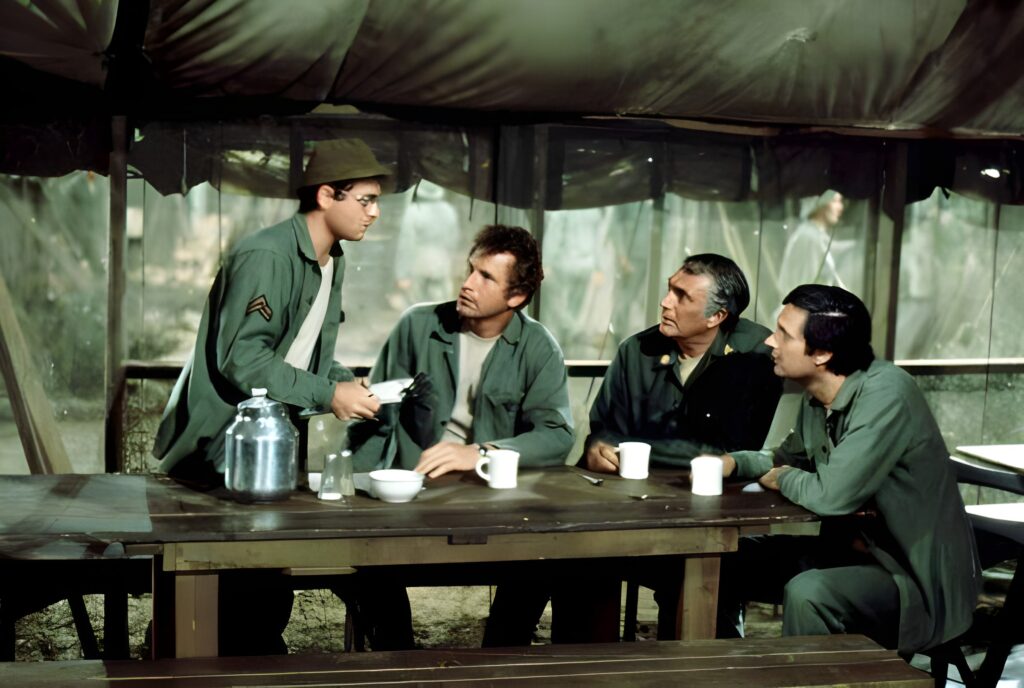
In “Welcome to Korea,” written by Everett Greenbaum, Jim Fritzell and Larry Gelbart and directed by Gene Reynolds, Hawkeye comes back from leave to hear from Radar that Trapper’s orders came through and he has already been shipped home. Hawkeye refuses to accept it. He jumps into Radar’s jeep for the run to Kimpo airfield, talks his way past the MPs and goes looking for his friend, only to learn that Trapper’s flight left about ten minutes before they got there.
Trapper did not leave him a letter. What he left was a message for Radar to pass along, and Radar delivers it the only way he can, with a kiss on Hawkeye’s cheek. It is a sweet, slightly ridiculous goodbye, and it is the only one Trapper ever got. On the same trip, Hawkeye and Radar pick up the new arrival who will take his cot, B.J. Hunnicutt.
Trapper was not finished, though. In 1979 CBS launched Trapper John, M.D., with the late Pernell Roberts as an older McIntyre running surgery at a San Francisco hospital, and it ran until 1986, more than twice as long as Rogers played him. Rogers moved on to House Calls, a career as an investor and money manager and a long run on Fox’s Cashin’ In. He died in Los Angeles on December 31, 2015, at 82, of complications from pneumonia, according to NPR.
He never pretended the choice was easy. “Do I have any regrets leaving the show?” he asked journalist Jerry Buck in 1979. “I’d have regrets if I hadn’t left.” Yet he also admitted to Reuters that had he known M*A*S*H would run another eight seasons, he probably would have “kept my mouth shut and stayed put.” Somewhere between those two answers is the reason Trapper slipped away with nothing but a borrowed kiss.



 ‘Gilligan’s Island’ Star Bob Denver’s 4 Children Are All Grown Up. Here’s Where They Are Now