

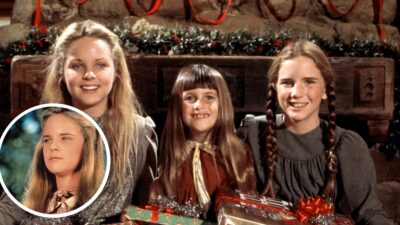
Mary Ingalls was cramming for her teacher’s exam by the light of an oil lamp when the words on the page began to swim. In the two-part Little House on the Prairie episode “I’ll Be Waving as You Drive Away,” which NBC aired on March 6 and March 13, 1978, she knocks that lamp over and starts a fire, and a trip to the eye doctor brings the news every viewer dreaded. Mary is going blind, and the show traced it back to the scarlet fever she had suffered earlier, the same explanation Laura Ingalls Wilder gave in her books.
That is the answer most of us grew up with, and it is probably wrong. In 2013, a team led by Dr. Beth Tarini of the University of Michigan published a study in the journal Pediatrics concluding that the real Mary Ingalls most likely lost her sight to viral meningoencephalitis, an inflammation of the brain and its lining. The clues came from Laura’s own hand, and Melissa Sue Anderson, who played Mary and is 64 today, had her own long road with the storyline.
What Did ‘Little House’ Say Made Mary Blind?

The television version stayed close to the books on the cause and invented almost everything around it. According to Wikipedia’s summary of the episode, Mary’s eyesight blurs while she studies, and an eye specialist, Dr. Burke, played by Ford Rainey, tells Charles that the damage comes from complications of her scarlet fever. Charles cannot bring himself to tell her, and Mary wakes one morning to total darkness.
Part two sends her to a school for the blind in Iowa, where a blind teacher named Adam Kendall refuses to let her feel sorry for herself. The real Mary went to an Iowa school too, but there was no Adam. The television Mary went on to teach and marry Adam, while the real Mary never did either, as Cheat Sheet and Wikipedia both note.
Mary’s eyes had troubled her once before, when she got glasses in the season two episode “Four Eyes.” This time there was no fixing it, and when word reached a teenage Melissa Sue Anderson that blindness was coming, she went straight to her boss to ask.
How Did Melissa Sue Anderson Learn To Play Blind?

Anderson told the story in her 2010 memoir, The Way I See It: A Look Back at My Life on Little House, in an excerpt published by ABC7 Chicago. “Is it true? Are you really going to make me go blind next season?” she asked Landon. He said yes. “My heart sank. I felt sick,” she wrote, and she burst into tears and asked whether she was being written out. “Of course not,” Landon told her. “You have a great future ahead.”
She was 15 when the episodes aired, and she was determined not to fake it. “Portraying a blind person required a great deal of research, which I started soon after reading these scripts,” she wrote in the memoir, as quoted by Cheat Sheet. “I didn’t want to be disrespectful or cartoonish.” She went to the Foundation for the Junior Blind in downtown Los Angeles to learn how a young person adjusts to losing her sight, and on camera she trained herself not to focus her eyes on anything.
In a 1980 Guideposts essay titled “Now I See,” Anderson admitted she arrived there resentful about the script change. A teacher there gave her simple homework: go home, close your eyes, and take four steps forward. She stood alone in her living room that afternoon and froze on the third step. “I felt as though I were about to fall off a cliff,” she wrote. “The room seemed to have dropped away from me.” The work paid off, because the episodes earned her a 1978 Emmy nomination for Outstanding Lead Actress in a Drama Series, according to Wikipedia and Biography.com.
Why Did She Later Call Mary “Blind And Boring”?

The nomination came with a sting. In the memoir, as quoted by Cheat Sheet, Anderson recalled Landon telling her, “You know you’re not going to win.” She agreed, but “his words kind of stopped me in my tracks.”
Over time the role started to feel like a box. “I used to say I was blind and boring,” she told the Atlanta Journal-Constitution in 2010. “Either I was just there not doing much or going through some tragedy.” The storylines, she said, became “too soap opera-ish,” and she eventually stepped away from the series.
Anderson, born September 26, 1962, in Berkeley, California, turned 64 in September. She lost her husband of 35 years, television writer and producer Michael Sloan, in August 2025, as reported by Hello! and Variety. She is among the ‘Little House on the Prairie’ cast members still alive today, but the girl she played was a real woman whose story ran differently.
What Was Life Like For The Real Mary Ingalls?
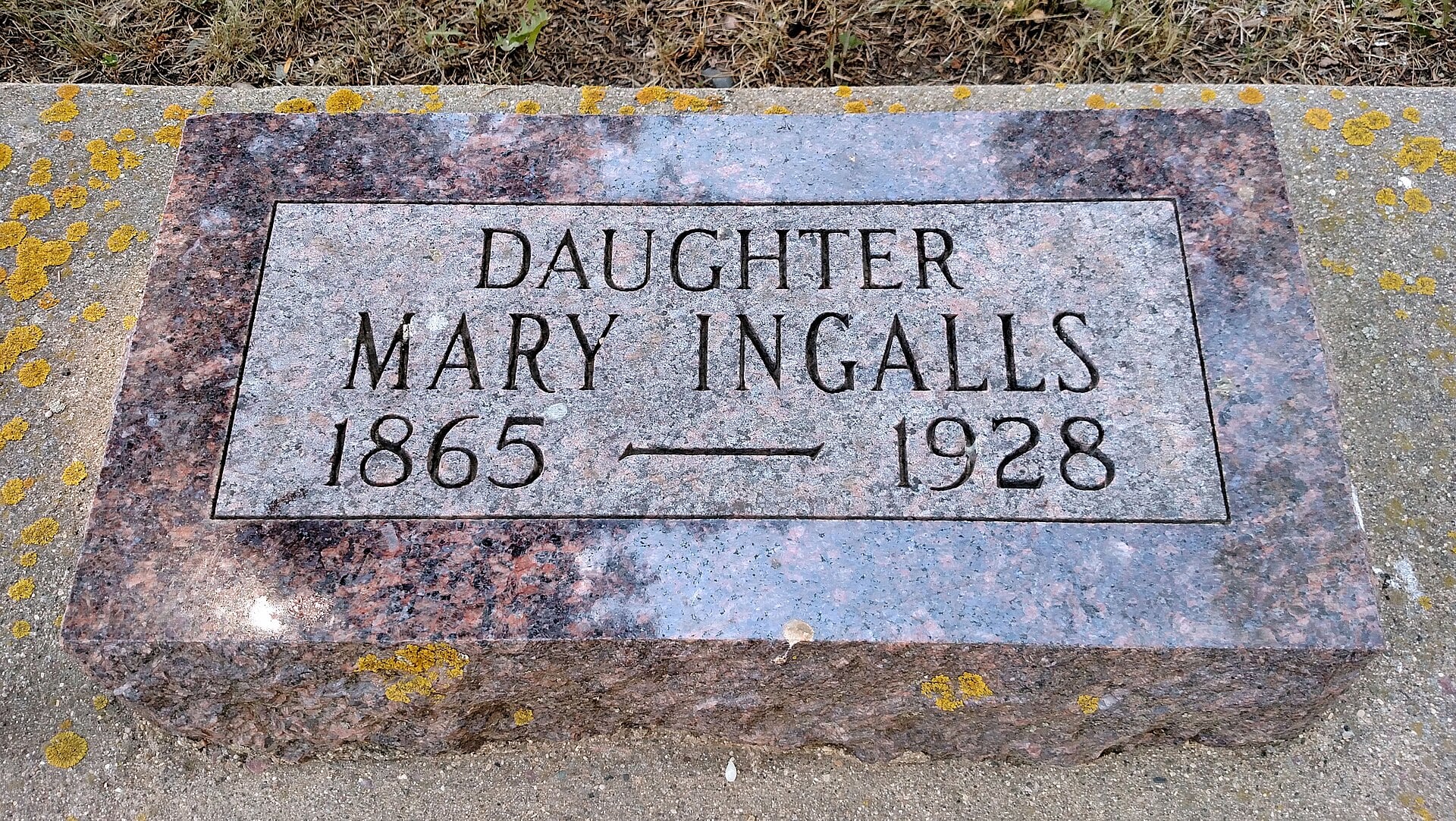
Mary Amelia Ingalls was born January 10, 1865, near Pepin, Wisconsin, on her father’s 29th birthday. She was 14 in 1879 when the illness struck, according to CBS News and Wikipedia, and By the Shores of Silver Lake sums up the result in one quiet line: the fever had settled in Mary’s eyes, and she was blind.
There was no school for the blind in Dakota Territory, so in 1881 Mary enrolled at the Iowa College for the Blind in Vinton. She finished the seven-year course and graduated on June 12, 1889, according to the American Printing House for the Blind’s museum timeline. Then she came home to De Smet, where she read, played the organ, wrote poetry and made fly nets for horses to help the family.
After her mother died in 1924, Mary lived with her sister Grace and then with her sister Carrie in Keystone, South Dakota. She died there of pneumonia in October 1928, at 63, and was buried beside her parents in De Smet. For most of a century, readers believed the scarlet fever story. A curious medical student did not.
What Do Doctors Think Really Took Mary’s Sight?

“Since I was in medical school, I had wondered about whether scarlet fever could cause blindness,” Tarini said in a University of Michigan release covered by CBS News in February 2013. Her team went back to newspaper reports, school records, Laura’s unedited memoir and her letters.
What they found never mentioned a rash. A local paper reported fears that “hemorrhage of the brain” had set in and that one side of Mary’s face became partially paralyzed. In a 1937 letter to her daughter Rose, quoted by The World, Laura described “some sort of spinal sickness” and wrote that a specialist found “the nerves of her eyes were paralyzed and there was no hope.” And the register at the Iowa College for the Blind listed the cause of Mary’s blindness as “brain fever.”
“Meningoencephalitis could explain Mary’s symptoms, including the inflammation of the facial nerve,” Tarini said. The researchers believe the novels named scarlet fever because readers knew it well. Scarlet fever was one of the most common infectious killers of American children between 1840 and 1883, according to the study. Tarini told The World that parents still flinch at the diagnosis because they think of Mary Ingalls, even though today it is treated much like strep throat.
So the show used the cause it was handed, and the real one was a brain infection nobody then could name. Anderson took a different lesson from those four steps in her living room. “The more I learned, the more I could open my mind and become more accepting and understanding of people,” she wrote. “We tend to be afraid of what we don’t know, and I’m glad our show helped dispel some of those feelings.”


 The Only ‘Soap’ Cast Members Still Alive Today