

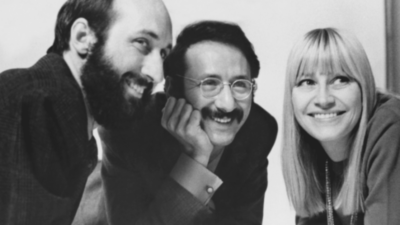
Mary Travers was born on November 9, 1936, in Louisville, Kentucky, which means the tall blonde who stood between Peter Yarrow and Paul Stookey would have turned 90 on Monday, November 9, 2026. If you saw Peter, Paul and Mary in their first years, you probably remember how she sang with her whole body, her long hair swinging in time with the guitars. You may also remember that between songs she barely said a word.
The two men did the talking, and audiences took her silence as part of the act. In a way it was, but there was more to it than that. The reason began with the manager who put the trio together, and the group’s last surviving member later added a detail that only the people closest to her ever saw.
How Did a Manager Build Peter, Paul and Mary Around Mary Travers?
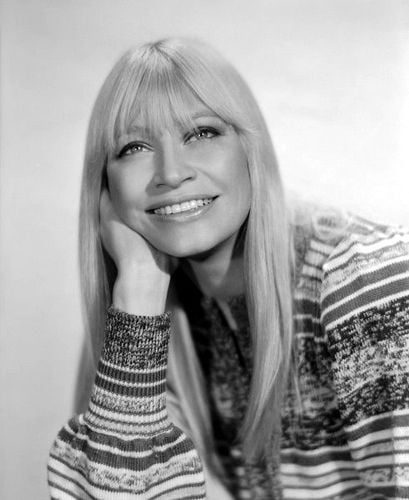
Before she was the “Mary” of the trio, Travers was a shy Greenwich Village singer whose friends Fred Hellerman and Theodore Bikel had to coax her into performing at the neighborhood folk clubs, according to her obituary in The New York Times. That reluctance did not scare off Albert Grossman, a Chicago entrepreneur who had announced at the 1959 Newport Folk Festival that “the American public is like Sleeping Beauty, waiting to be kissed awake by the prince of folk music,” as Time recalled.
Grossman had a plan. As Travers recalled in David Hajdu’s book Positively 4th Street, quoted by the Associated Press, his strategy was to “find a nobody that he could nurture and make famous.” He suggested her to Peter Yarrow, a singer he already managed, with the warning “if you could get her to work,” as the Times put it. Times critic Robert Shelton was blunter about the formula. “Sex appeal as a keystone for a folk-song group was the idea of the group’s manager, Albert B. Grossman,” he wrote.
The third member was a comic and singer named Noel Stookey, whom Grossman had perform under his middle name, “Paul,” according to Time. The three rehearsed for seven months in Travers’s apartment before their 1961 debut at the Bitter End, and Grossman then landed them a deal with the new Warner Bros. Records. Travers explained in a 1966 Times interview what kept three strong personalities together. “There has to be a certain amount of love just in order for you to survive together,” she said.
Two years after that debut, the chemistry carried them to the National Mall.
What Did the Trio Sing on the National Mall in 1963?

On August 28, 1963, Peter, Paul and Mary stood near the Lincoln Memorial at the March on Washington and sang Bob Dylan’s “Blowin’ in the Wind” and “If I Had a Hammer” for a crowd that would soon hear Martin Luther King Jr. deliver his “I Have a Dream” speech. They later marched with King in Selma, Alabama, too.
Earlier that year “Puff, the Magic Dragon” had climbed to No. 2 on the Billboard Hot 100. A 1964 Newsweek article helped start the rumor that it was about marijuana, and Yarrow denied it for the rest of his life. Our story on the real meaning behind “Puff, the Magic Dragon” traces how a Cornell student’s poem became a song grownups refused to take at face value.
The group’s only No. 1 single came in December 1969, when their recording of John Denver’s “Leaving on a Jet Plane” topped the chart. Within a year the three had split to pursue solo careers, and Travers recorded five albums of her own. They reunited in 1978 and kept touring together for three more decades, until her health would no longer allow it.
How Did Mary Travers Face Her Final Battle?

Travers was diagnosed with leukemia in 2004, and a bone marrow transplant the following year gave her back the stage for a while. She sounded almost giddy when she spoke to the Associated Press in 2006. “It was like a miracle,” she said. “I’m just feeling fabulous. What’s incredible is someone has given your life back.” Then came the image she could not get over. “I’m out in the garden today. This time last year I was looking out a window at a hospital.”
By the middle of 2009 the leukemia had returned. Travers died on September 16, 2009, at Danbury Hospital in Connecticut from complications of her treatment. She was 72 and had spent her later years in Redding, Connecticut, with her husband, Ethan Robbins. Yarrow told the AP she faced her illness “with great dignity and without restraint,” adding, “It was, as Mary always was, honest and completely authentic.”
Her memorial was held at Riverside Church in New York City on November 9, 2009, which would have been her 73rd birthday. Gloria Steinem summed up what Travers had meant to a generation of young women. She “seemed to us to be a free woman, and that helped us to be free,” Steinem said.
That free woman had once been told to keep quiet on stage.
Why Did Mary Travers Stay Silent on Stage?
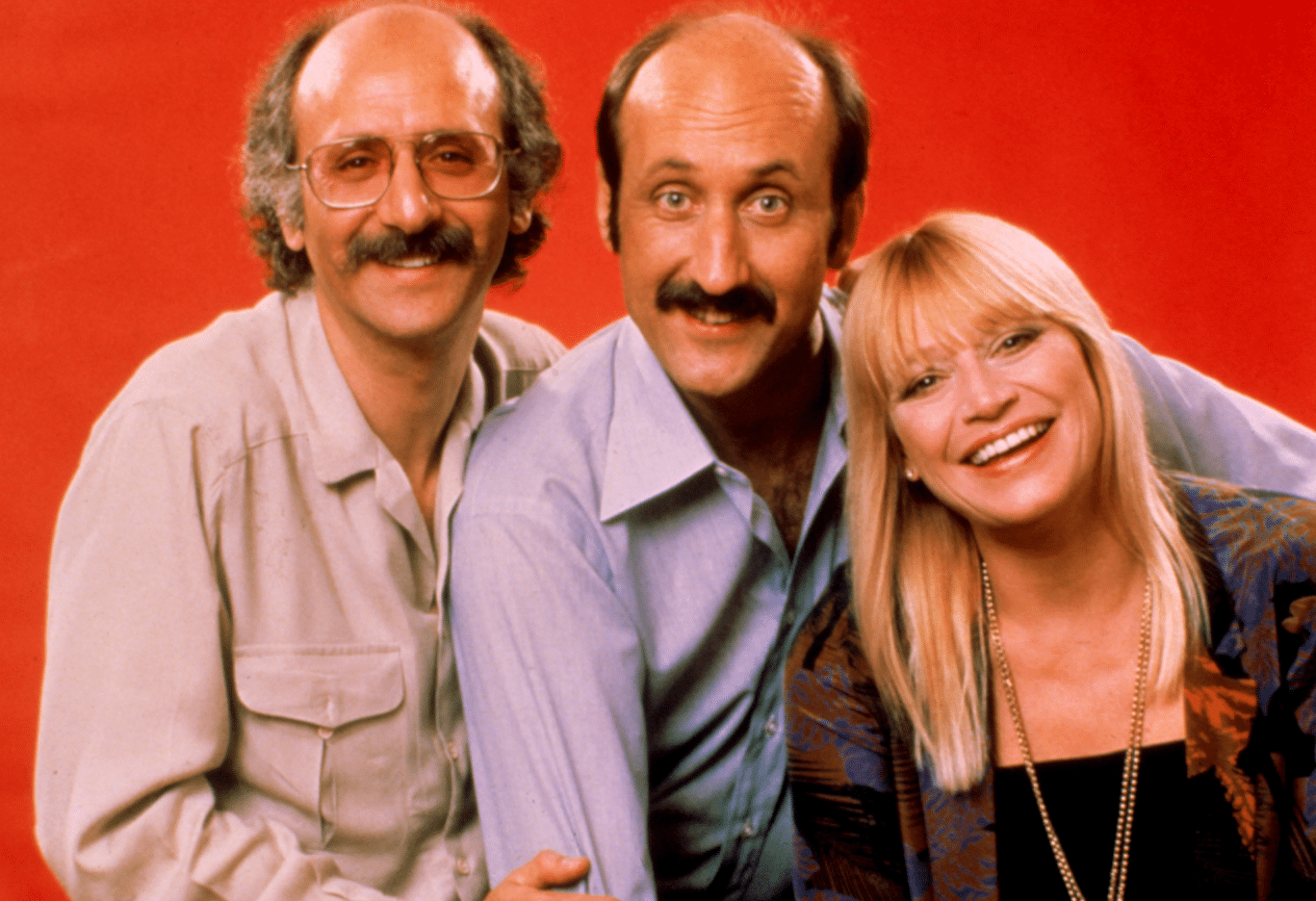
The rule came from Grossman. In the early days he told Travers never to speak on stage, to keep an air of mystery about her, according to her obituaries in Rolling Stone and The Week. A 2024 profile posted on Noel Paul Stookey’s own Substack called it a curious request from a manager who was “ahead of his time in many ways.” Travers, for her part, often said the silence came from her own nerves.
Stookey’s account suggests both were true. In his statement after her death, quoted by the Bangor Daily News, he wrote that “as a performer, her charisma was a barely contained nervous energy,” which he said was “occasionally (and then only privately) revealed as stage fright.” The swaying fans remember may have been doing double duty, carrying the songs while she worked off jitters no audience ever saw. Stookey added that “as a partner … she could be vexing and vulnerable in the same breath.”
She did not stay quiet for long. Within a few years, the 2024 profile noted, she had found her voice “in more ways than one,” speaking her mind from the stage and later traveling to El Salvador to interview refugees. Stookey called her “brave, outspoken and inspiring,” especially “in her defense of the defenseless.”
Today Stookey is the only one left. Peter Yarrow died on January 7, 2025, at 86, after four years with bladder cancer. Stookey, 88, still lives in Maine and spent this fall on the road singing the old songs, the ones he once shared with a nervous young woman who let the music talk for her. “I seldom heard her say she was sorry,” he wrote in 2009, “yet she often displayed an immense generosity that would surprise even herself.”

 The Only ‘CHiPs’ Cast Members Still Alive Today