

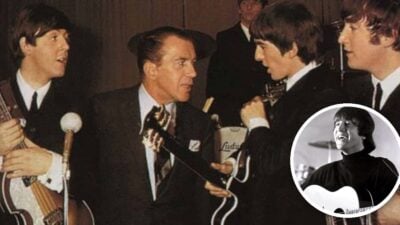
When the Beatles released Rubber Soul on December 3, 1965, track two was a gentle waltz about a girl, a room full of wood and a night that went nowhere. The man in “Norwegian Wood (This Bird Has Flown)” ends up sleeping in the bath, wakes to find her gone, and then delivers the line that has puzzled listeners for sixty years: “So I lit a fire.” Here is the short answer. John Lennon said the song was about a real affair he was hiding from his wife, Cynthia, and he never named the woman. Paul McCartney says the fire was no cozy blaze in the grate, because in his telling the narrator burns her flat down.
“It was about an affair I was having,” Lennon told David Sheff in the 1980 Playboy interview, and he admitted he wrote it so his wife would not catch on. Then he added the sentence that has kept the guessing going ever since: “But I can’t remember any specific woman it had to do with.” To see how a confession turned into a riddle, you have to go back to a ski trip in the Alps.
Why Did John Lennon Hide “Norwegian Wood” In Plain Sight?
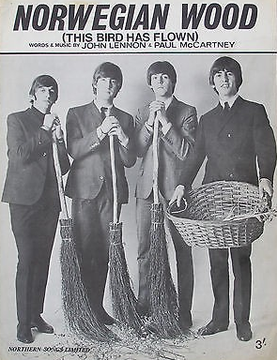
Lennon began the song in January 1965 in St. Moritz, Switzerland, on a winter holiday with Cynthia, producer George Martin and Martin’s future wife, Judy Lockhart-Smith. Martin had hurt himself skiing, which meant long hours indoors, and Lennon came home with a tune under the working title “This Bird Has Flown.”
He explained the problem the lyric had to solve in his long 1970 interview with Jann Wenner of Rolling Stone, later published as Lennon Remembers. He was writing about an affair without letting his wife know it, he said, so the words came out “very gobbledegook,” drawn from “my experiences, girls’ flats, things like that.” Ten years later he was blunter with Sheff, whose tapes became the book All We Are Saying. “I was very careful and paranoid because I didn’t want my wife, Cyn, to know that there really was something going on outside of the household,” he said. “I’d always had some kind of affairs going, so I was trying to be sophisticated in writing about an affair.” The trick, as he put it, was to do it “in such a smoke-screen way that you couldn’t tell.” So what did the smoke screen actually say?
What Does The Song Actually Say Happens That Night?

The lyric plays like a short film. The singer opens by admitting he once had a girl, “or should I say, she once had me.” She shows him her room and asks if it isn’t good, this Norwegian wood. They talk and drink wine until two in the morning, and when he expects more, she laughs, says she has to work in the morning and goes to bed. He crawls off to sleep in the bath. When he wakes up, the bird has flown.
The last verse is only a few words long. He is alone, he lights a fire, and he asks once more whether it isn’t good, Norwegian wood. Nothing in the lyric says what the fire is for, and McCartney himself has granted that a listener could take it innocently. “It could have meant I lit a fire to keep myself warm, and wasn’t the decor of her house wonderful?” he told Barry Miles. That was not what he meant, and it was not even where the title came from.
Who Came Up With The Ending, And What Was “Norwegian Wood”?
McCartney gave his side in Many Years From Now, the 1997 authorized biography written by Barry Miles. In 1965 he was living with the family of his girlfriend Jane Asher in London, and her brother Peter Asher, of Peter and Gordon, had decorated his room in the fashionable Scandinavian style. “Peter Asher had his room done out in wood, a lot of people were decorating their places in wood,” McCartney recalled. “It was pine really, cheap pine.” The title, he said, was “a little parody really on those kind of girls who, when you’d go to their flat, there would be a lot of Norwegian wood.” The affair, he added, was completely imaginary from his point of view, though in John’s it was based on one.
The ending, McCartney says, was his idea. “In the last verse, I had this idea to set the Norwegian wood on fire as revenge, so we did it very tongue in cheek,” he told Miles. He laid out the plot as he saw it: “She led him on, then said, ‘You’d better sleep in the bath.’ In our world the guy had to have some sort of revenge.” The fire, he said, meant the narrator burned the place down “as an act of revenge,” and then the band left it there and went into the instrumental.
Lennon’s own accounts of the writing do not quite line up. In 1970 he credited McCartney with helping on the middle section, but by 1980 he called “Norwegian Wood” “my song completely.” That leaves the two partners in rough agreement on the fire and in quiet disagreement over whose song it was. Neither of them, though, ever answered the bigger question.
So Who Was The Woman In “Norwegian Wood”?
Lennon never said, and every name that follows is a theory from people around him or from his biographers, never a confirmation from him. The name heard most often is Maureen Cleave, the Evening Standard writer who was close to the Beatles and who conducted the 1966 interview in which Lennon said the band was more popular than Jesus. Lennon’s boyhood friend Pete Shotton suggested she was the woman, and Bob Spitz’s 2006 book The Beatles: The Biography reports that Lennon claimed a liaison with her. Cleave always denied it, saying that in all their meetings Lennon made “no pass” at her. She died on November 6, 2021, at 87.
Biographer Philip Norman pointed somewhere else. In his 2008 book John Lennon: The Life, he named Sonny Freeman, a German-born model who was then married to photographer Robert Freeman, the man who shot the stretched, moody cover of Rubber Soul itself. Norman wrote that she and Lennon carried on a secret affair for more than a year. That claim rests on Norman’s reporting alone, and Lennon never confirmed it. Robert Freeman died in November 2019 at 82.
The one person the song was written to fool was Cynthia, who stayed married to Lennon until 1968 and died of cancer at her home in Mallorca on April 1, 2015, at 75. Whoever the woman was, the record itself had a second secret, and this one was out in the open for everyone to hear.
How Did A Cheap Sitar End Up On A Beatles Record?
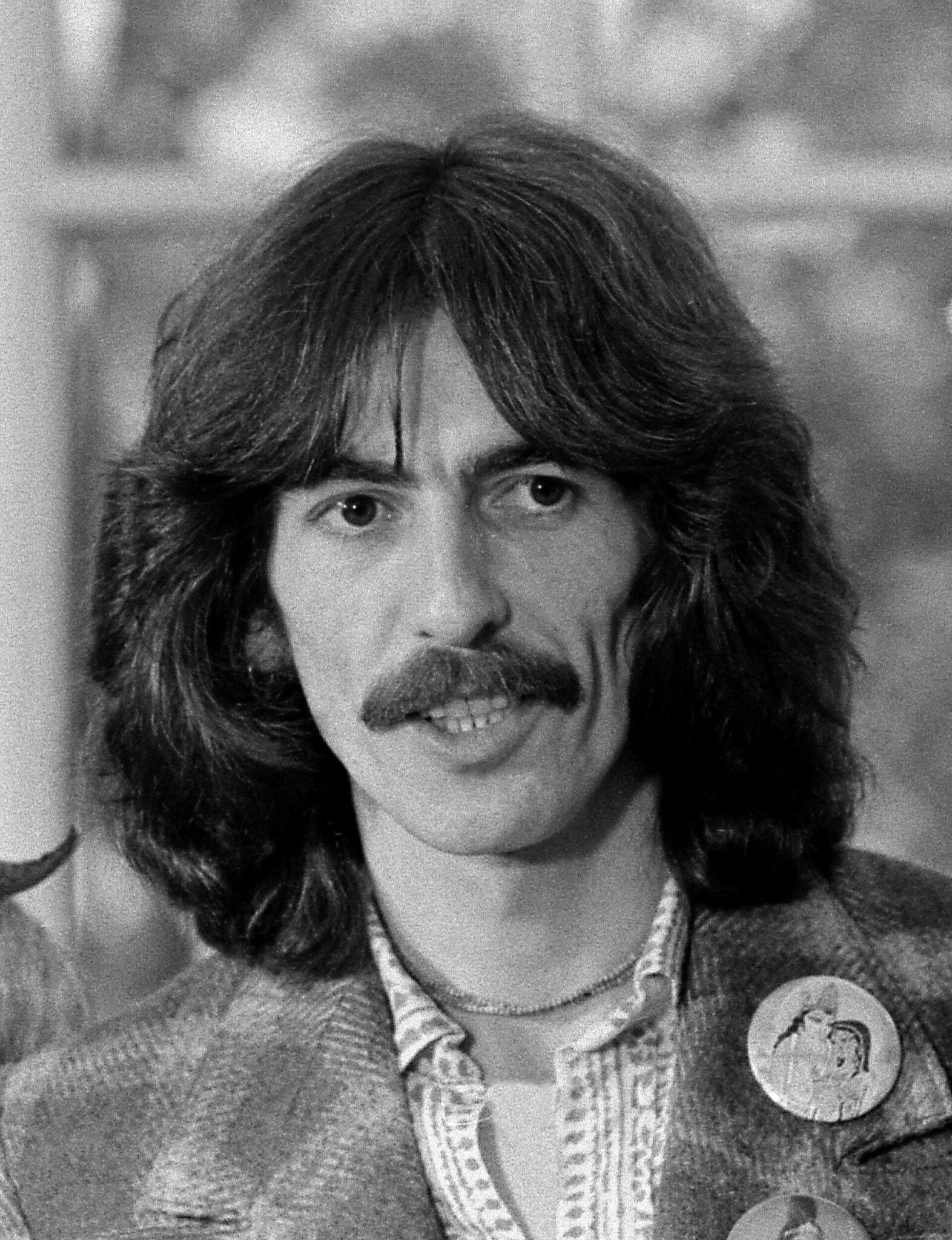
George Harrison had first met the instrument on the set of Help! in April 1965. Curious about its sound, he bought an inexpensive sitar from a little shop called Indiacraft near the top of Oxford Street in London. When the band cut “Norwegian Wood” at EMI Studios in London that October, the backing track felt like it needed something more, and Harrison reached for it. “It was quite spontaneous: I found the notes that played the lick,” he recalled in The Beatles Anthology. “It fitted and it worked.”
The Beatles made a first version on October 12, then remade the song on October 21, the take that ended up on the album. Other British bands had flirted with Indian sounds that year, including the Yardbirds on “Heart Full of Soul” and the Kinks on “See My Friends,” but those records imitated the drone on guitar. “Norwegian Wood” is widely credited as the first rock record to feature a real sitar, and Harrison called it “the first use of sitar on one of our records.” Within a year he was studying with Ravi Shankar.
The song is still making news. On October 2, 2026, the Beatles released a new Special Edition of Rubber Soul, newly mixed by Giles Martin, the son of the producer who sat out that ski holiday nursing an injury while Lennon worked out the tune. Paul McCartney, now 84, is the surviving half of that songwriting partnership, and he has never budged on the ending. If you bought Rubber Soul in 1965 and pictured a man warming his hands in an empty room, you heard exactly what Lennon wanted Cynthia to hear, but McCartney heard something else. “In our world,” he said, “the guy had to have some sort of revenge.”




 81-Year-Old Deep Purple Singer Ian Gillan Hospitalized After ‘Medical Emergency’ Forces Band To Postpone Shows