

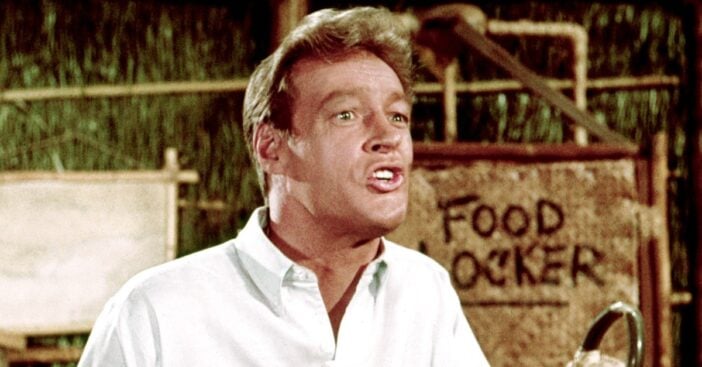
Across 98 episodes on CBS, from September 1964 to April 1967, the Professor on Gilligan’s Island could turn a coconut shell into a working radio, yet he never managed to patch the hole in the S.S. Minnow. Viewers have teased the show about it for six decades, and Russell Johnson, the actor who played him, joked about it for the rest of his life.
The short answer is that the boat was never meant to be fixed. Creator Sherwood Schwartz fought the president of CBS to keep his castaways stranded, and when the network pushed for a version where they sailed off after the first week, he told TV Guide in 1965, as MeTV recounted, “That’s an idea for a show, but it’s not my show.” The Professor also had a real name, though you had to be listening closely to the radio in the very first episode to catch it.
What Was The Professor’s Real Name?
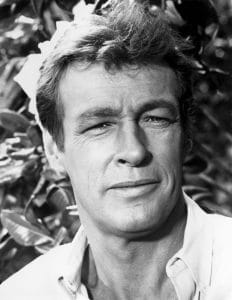
In “Two on a Raft,” the first episode CBS broadcast on September 26, 1964, the castaways huddle around their radio for a news report about the missing Minnow. That report names the Skipper as Jonas Grumby and the Professor as Roy Hinkley, described as a research scientist and a well-known Scoutmaster. The name barely surfaced again. Its one other appearance came when Mr. Howell introduced him as “Roy Huntley,” and after the Professor corrected him, Thurston brushed it off with “Brinkley, Brinkley.”
When Johnson died in 2014, The New York Times called the full name, Dr. Roy Hinkley, a detail only avid fans tend to remember. His diplomas were easier to recall. Asked about his schooling, the Professor rattled off “a B.A. from USC, a B.S. from UCLA, an M.A. from SMU and a Ph.D. from TCU,” and Mr. Howell decided it sounded like “a marvelous recipe for alphabet soup.”
Even the theme song overlooked him at first. In season one, the closing verse named Gilligan, the Skipper, the millionaire and his wife and the movie star, and then folded the last two castaways into “the rest.” Bob Denver lobbied for a change, and from season two on, the Professor and Mary Ann got their own line. So the man with four degrees finally had his name in the song, which raises the real question of what he could actually build.
Why Could He Build A Radio But Not A Boat?

The joke worked because the Professor’s island workshop kept getting more impressive. Johnson’s character, as the Associated Press described him, built generators and other gadgets out of scrap he found on the island, and the coconut radio became the most famous of them.
The show did let him try. In “Goodbye Island,” which aired in November 1964, the Professor discovered that a syrup tapped from a tree hardened into a powerful glue, and the castaways used it to patch up the Minnow for the trip home. The glue failed, and by the end of the episode the boat was in worse shape than when they started. It was the pattern for the whole series, because any escape plan that got close to working had to fall apart by the closing credits. The man who played the Professor had his own thoughts about that.
Did Russell Johnson Ever Explain It?

Johnson came to the island the long way. He flew as a B-24 bombardier in the Pacific during World War II and broke both ankles when his plane was shot down over Mindanao in 1945, earning a Purple Heart, according to the AP. Hollywood then cast him as a heavy in one Western after another. “I played more bad guys than you can shake a stick at until I played the Professor,” he said, as the Times recalled. “Then I couldn’t get a job being a bad guy.”
He never claimed to have an in-story excuse for the Minnow. Instead, he turned it into his favorite punch line, pointing out in interview after interview that the Professor could build a shortwave radio out of a coconut but couldn’t figure out how to patch a hole in a boat. The scientists in the audience didn’t mind. Speaking at a biochemical conference in 2001, he looked out at the crowd and later recalled to Mental Floss, “There were four or five hundred PhDs there, and every one of them was a Gilligan’s Island fan.” Johnson died at his home on Bainbridge Island, Washington, on January 16, 2014, at 89. He could laugh about the boat because he knew the real reason it stayed broken, and that reason went all the way to the top of CBS.
Why Did CBS Want The Castaways Rescued?
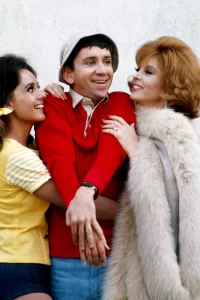
CBS president Jim Aubrey liked Gilligan and the Skipper, and he liked their little charter boat, but he hated the island. “In Mr. Aubrey’s view of the series, the shipwreck, the Castaways, and the deserted island were simply the first episode,” Schwartz wrote in his account of the battle, as Slashfilm quoted it. Aubrey’s worry was that every new viewer would need the premise explained, and he wanted the crew off the island and on to a fresh adventure each week. Schwartz refused, and Aubrey went ahead with his own charter boat comedy, The Baileys of Balboa, which premiered that same fall, two nights before Gilligan’s Island, and lasted 26 weeks.
Schwartz answered the explanation problem with the theme song, which retold the shipwreck in about a minute at the top of every episode. “Exposition is the most deadly obstacle to entertainment,” he wrote. The song worked almost too well. When the show was about ten weeks old, a Coast Guard officer named Commander Doyle called Schwartz about telegrams and letters from viewers who wanted the castaways saved. “Why not send one U.S. destroyer to rescue those poor people before they starve to death?” one asked. Schwartz later told Entertainment Weekly, “Who did they think was laughing at the survivors of the wreck of the U.S.S. Minnow?” That left the question fans would ask him for the rest of his life: why the smartest man on the island never simply fixed the boat.
What Did Sherwood Schwartz Say About The Boat?

For Schwartz, a working boat would have ended the experiment he built the show to run. After the first season, he told TV Guide that “the network, the sponsors and the advertising agency think the star of Gilligan’s Island is… the island.” In his book Inside Gilligan’s Island, he described the island as “a social microcosm and a metaphorical shaming of world politics,” a place where people with nothing in common had to cooperate to survive. He was blunter in another interview, reported by the Jewish Journal, calling the castaways a metaphor meant “to show how the nations of the world have to get along together or cease to exist.” Seven strangers could only learn that lesson if nobody could leave.
As for the Professor himself, Schwartz gave an answer that was more about human nature than carpentry. When Mark Simone asked him on WABC radio why the Professor could rig up nearly anything except a way home, Schwartz said it was logical, because people tend to overlook the obvious fix. “That’s true of mankind,” he said, according to a 2009 account of the interview by BrandlandUSA, the only published record of that exchange.
Schwartz died in 2011 at 94, and today Tina Louise, 92, is the last of the original castaways still with us. The Minnow never got its patch, and Gilligan never got a first name either. Johnson thought that was the charm of it. The show had no murders and no car crashes, he told an interviewer in 2004, only “good, plain, silly fun.”
