


The men of Walnut Grove took off their hats, and Reverend Alden bowed his head. “Dear Lord, we bury a friend today,” he prayed. “This town has been our friend.” Then the plungers went down, one after another. The boarding house went up in a ball of fire, Mr. Edwards wept as his own charge blew, and the little Minnesota town that viewers had visited since 1974 came down in smoke and splinters on NBC on February 6, 1984.
That was Little House: The Last Farewell, the two-hour movie that Michael Landon wrote and directed as the true ending of Little House on the Prairie. The story gave the townspeople a good reason to destroy their homes. The dynamite was real, though, and so were the buildings, and the reason they had to go began a long way from the script.
How Did ‘The Last Farewell’ End Walnut Grove?
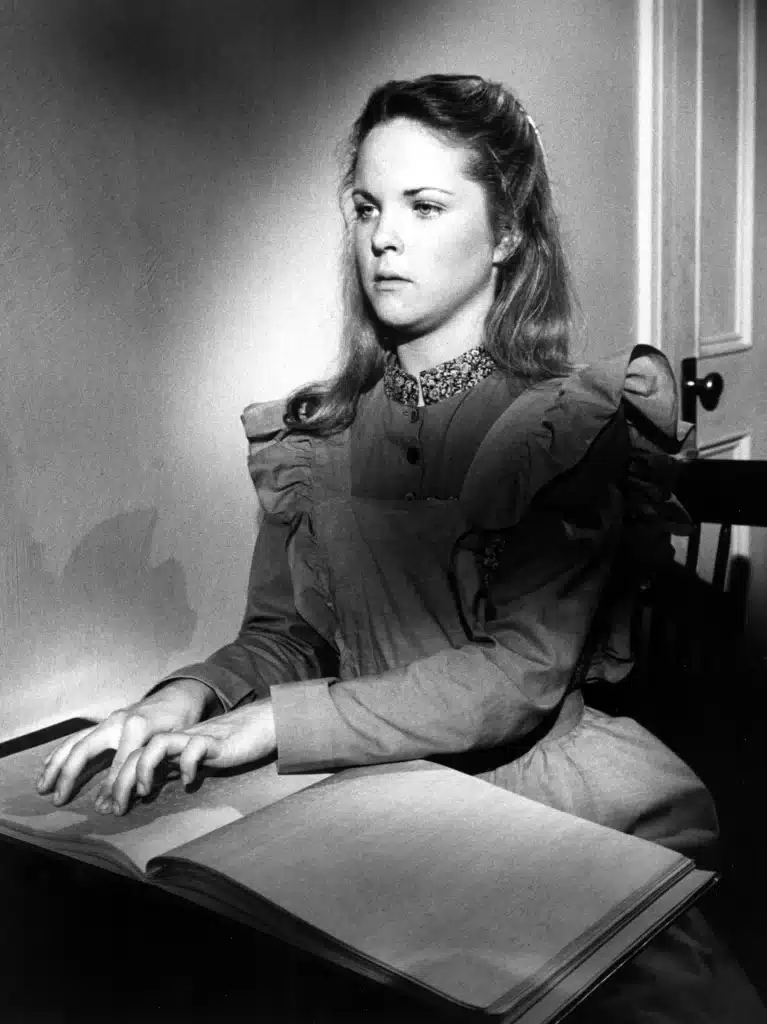
Landon brought Charles and Caroline back to town for one more visit, with Karen Grassle returning as Ma for the last time after her own sad goodbye to the series, and then dropped a villain on everybody. A land tycoon named Nathan Lassiter, played by James Karen, had gotten title to all of Hero Township, land the settlers believed they had homesteaded. When the courts and then the cavalry sided with him, Laura, played by Melissa Gilbert, talked them into a stand of their own: if they could not keep the town, nobody would.
When Lassiter rode in to claim his prize, he found rubble. The townspeople told him the buildings had been theirs to destroy, and when word came that the neighboring towns would do the same thing, he walked away beaten. Reverend Alden declared that Walnut Grove “did not die in vain,” and the whole town rolled out in wagons singing “Onward Christian Soldiers.” Gilbert, who was 19, later recalled that last shot as “all of us walking out of town from the church” as they sang. That church was still standing, and so was the Ingalls family’s little house, and neither was an accident.
Were The Explosions Real?

Every bit of it. The town was a real set on the Big Sky Ranch in Simi Valley, California, and the crew rigged the actual buildings the cast had worked in for nearly a decade. After a round of test blasts, the destruction was filmed in a single day. The actors were kept away for safety and arrived the next morning to film their reactions to what was left.
“We all walked down into town from the trailers together and rounded the corner and it was gone,” Gilbert said in her 2011 interview with the Television Academy Foundation. The tears on screen, she has said, were real. She called the weeks between reading the script and that final day “the longest funeral I’d ever attended.”
Landon put it more gently before the movie aired. “I think it makes for a good strong pioneer ending,” he told The New York Times in 1984. “It was also a nice catharsis for the cast and crew. There were lots of tears when we finally blew up the town. The actors had all become very attached to their own buildings, so it was very emotional.”
Why Were The Church And The Little House Spared?

Landon drew the line at two buildings. Producer Kent McCrary, in an account quoted by CBR, remembered Landon saying, “I will not blow up the little house nor the church.” Alison Arngrim, now 64, heard the same story about the chapel. “I’m not gonna be the guy to blow up a church,” she recalled Landon saying, in a 2023 interview with Yahoo Entertainment.
The church, Gilbert told Entertainment Weekly, “was a sacred building for the entire Walnut Grove community on the show and off the show.” The little house got a quieter send-off. Rather than blowing it up, the crew took it apart, and Gilbert said Stan Ivar, the actor who played blacksmith John Carter and is now one of the show’s surviving stars at 83, “disassembled it piece by piece and has had it in storage forever.”
Landon moved straight on to Highway to Heaven that September, reuniting with Victor French for five seasons, and he died of pancreatic cancer on July 1, 1991, at 54. The full story of why his town had to go came out in pieces over the years.
What Was The Real Reason Michael Landon Blew Up Walnut Grove?
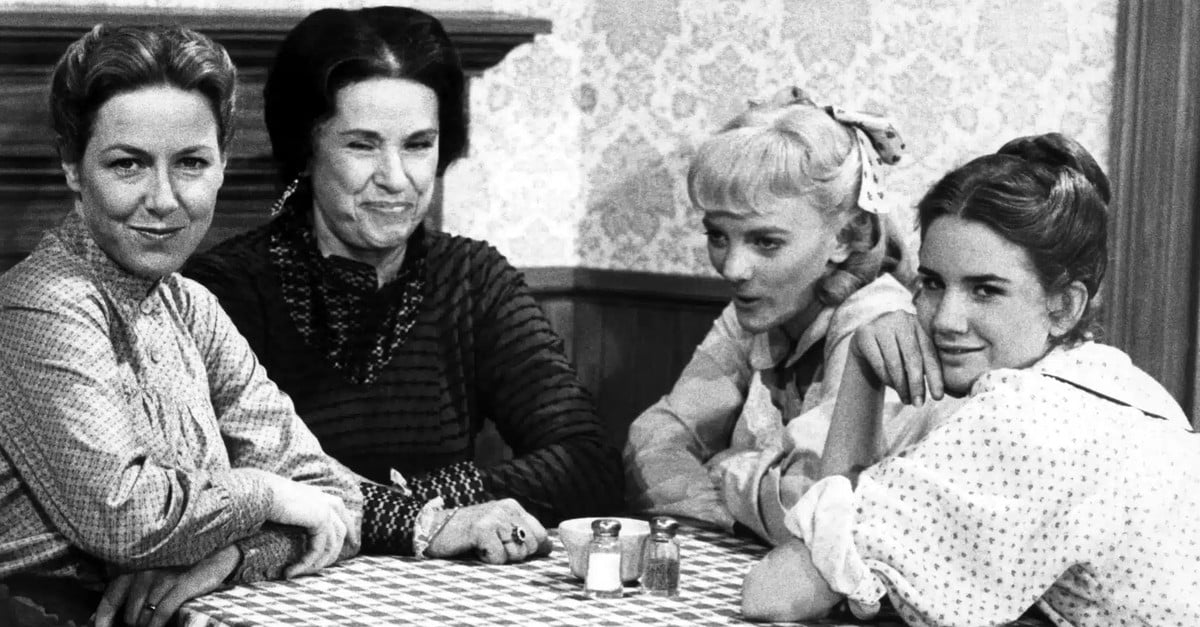
The first reason was a lease. The ranch land had to go back the way the production found it, and McCrary said the company had promised to “put the acreage back to its normal state,” because the owner used it to graze cattle. Arngrim remembered the ranch simply telling the cast and crew to take their sets with them. “And of course, Michael being Michael went, ‘We blow it up,'” Arngrim said.
NBC spokesman Bill Kiley gave UPI the network’s version at the time. “Mike decided that if the town had to go, he might as well send it out in a blaze of glory on the screen,” he said.
Gilbert saw something angrier underneath. In her 2009 memoir, Prairie Tale, she wrote that Landon learned Little House was finished only because it was missing from NBC’s fall lineup. Nobody from the network ever called him. “Perceiving disrespect, Mike’s temper redlined,” she wrote, and he wanted to destroy all the sets in Simi Valley. Talking to Entertainment Weekly, she added that he was “so angry that NBC never called him,” and that “it was just such a disrespectful thing to do to him.” In the Television Academy interview she was even blunter, calling the blast Michael’s way of saying “No one else is going to shoot here. This was mine.”
Gilbert also remembered the talks she had with Landon about it, including “his desire to not have anyone else use our sets.” In their minds, the town was never NBC’s to keep.
“Those were ours,” Gilbert said. “We built them.”



 70-Year-Old Tom Hanks’ 4 Kids Are All Grown Up, And One Followed Him Behind The Camera