

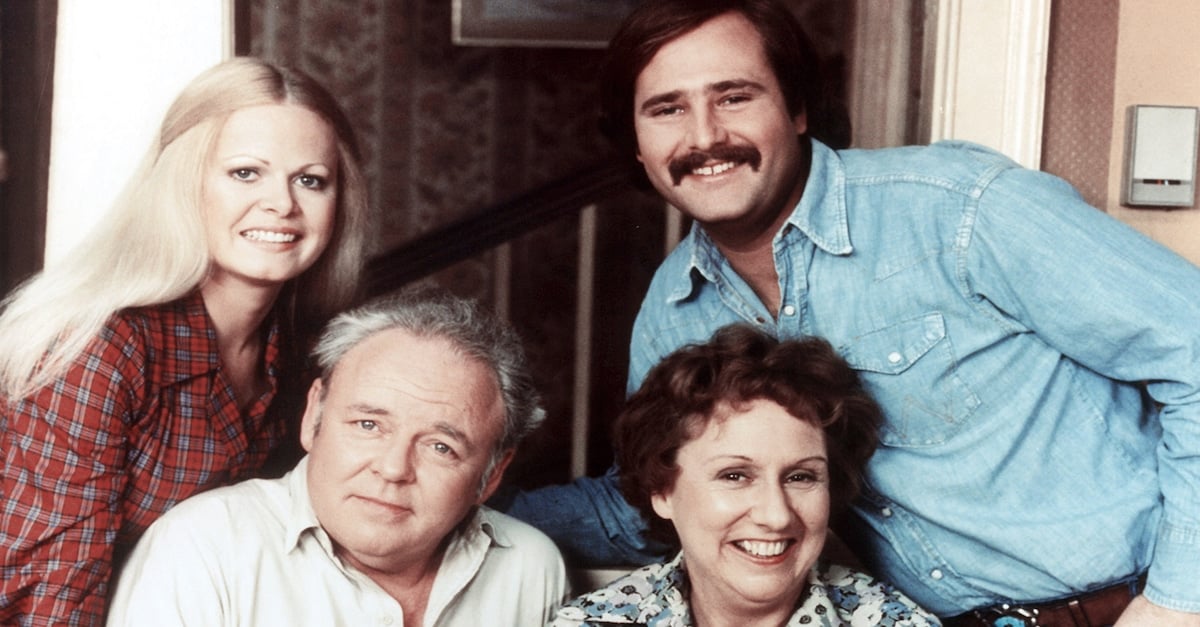
On Tuesday night, January 12, 1971, CBS viewers who stayed tuned at 9:30 got something unusual before the jokes started. Ahead of the first episode of All in the Family, the network ran a solemn disclaimer explaining that the show they were about to watch meant well. The network also had extra operators standing by for the angry calls it was sure would come.
Norman Lear, who created the show and died in December 2023 at 101, saw that warning very differently than the executives who wrote it. To understand why he wasn’t bothered, you have to go back to the two times another network said no.
Why Did ABC Turn Down Archie Bunker Twice?

Lear adapted the British sitcom Till Death Us Do Part, and he shot it for ABC first. The original pilot, “Justice for All,” was taped in New York in 1968 with Carroll O’Connor as Archie Justice and Jean Stapleton as his wife, Edith. ABC passed but ordered a second try, “Those Were the Days,” which was taped in Hollywood in February 1969 with a new young couple. ABC passed again. Lear told Variety’s Army Archerd the network found it “too controversial,” and he had a sharper explanation for the Los Angeles Times in November 1970. “Our timing was bad,” he said, according to TV Obscurities. “We turned it in right after ABC had turned off Turn-On,” a racy sketch show ABC yanked after one episode.
CBS was in a different mood. Robert D. Wood had become network president in 1969, and he was clearing out rural hits like Green Acres to chase younger viewers. CBS ordered 13 episodes with Wood’s backing, but he was candid about his nerves. “Frankly, we’re still not sure how to introduce this one to the public,” Wood told Variety on July 22, 1970, six months before the debut. So it went on quietly, with a note of caution in front.
What Did the ‘All in the Family’ Disclaimer Actually Say?
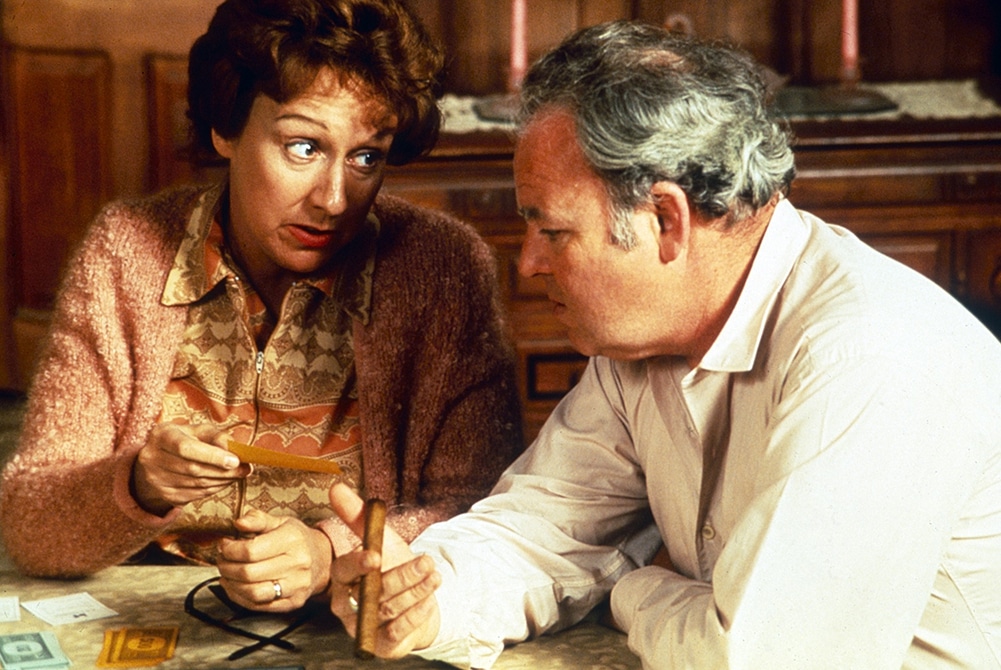
The first episode, “Meet the Bunkers,” opened with a card that read, “The program you are about to see is All in the Family. It seeks to throw a humorous spotlight on our frailties, prejudices and concerns. By making them a source of laughter, we hope to show, in a mature fashion, just how absurd they are.”
Lear had no idea it was coming. “It was a total surprise to us,” he told Terry Gross on NPR’s Fresh Air in 2014. “But we lived with it for some weeks and then they took it down.” He had been far more worried about a racy joke in the opening scene, a Sunday morning crack from Archie that the network wanted cut. Lear dug in, and he told Gross what he said to the executives: “if you forced the change, I won’t be back.” He was still on the phone with the network’s president shortly before it aired.
Then came the phone calls. CBS had hired dozens of extra operators for the protests, and they did get busy, but not the way anyone expected. “There was an avalanche, but 99% of the callers liked the show,” Lear told Variety in 1971, as the magazine’s Tim Gray recounted for the show’s 50th anniversary. The bigger problem was that not many people were watching yet.
How Did a Slow Start Become Five Straight Years at No. 1?

That first season of 13 episodes finished 34th in the Nielsen ratings. CBS renewed it anyway that March. On May 9, 1971, the Emmys opened with the Bunkers watching the broadcast, and the night ended with wins for best comedy series and best new series and a best actress trophy for Stapleton.
About two weeks later, on May 24, Daily Variety had it at No. 1 in Nielsen’s 70-city tally, and over the summer of 1971, when the competition was showing reruns, the Bunkers’ own reruns pulled in even more viewers. All in the Family then topped the yearly Nielsen ratings every season from 1971 to 1976, the first series to stay on top five years running.
Lear never claimed the show would fix anything. “If two thousand years of the Judeo-Christian ethic hadn’t eradicated bigotry and intolerance, I didn’t think a half-hour sitcom was going to do it,” he wrote in his 2014 memoir, Even This I Get to Experience. Carroll O’Connor died in 2001 at 76 and Jean Stapleton in 2013 at 90. Rob Reiner, who played Mike, died in December 2025 at 78. Sally Struthers, now 79, is the last of the original All in the Family stars still with us. Four years after that premiere, the networks started reaching for warnings again, and Lear finally said out loud what he thought they really did.
Why Did Norman Lear Think Warnings Helped Ratings?

In 1975, ABC put a warning card in front of Lear’s Hot l Baltimore, a comedy set in a run-down hotel and among the first sitcoms to carry one. The networks were also rolling out a “family viewing” policy for the early evening hours. Lear didn’t flinch at either. “I think All in the Family is family entertainment,” he said, as MeTV recounted this week. “After eight episodes, CBS decided it was a family show.”
As for the warnings themselves, Lear told the Worcester Telegram in 1975 that they did the opposite of what the network feared. “I don’t think the disclaimers cause anyone to switch to another channel,” he said. “Quite the reverse.” Then he put it more plainly: “They are red arrows pointing out the shows.”
He still felt that way almost 40 years later. When Terry Gross read the 1971 card back to him on Fresh Air at 92, Lear said, “I don’t remember being upset by it, you know?” CBS had written it to keep its distance from Archie Bunker. To the man who made the show, it was “like more fingers pointing at it.”



 Robby Krieger’s Wife Lynn, The Woman Behind The Doors’ “Love Her Madly,” Has Died At 79