

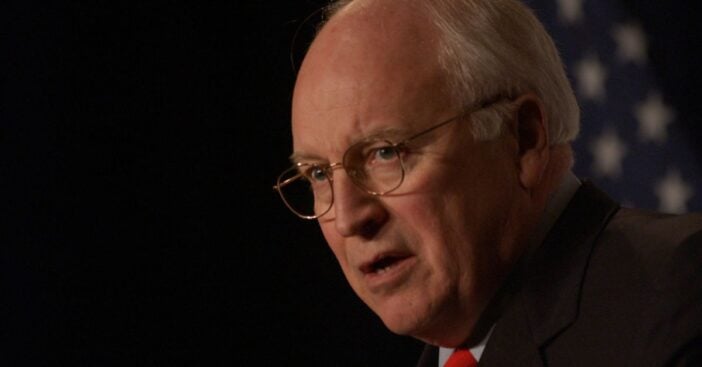
- Dick Cheney died on Monday, November 3 at the age of 84.
- Prior to his passing, Cheney had been experiencing complications related to pneumonia and vascular disease.
- Cheney was regarded as one of the most powerful and influential vice presidents in American history and played a major role in shaping politics after September 11.
On Monday, November 3, Dick Cheney passed away. He was 84 years old when he died. News of his passing comes from a statement issued by his family.
Dick Cheney served as the 46th Vice President of the United States from 2001 to 2009 under President George W. Bush, where he played a central role in shaping U.S. foreign and defense policy following the September 11 attacks. A key advocate for the wars in Afghanistan and Iraq, he became one of the most influential and controversial figures in modern American politics. Before his vice presidency, Cheney served as Secretary of Defense under President George H. W. Bush, overseeing Operation Desert Storm, and earlier as White House Chief of Staff under President Gerald Ford. His decades-long career placed him at the center of U.S. power for more than a generation.
Former Vice President Dick Cheney has passed away
“Dick Cheney was a great and good man who taught his children and grandchildren to love our country,” reads the statement by his family, “and to live lives of courage, honor, love, kindness, and fly fishing. “We are grateful beyond measure for all Dick Cheney did for our country. And we are blessed beyond measure to have loved and been loved by this noble giant of a man.”
Cheney was born on January 30, 1941, in Lincoln, Nebraska, and raised in Casper, Wyoming. He attended Yale University but left before graduating, later earning both bachelor’s and master’s degrees in political science from the University of Wyoming. His political career began in Washington, D.C., as a congressional fellow and later as a staff assistant to Donald Rumsfeld during the Nixon administration. Cheney’s early government work led to his appointment as White House Chief of Staff under President Gerald Ford in 1975, marking the start of a long career in national politics and government service.
Life and politics
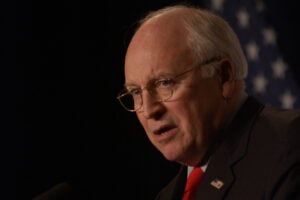
After leaving public office, Dick Cheney devoted much of his time to writing, business, and philanthropy. He co-authored several books, including In My Time and Exceptional: Why the World Needs a Powerful America, reflecting on leadership, governance, and his years in Washington. He also became a frequent public speaker, appearing at universities, policy conferences, and veterans’ events. Beyond politics, Cheney worked to raise awareness of heart disease, openly discussing his multiple cardiac procedures and his 2012 heart transplant, which inspired outreach efforts promoting cardiovascular research and patient care.
Cheney also returned to the private sector and continued his involvement in the oil and energy industry. He served as CEO of Halliburton before his vice presidency, and his connections to the industry remained a topic of scrutiny in subsequent years. Although his direct influence in government waned, Cheney remained a significant figure in conservative politics, policy circles, and veterans’ affairs until his passing.