

Picture Manhattan on a raw Thanksgiving morning in 1946: brass bands, giant balloons bobbing over the crowd, and at the very end a white-bearded Santa waving from his sleigh. Nobody lining the curb that day knew they were extras in a movie, and nobody knew the Santa was an English stage actor named Edmund Gwenn. A year later, that parade became the opening of Miracle on 34th Street, the movie a lot of us still watch every Thanksgiving with the real parade on in the next room.
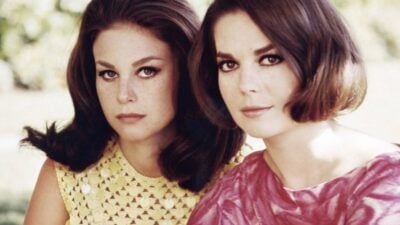
At the heart of the film was a little girl who didn’t believe in Santa Claus. She was played by Natalie Wood, who was 8 years old when the cameras rolled, and off camera her feelings about Gwenn were a very different story from Susan Walker’s.
How Did a Real Parade End Up in ‘Miracle on 34th Street’?

Director George Seaton couldn’t stage a Macy’s parade, so he borrowed the real one. According to Turner Classic Movies, the crew shot among the crowds on November 28, 1946, and because the parade wasn’t going to stop for Hollywood, every scene got a single take. Nine cameras ran at once to catch it.
Maureen O’Hara, who played Susan’s mother, remembered the scramble in her memoir. “It was a mad scramble to get all the shots we needed, and we got to do each scene only once,” she wrote. She also remembered the weather. “It was bitterly cold that day,” she recalled, and she and Gwenn envied Wood and John Payne, who got to watch the parade from a warm window.
Gwenn had no such luck, because he was in the parade itself. He rode the Santa Claus float down the route and climbed up onto the Macy’s marquee at the end. O’Hara described those shots of “Edmund riding in the sleigh and waving to the cheering crowd” as “real-life moments,” Mental Floss reported. The crowd only found out who their Santa had been when The New York Times ran a small item the next day.
Shooting moved inside Macy’s Herald Square store in December, which turned out to be a treat for the youngest member of the cast.
Why Did a Christmas Movie Open in June?
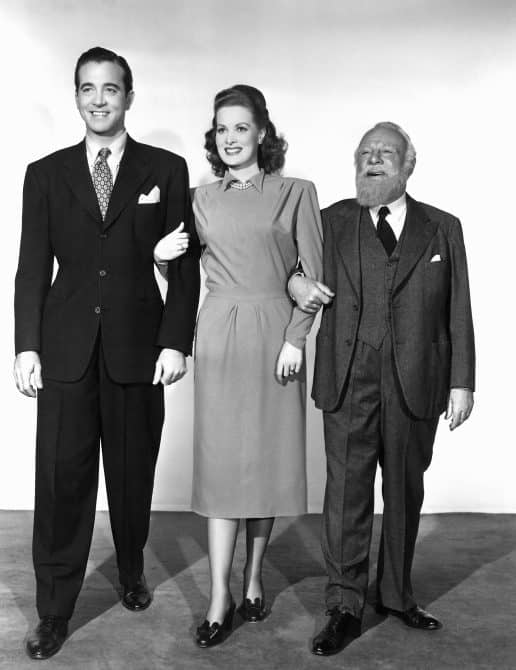
The store was too busy with holiday shoppers during the day, so the Macy’s scenes were filmed at night. O’Hara wrote that Natalie “loved this, because it meant she was allowed to stay up late.” Production returned to California in January 1947 and wrapped that March, and then the studio made a decision that still puzzles people who think of this as a Christmas movie.
Fox chief Darryl F. Zanuck held it for summer, believing more people went to the movies in warm weather. The film opened at New York’s Roxy Theatre on June 4, 1947. O’Hara’s version was blunter. “Zanuck wasn’t sure it would be a success, so he had it released in June,” she wrote, adding that “the publicity campaign barely talked about Christmas at all.” Audiences walked in expecting a romantic comedy.
It worked anyway. The film had been made for about $248,000 and earned $2.7 million in U.S. rentals, according to Variety‘s list of the top grossers of 1947. It was nominated for Best Picture and won three Oscars, two for its writing, with Valentine Davies taking Best Original Story and Seaton winning for the screenplay. The third went to the man in the beard, and we’ll come back to what he said when he got it.
Who Was the Girl Who Didn’t Believe?
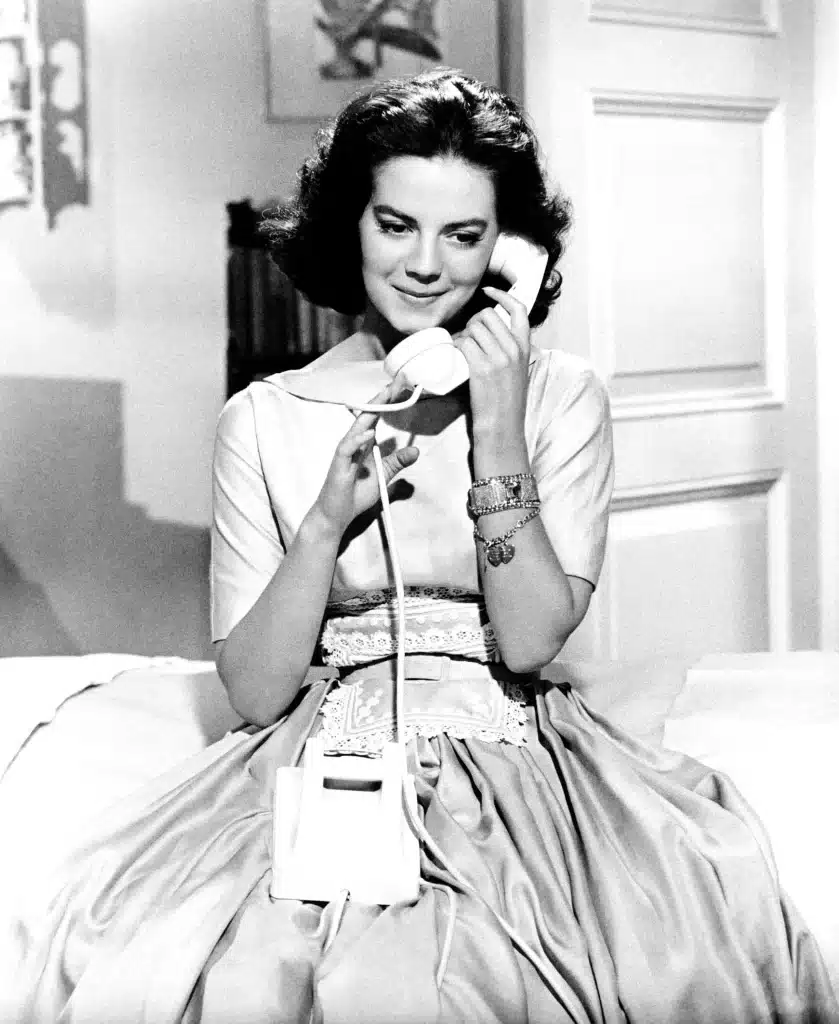
She was born Natalia Zacharenko in San Francisco on July 20, 1938, the daughter of Russian immigrants, and the family called her Natasha. By the time Fox cast her as the serious little Susan Walker, she already had screen work behind her. O’Hara took to her right away. “She always called me Mamma Maureen and I called her Natasha,” the actress wrote, and the two stayed close for the rest of Wood’s life.
The film made her one of the most popular child stars in Hollywood, and she did something few child stars manage, which was keep going. She earned an Oscar nomination at 17 for Rebel Without a Cause, then two Best Actress nominations, for Splendor in the Grass and Love with the Proper Stranger, with West Side Story between them. Natalie Wood died on November 29, 1981, three days after Thanksgiving, when she drowned off Catalina Island during a break from filming Brainstorm. She was 43.
For a lot of viewers, though, she stays 8 years old every November, tugging at Kris Kringle’s beard to see if it’s real. Her own answer to that question was more complicated than Susan’s.
What Did Natalie Wood Believe About Edmund Gwenn?

Wood told biographer Suzanne Finstad about it for the book Natasha: The Biography of Natalie Wood. “I still vaguely believed in Santa Claus,” she said. “I guess I had an inkling that maybe it wasn’t so, but I really did think that Edmund Gwenn was Santa.”
Gwenn made that easy. He arrived early every morning and spent hours on the beard and mustache, so the little girl on set never saw him any other way. Then came the wrap party. Gwenn showed up clean-shaven and wearing his glasses. “I saw this strange man, without the beard, and I just couldn’t get it together,” Wood recalled, as Showbiz Cheat Sheet reported from the biography. Finstad put it more simply: “When they had a wrap party, and he came without his beard, she was absolutely shocked.”
She wasn’t the only one he fooled. O’Hara wrote that halfway through the shoot the whole company believed Edmund really was Santa Claus, and that she had “never seen an actor more naturally suited for a role.”
The Academy seemed to agree. At the ceremony in March 1948, Gwenn, then 70, walked up to accept Best Supporting Actor and said, “Now I know there’s a Santa Claus!” He is still the only actor ever to win an Oscar for playing him.

 Tina Turner Left Ike With 36 Cents, Then Married The Man Who Saved Her Life