
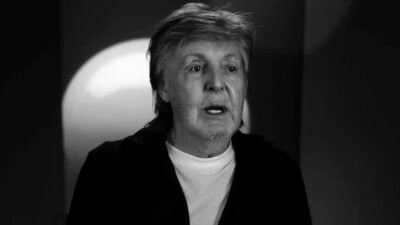
In the fall of 1969, Paul McCartney was alive, well and hiding out on a farm in Scotland with his wife Linda and their girls, which is exactly why so much of America decided he was dead. By the time Life magazine reached newsstands with its November 7, 1969 issue, the rumor had traveled from a Detroit call-in show to a college newspaper to the national news, and the one man who could end it had stopped answering the phone.
McCartney is 84 now and still making records. His album The Boys of Dungeon Lane made the 2026 Mercury Prize shortlist, Euronews reported in July. He has spent 57 years living with the strangest story ever told about him, and the way he finally answered it involved a muddy field, a slop bucket and a deal with a photographer.
How Did The ‘Paul Is Dead’ Rumor Start?

The story caught fire on Sunday, October 12, 1969, when a caller to Russ Gibb’s show on WKNR-FM in Detroit told the DJ that Paul had died and the Beatles had been hiding it, leaving clues in their records for fans to find. Gibb played “Revolution 9” backward on the air and spent the next hour taking calls. “What I heard shocked me out of my boredom,” he later told AnnArbor.com, and he joked that he would “probably always be remembered as the ‘ghoul who killed Paul McCartney.'”
Two days later, The Michigan Daily ran a review of Abbey Road by University of Michigan student Fred LaBour under the headline “McCartney Dead; New Evidence Brought to Light.” LaBour made up many of the clues himself, according to both AnnArbor.com and Wikipedia‘s history of the hoax. He read the album cover as a funeral procession with a barefoot Paul as the corpse, and he turned the Volkswagen license plate “LMW 281F” into “28IF,” the age Paul supposedly would have been if he had lived.
“I wanted to poke fun at over-zealous critics who try to find endless meaning in every nuance of an art project,” LaBour explained. “Almost everybody else took it seriously.” Fans did the rest. They heard “I buried Paul” at the end of “Strawberry Fields Forever,” a mumble John Lennon later said was actually “cranberry sauce.” By October 22 the rumor was international news, and the man at the center of it was nowhere to be found.
Where Was Paul McCartney When The World Thought He Was Dead?

He was at High Park, his remote farm on Scotland’s Kintyre peninsula, with Linda, her daughter Heather and their new baby, Mary. The Beatles were quietly coming apart, and he wanted out of the spotlight. On October 24 he gave a short interview to the BBC’s Chris Drake to deny the story, and according to Allan Kozinn and Adrian Sinclair’s book The McCartney Legacy, excerpted by Literary Hub, that broadcast is what led Life to his door.
The magazine sent London correspondent Dorothy Bacon and photographer Terence Spencer, who had been shooting the Beatles since 1963. Their first try at reaching the farm on Saturday, November 1 got them nowhere, according to The Paul McCartney Project. When they came back, Spencer started snapping pictures, and McCartney did not take it kindly. “He heard the click, turned, and threw the slop pail at me,” Spencer recalled. The veteran photographer wrote that he had been “hit for the first time in twenty years of covering trouble around the world” by a Beatle.
McCartney regretted it almost at once. “They went away, and I thought, ‘They’ve got a picture of me throwing a bucket; this is not what I want in my life,'” he remembered in the Kozinn and Sinclair account. He went after the pair and offered a trade: Spencer’s film in exchange for a short interview with Bacon and a set of family photos taken by Linda. Life took the deal, and what he said next would turn out to be bigger news than the rumor itself.
What Did Paul McCartney Tell Life Magazine?

The November 7 issue put Paul, Linda and the girls on the cover under the line “Paul is still with us,” and inside, he sounded more tired than angry. He called the whole thing “all bloody stupid,” according to the interview text preserved by The Paul McCartney Project, and offered a theory of his own. “Perhaps the rumor started because I haven’t been much in the press lately,” he said. “The people who are making up these rumors should look to themselves a little more.”
Then he said something almost nobody caught at the time. “The Beatle thing is over,” he told Bacon. “It has been exploded, partly by what we have done, and partly by other people. We are individuals, all different. John married Yoko, I married Linda. We didn’t marry the same girl.” Lennon had already told the others privately that he was leaving, but the public would not learn the band was finished until the spring of 1970, a loss McCartney has since compared to getting “sacked.”
His closing request was the most human line in the piece. “I would rather be a little less famous these days,” he said. “Can you spread it around that I am just an ordinary person and want to live in peace?”
Did Paul McCartney Ever Make Peace With The Rumor?

The Life story took most of the air out of the hoax, as both Wikipedia’s history and the Kozinn and Sinclair book note. Fred LaBour went on to a long career as “Too Slim,” the bass player in the cowboy band Riders in the Sky, and looks back on it as his “15 minutes of fame.” The rumor never fully died, though, and his family still hears it. One of his daughters has spoken about the constant death rumors that follow her father.
McCartney eventually decided the best answer was a joke. In 1993 he named a live album Paul Is Live and gave it a cover that parodies Abbey Road, a wink at the photo that started it all. He never did get his wish to be a little less famous. But the farmer who threw a bucket of slop at a photographer in 1969 is still here, still writing songs, and still answering the question the only way that ever really worked, by showing up.